Hof im Schnee — History & Facts
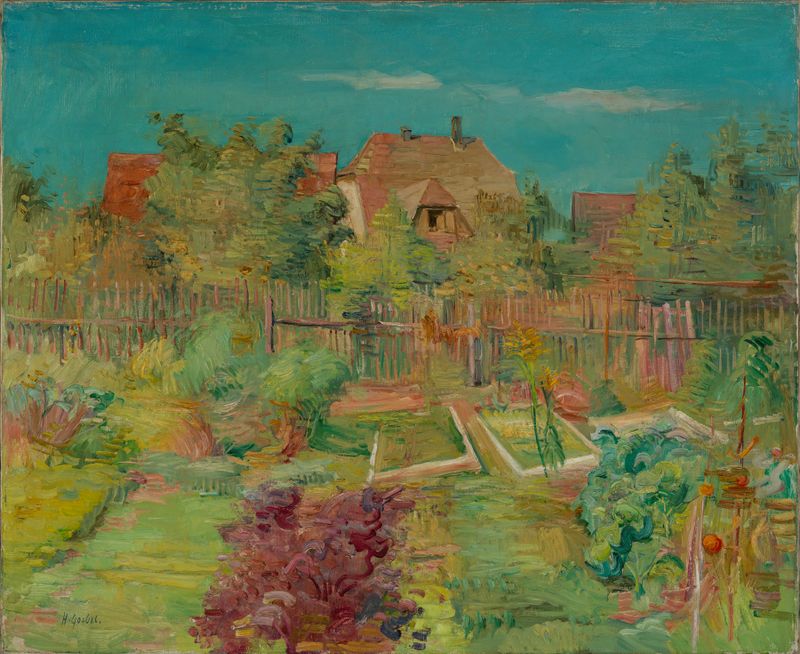
Could a single brushstroke hold eternity? In the delicate spaces of Hof im Schnee, the weight of nostalgia lingers, beckoning viewers to ponder their own memories cloaked in the stillness of snow. Look to the center of the canvas, where the soft, white snow blankets the ground, creating a serene landscape. The muted tones of gray and blue, combined with gentle brushwork, evoke a sense of tranquility while capturing the fleeting essence of winter. Notice how the subtle variations in texture suggest the depth of the snow, allowing the viewer to feel the crisp air and the serenity of an untouched scene.
The sparse, leafless trees stand like sentinels along the edges, their elongated shadows adding a quiet tension to the composition. As you explore further, you might find deeper meanings hidden within the stark contrasts of light and dark. The play of shadows hints at the passage of time, while the pale light that dances across the snow suggests warmth and memory amidst the chill. This juxtaposition fosters an emotional tension that resonates with universal experiences of longing and reflection.
Each brushstroke, seemingly simple, becomes a conduit for feelings of loss and yearning, inviting the viewer into a space where past and present converge. Hermann Goebel painted Hof im Schnee in 1913, a period marked by significant artistic shifts and the onset of modernism. Working in Germany, he sought to capture the essence of everyday life through impressionistic techniques, reflecting a world on the brink of change. As the art scene began to evolve, Goebel's focus on the natural landscape allowed him to explore the deeper emotional currents that connect us to our surroundings, even as the world around him was rapidly transforming.