Neckar Landscape at Gundelsheim — History & Facts
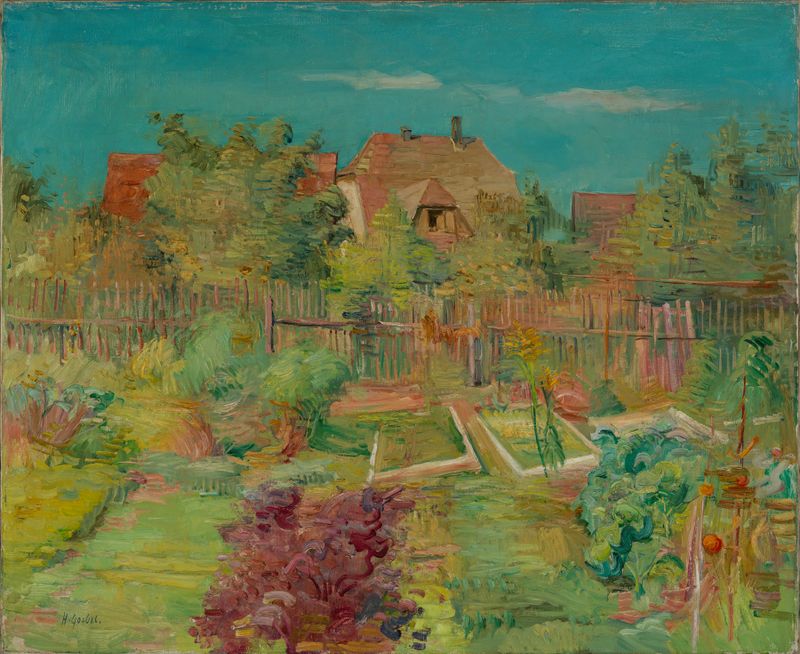
Can beauty exist without sorrow? The poignant tension between tranquility and unease echoes in the landscape, holding an innocence that is both captivating and fleeting. Look to the foreground, where rolling hills gently cradle the serene Neckar River. The soft pastel hues of green and blue evoke a sense of calm, while the delicate brushstrokes create a shimmering effect on the water's surface. Notice how the warm, golden light filters through the trees, casting long shadows that stretch across the landscape, hinting at the passage of time.
The composition draws your gaze toward the horizon, inviting contemplation of what lies beyond the idyllic scene. Delve deeper into the painting's contrasts; the serene beauty is underscored by hints of restlessness. The juxtaposition of the placid river with the looming hills suggests the struggle between nature's tranquility and the potential for disruption. Small details, like the distant figures laboring in the fields, whisper of human endeavor, subtly reminding us of the toil that underpins such beauty.
This duality evokes an emotional resonance, capturing a fleeting moment in nature that contrasts with the unrelenting march of time. In 1911, Goebel painted this work during a period marked by significant change in the art world, as artists began to explore new styles and expressions. Living in Germany, he was influenced by the burgeoning modernist movement, yet his affinity for depicting serene landscapes retained a connection to earlier Romantic traditions. The world was on the cusp of upheaval, but in this piece, the artist chose to reflect a moment of innocence, perhaps as a way to preserve the beauty of a vanishing past.