Hofvijver te ‘s-Gravenhage — History & Facts
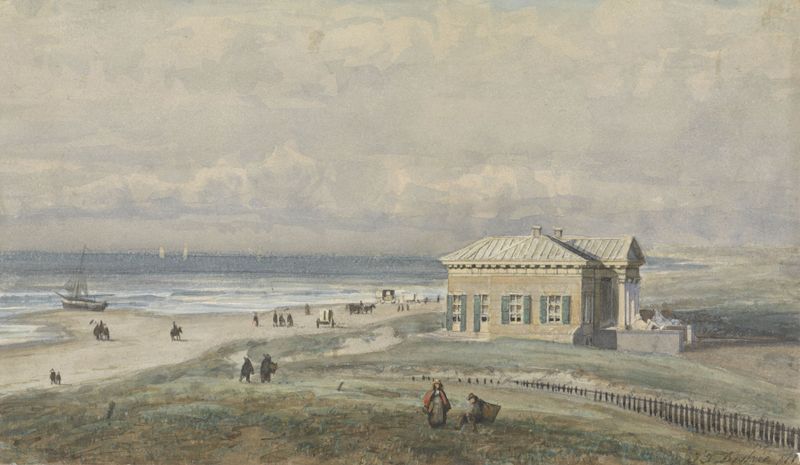
Who listens when art speaks of silence? In the stillness of a quiet moment captured on canvas, a haunting legacy unfolds, inviting the viewer to consider the stories held within the frame. Look to the foreground where the serene water of the Hofvijver reflects the ghostly outlines of the trees, their branches stretching like fingers towards the sky. Notice how the soft pastel hues of dawn blend seamlessly into the twilight, creating a tranquil palette that evokes a sense of introspection. The careful brushwork brings out the ripples in the water, suggesting a gentle breeze, while the distant buildings loom with a dignified presence, grounding the scene in both nature and civilization. Within this serene portrayal lies a contrast between tranquility and the passage of time.
The still water symbolizes both reflection and the weight of history, echoing the quiet moments in our own lives that shape us. Meanwhile, the fading light hints at transience—a moment on the cusp of change that speaks to the ephemeral nature of existence. One can feel the presence of those who have walked these grounds, their whispers mingling with the breeze, inviting contemplation of one’s legacy. Created in 1870, the artist painted this scene amidst the shifting cultural landscape of the Netherlands, a time when realism was gaining prominence and artists sought to capture both the beauty of nature and the realities of urban life.
Destree’s work reflects his deep appreciation for his surroundings, and the legacy he aimed to leave behind is evident in this meticulously crafted moment of stillness in an ever-changing world.