Paviljoen van Wied te Scheveningen — History & Facts
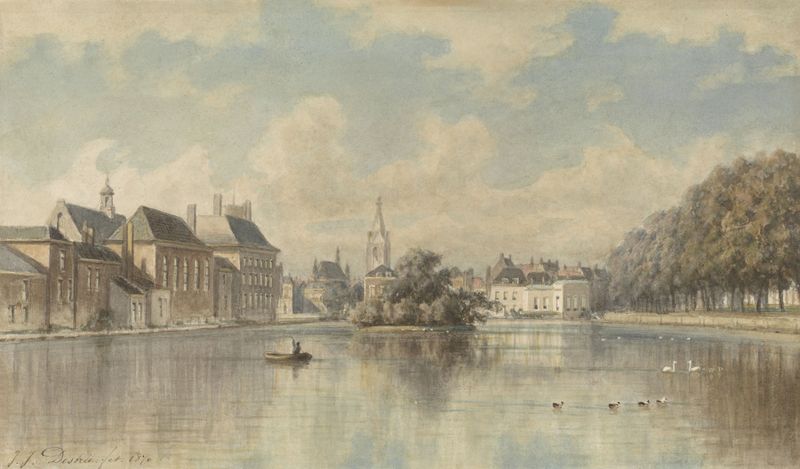
Could beauty survive in a century of chaos? In the late 19th century, amidst the turmoil of societal shifts and industrialization, this question resonates profoundly. Look to the left at the intricately adorned pavilion, its architectural elegance capturing the sun's golden rays, casting playful reflections in the nearby water. As your gaze travels across the canvas, notice the gentle movement of the people gathered, their leisurely postures and bright clothing contrasting with the serene backdrop of the sea. The delicate brushwork and vibrant palette breathe life into every detail, inviting viewers to pause and linger in this idyllic moment. Upon closer inspection, the pavilion stands as a symbol of desire—an oasis of pleasure amid the encroaching chaos of modernity.
The figures exude a sense of yearning, their interactions hinting at unspoken stories and dreams. Each brushstroke not only illustrates a scene but also evokes the ephemeral nature of beauty, suggesting that while chaos could overwhelm, there exists a sanctuary where joy and tranquility still thrive. In 1877, Destree painted this work in Scheveningen, a coastal resort known for its beauty and allure. At that time, the artist was navigating the evolving art world, influenced by both Romanticism and the emerging Impressionist movement.
His choice to depict this charming pavilion reflects a broader desire to capture fleeting moments of happiness in an era marked by rapid change and uncertainty.