Hōgajō, Pl.13 — History & Facts
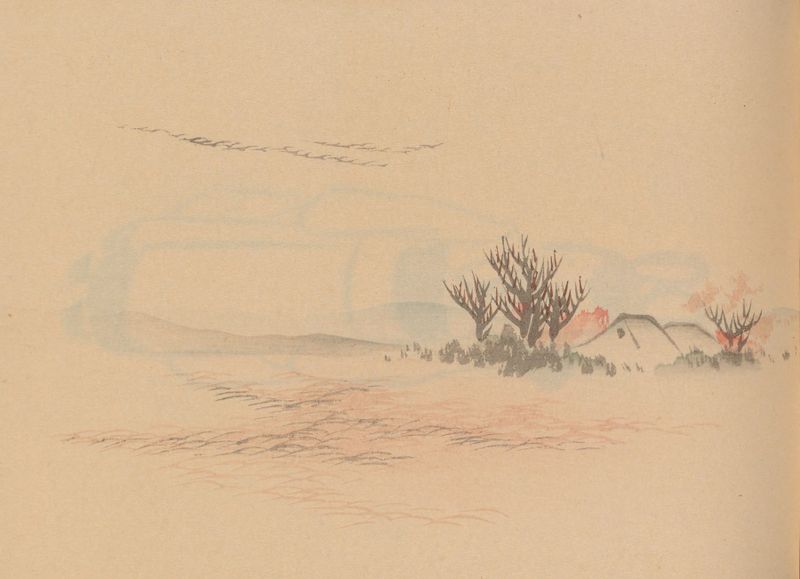
Who listens when art speaks of silence? In Hōgajō, Pl.13, the quietude resonates with an underlying tension, inviting viewers into a world that whispers of violence beneath its surface. Look to the center of the canvas, where an elegantly poised figure stands, draped in flowing garments that catch the light with subtle hues of blue and gold. Notice how the delicate brushstrokes create a swirling motion, almost as if the fabric has a life of its own, swirling around her. The background is a gradient of muted tones, offering a stark contrast to her vibrant presence, which draws the eye effortlessly.
Each element is meticulously composed, harmonizing to maintain balance while hinting at the chaos lurking just out of sight. Delve deeper into the intricate details: the exquisite patterns on her attire tell stories of tradition, while her gaze, serene yet distant, hints at inner turmoil. The tension between her poised exterior and the painted space around her evokes questions about the nature of violence—how it can exist silently, coiling beneath the surface of everyday beauty. This juxtaposition encapsulates not only personal struggle but a broader commentary on societal norms that often mask deeper conflicts. In 1901, during the Meiji era in Japan, Jirō Takeuchi created this piece amidst a period of rapid change and Western influence.
Artists were grappling with the tension between tradition and modernity, reflecting on the complexities of identity within a transforming society. Hōgajō, Pl.13 stands as an emblem of that era, portraying the silent battles that resonate through art and life alike.