
Hohlweg im Winter — History & Facts
In the stillness of winter, nature whispers secrets of madness, a chaotic dance beneath a serene surface. Look to the left at the winding path, where soft snow blankets the ground and invites you deeper into the composition. The trees, stripped of their foliage, reach toward the sky like skeletal hands, their dark silhouettes contrasting against the soft, muted whites and blues of the landscape. Notice how the light filters through the barren branches, creating a delicate interplay of shadows that evokes a sense of haunting tranquility, yet hints at an underlying turmoil within the serene facade. This harmonious yet discordant scene prompts contemplation of the dualities present in nature and human emotion.
The starkness of winter’s chill juxtaposes the warmth of the path, suggesting a journey fraught with hidden madness beneath the calm exterior. The convergence of light and dark not only highlights the beauty of the surroundings but also encapsulates the internal struggle of navigating through life's tumultuous seasons. Eugen Jettel painted Hohlweg im Winter in 1895, during a period of artistic exploration and emotional depth. Living in Vienna, he was influenced by the changing artistic movements of the time, reflecting the tension between realism and the emerging avant-garde.
This painting represents both his mastery in capturing landscapes and an era where the complexities of the human experience began to seep into visual art, ultimately enriching the narrative of the natural world.
More Artworks by Eugen Jettel
Browse all →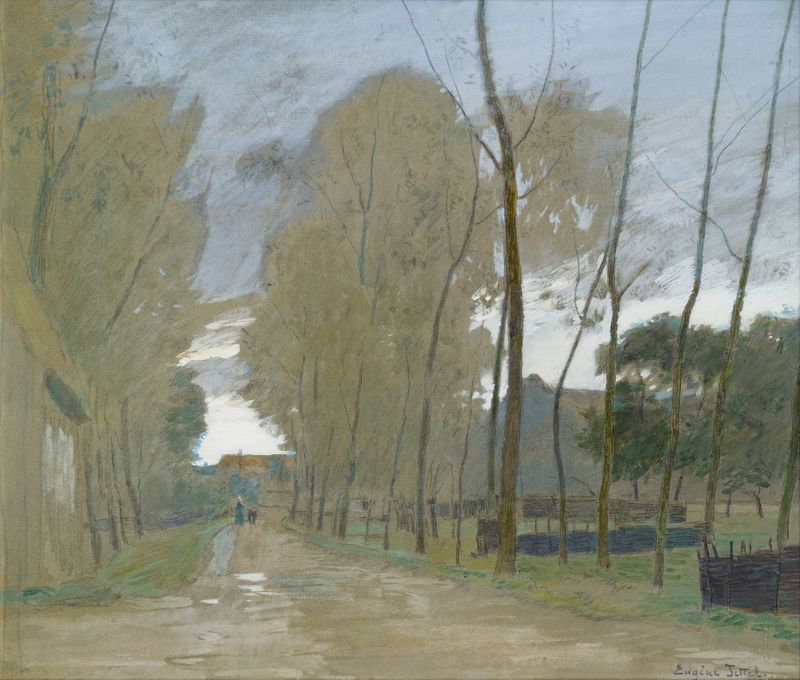
Motiv aus der Bretagne
Eugen Jettel
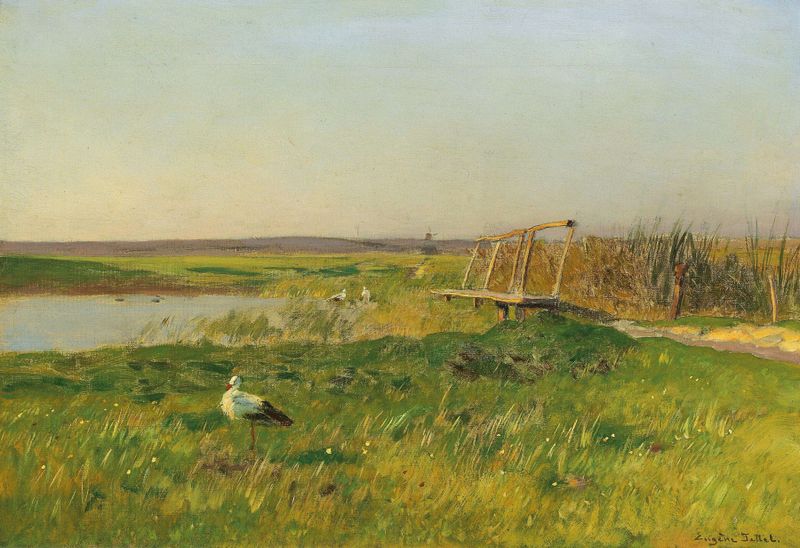
Frühlingslandschaft mit Störchen an einem Weiher
Eugen Jettel

Rinder auf Sommerwiese
Eugen Jettel
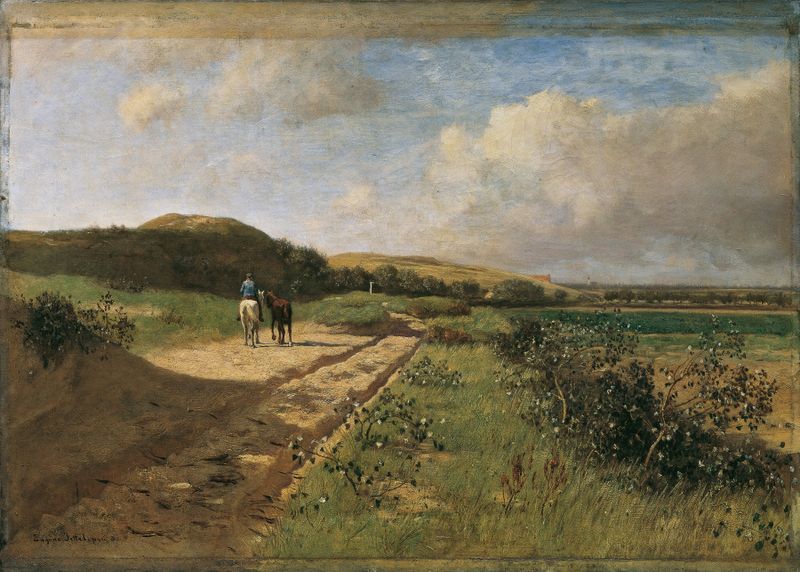
Dünen bei Katwijk
Eugen Jettel
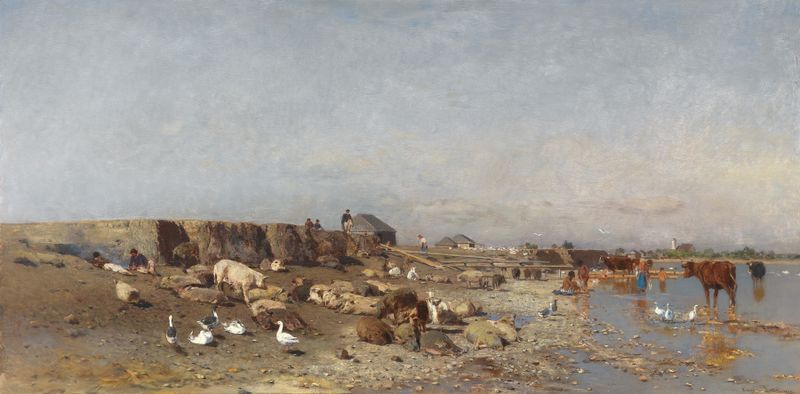
Motiv aus Szered an der Waag
Eugen Jettel
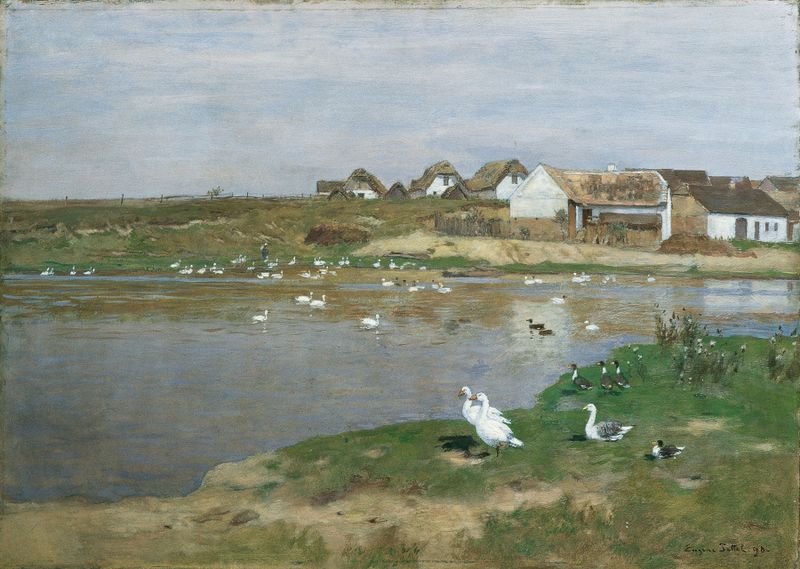
Der Gänseteich in Kotting-Neusiedl
Eugen Jettel

Flusslandschaft Mit Boot
Eugen Jettel

Flusslandschaft mit Kühen
Eugen Jettel

Dorfpartie Strohhütten aus Staatz
Eugen Jettel

Abendlandschaft
Eugen Jettel





