Holländsk tjalk — History & Facts
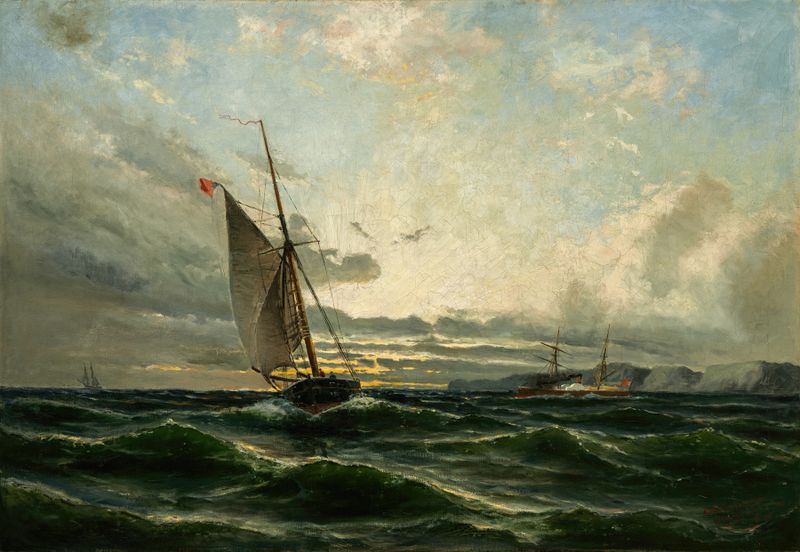
What secret hides in the quiet of the canvas? Beneath the stillness of the painted waters lies an unfulfilled longing, echoing the desires of souls adrift in the embrace of the unknown. Focus on the serene waters that stretch across the canvas, glistening under a delicate light. Notice how the soft blues and greens blend, coaxing the viewer's eye toward the graceful lines of the tjalk, its hull softly bobbing as if it whispers stories of distant shores. The calm sky above, brushed with gentle strokes of pale clouds, frames the scene, inviting a sense of serenity while subtly hinting at the untamed nature that lies just beyond the horizon. Hidden within this tranquil depiction is a tension between stability and the urge to explore.
The sturdy vessel, anchored yet poised for adventure, embodies a yearning for freedom and discovery. Each brushstroke reveals a depth of emotion, capturing the longing of those who dream of the open sea while remaining tethered to the familiar. The stillness invites contemplation, allowing the imagination to wander to distant lands and uncharted waters. In 1885, Christian Fredrik Svensson painted this work during a time of significant change within the art world and society.
Living in Sweden, he was part of a burgeoning movement that sought to capture the essence of Scandinavian landscapes and maritime life. As industrialization transformed the coasts, the artist was drawn to the tension between the traditional and the modern, reflecting both the beauty and the yearning for a past that was rapidly fading.