Holzbrücke über einem Gebirgsbach — History & Facts
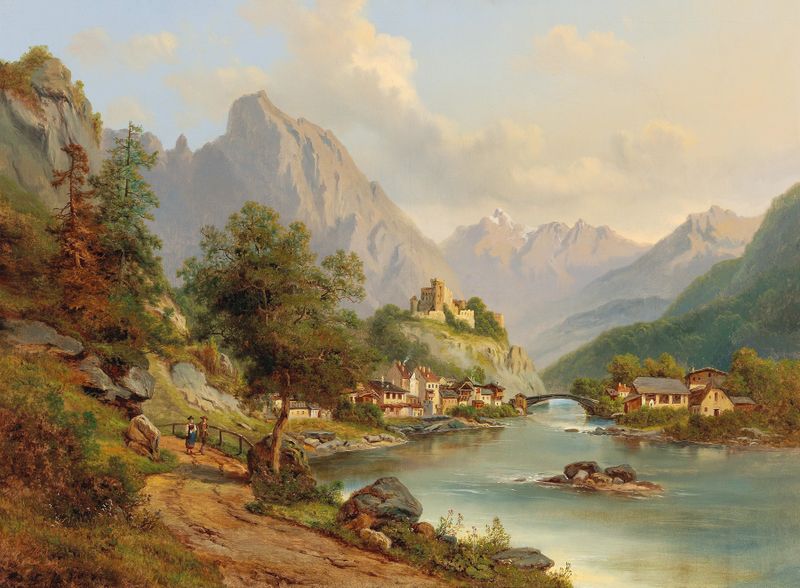
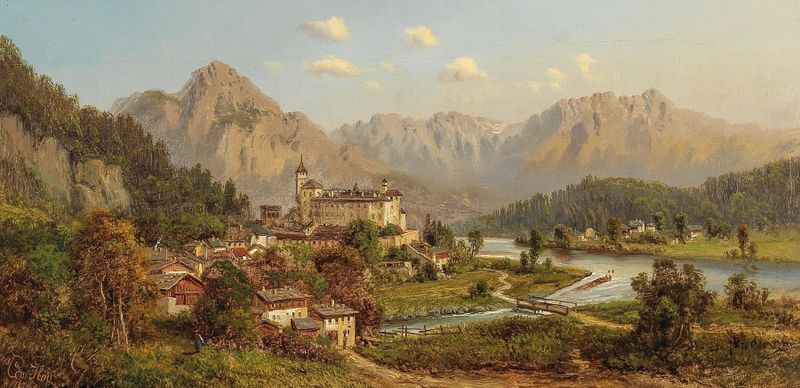
Can beauty exist without sorrow? In Holzbrücke über einem Gebirgsbach, the interplay of light and shadow invites viewers to ponder this profound question, as nature reveals its duality through serene landscapes. Look to the left at the cascading waters of the mountain stream, where delicate ripples catch the sunlight, shimmering like scattered diamonds. Shift your gaze upward to the wooden bridge arching gracefully over the water, its sturdy beams juxtaposed against the soft curves of the surrounding foliage. The artist employs a muted palette, with earthy tones that speak to the age and strength of the bridge while contrasting the vibrant hues of the natural world, creating a harmonious balance that feels both inviting and solemn. The shadows beneath the bridge hint at hidden depths and untold stories, evoking a sense of mystery that permeates the tranquil scene.
The juxtaposition of light and dark serves as a reminder of fleeting moments; beauty is often interwoven with melancholy. The winding path through the trees leads us to contemplate the passage of time, alluding to the impermanence of both nature and human constructs, suggesting that this idyllic moment is simply a pause in a larger narrative fraught with change. Edmund Höd painted this work in 1861 while living in the Bavarian region of Germany, a time when Romanticism was at its peak, and artists sought to depict the sublime beauty of nature. This period was marked by a growing fascination with landscape painting as a form of emotional expression, reflecting both the artist's inner world and the greater societal shifts of the era.
As industrialization progressed, these serene scenes became a refuge, capturing the nostalgia for a simpler, more harmonious existence with the natural environment.