Holzhütte am See — History & Facts
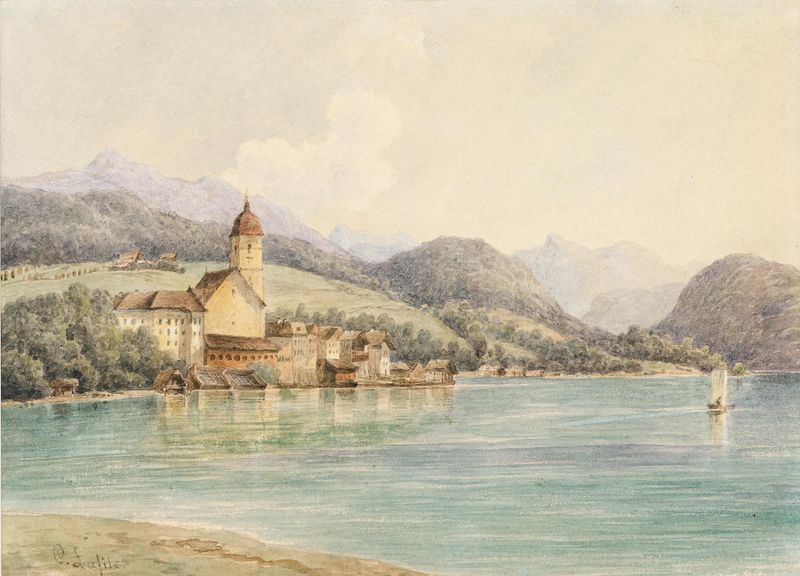
In the quiet moments of life, grief reveals itself through delicate nuances—like the tranquil waters reflecting a stillness that belies deeper emotions. Look to the shimmering lake where the gentle ripples mirror the sky's soft hues, beckoning you to dive deeper into the landscape's secrets. The rustic wooden cabin lies at the water’s edge, its earthy tones harmonizing with the surrounding nature. Notice how the light dances across the scene, illuminating the cabin’s weathered façade, suggesting years of whispers held within its walls.
The brushwork is meticulous yet fluid, inviting you to explore the perfect balance between structure and the wildness of nature. Amidst this serene composition, contrasts emerge. The stability of the cabin stands in stark juxtaposition to the fluidity of the lake, symbolizing the enduring nature of memory against the ebb and flow of emotions. The muted palette evokes a sense of melancholy, hinting at a story of loss that lingers in the air—a reminder of what once was.
The surrounding trees, with their bent branches, seem to bow in silent mourning, accentuating the weight of remembrance woven into the landscape. In 1851, Holzhütte am See emerged during a time of personal turmoil for the artist, who sought solace in nature's embrace. Living in Germany, Lafite was part of a broader Romantic movement that emphasized the connection between humanity and the natural world. This period influenced his artistic vision, as he grappled with themes of transience and nostalgia, forever captured in his evocative portrayals of serene landscapes.