View of St. Wolfgang on Lake Wolfgang — History & Facts
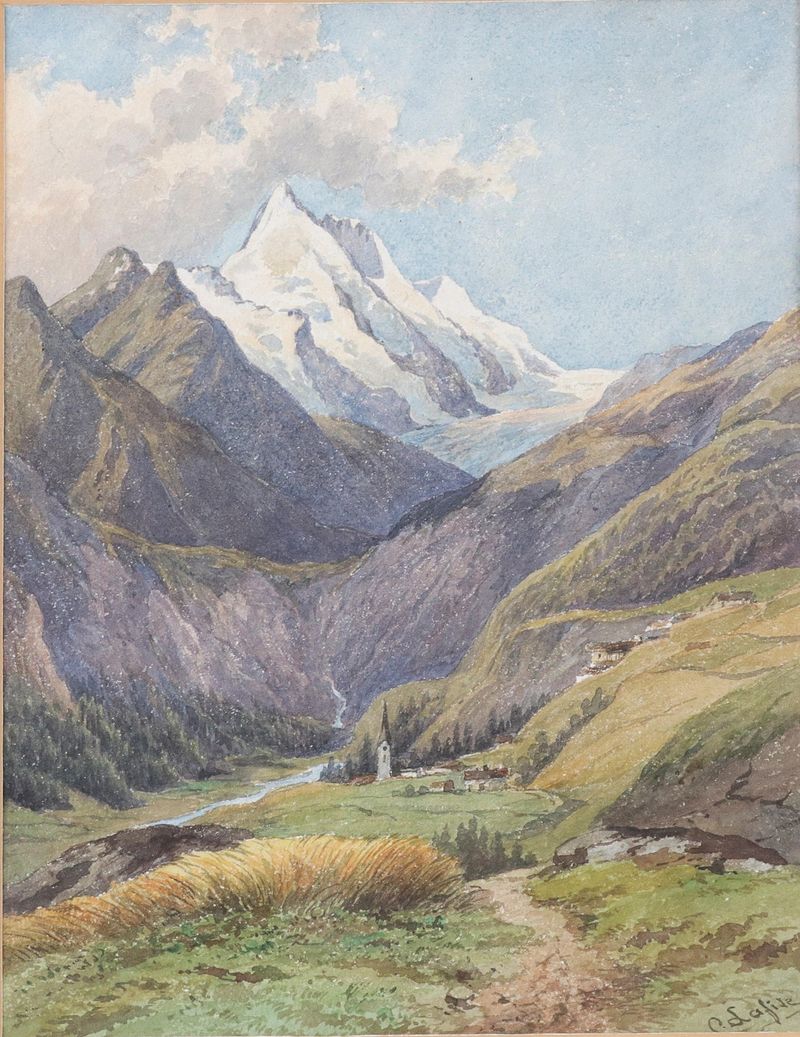
In this stillness, one is drawn to the infinite void where nature's beauty and human experience intertwine. Such moments capture the essence of existence, leaving us to ponder the quiet mysteries of life. Focus on the gentle curve of the lake in the foreground, where soft ripples reflect the sky’s tranquil hues. To the left, the quaint town of St.
Wolfgang nestles against the mountains, its pastel buildings painted with delicate care. The warm glow of sunlight spills over the scene, illuminating the detailed brushwork that captures both the vibrancy and the calm of this idyllic setting. Notice how the interplay of shadows creates depth, inviting the viewer to step closer and explore this serene landscape. Hidden within this pastoral view lies a contrast between the stillness of the water and the looming peaks, evoking a sense of both safety and isolation.
The serene beauty of the village juxtaposed against the formidable mountains reflects the tension of human existence amid nature’s grandeur. Each brush stroke seems to whisper stories of those who dwell here, standing in the void between the worlds of tranquility and turmoil. Carl Lafite created this piece during an unspecified period, likely influenced by the Romantic movement's focus on the sublime beauty of nature. As an artist, he sought to evoke emotion through landscape, engaging with the tension between human life and the natural world.
His work speaks to a time when artists began to explore the depths of human experience through the lens of serene yet powerful imagery, capturing the essence of a fleeting moment in time.