Homewards — History & Facts
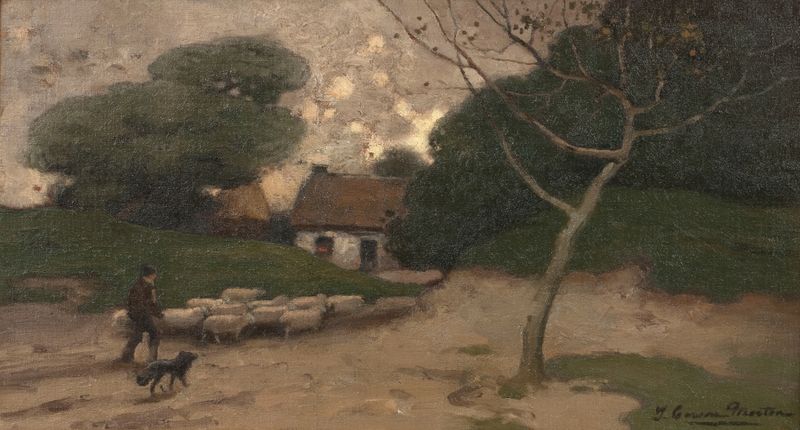
What if beauty was never meant to be finished? The ephemeral nature of existence dances between the lines of completion and longing, echoing in the depths of this artwork. Focus on the central figures, their silhouettes gently merging with the abstract landscape around them. Notice how soft, warm hues blend with cooler tones in the background, creating a sense of movement, as if each brushstroke is a step towards an elusive destination. Light spills across the canvas, illuminating the path homewards, while shadows weave around the figures, suggesting the tension between journey and arrival. Hidden within this composition lies a duality of emotions – joy and sorrow intertwine as the figures journey towards an undefined horizon.
The contrast between their grounded forms and the ethereal swirls of color invokes a feeling of longing, a search for belonging that transcends mere physicality. In the subtle details, like the delicate grasp of hands or the faint expressions etched on their faces, we sense a collective yearning, a shared ecstasy for what lies just beyond reach. Thomas Corsan Morton painted this piece during a period marked by his exploration of color and form, infusing his canvases with a sense of movement and emotion. While the exact date remains unknown, his work in the late 19th to early 20th century reflects a time of artistic transition, bridging traditional techniques and the emerging modernist sentiments that would soon dominate the art world.