Horloge met ketting — History & Facts
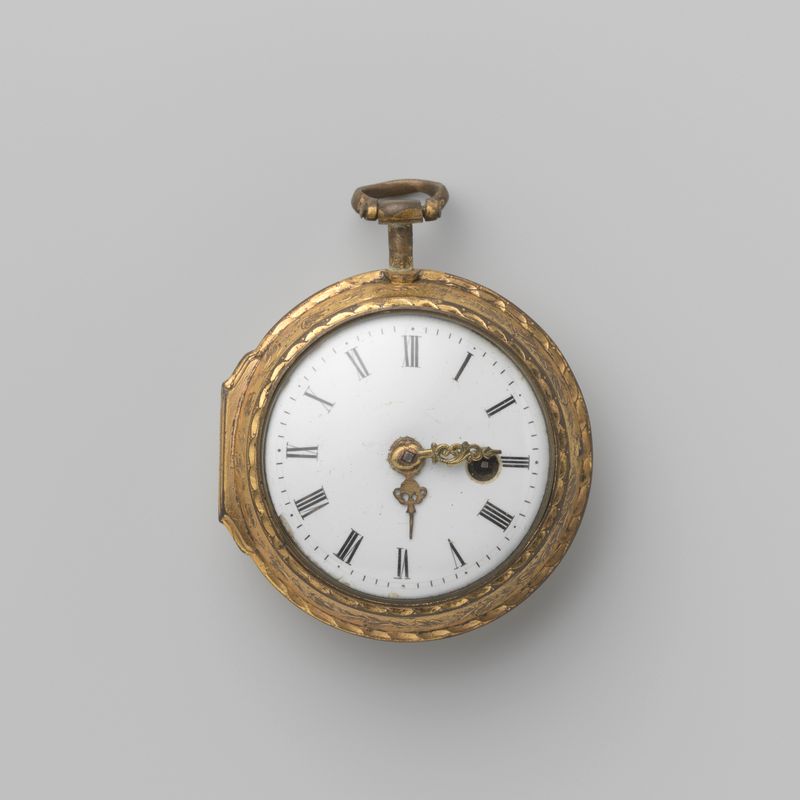
This notion echoes through the serenity of a timepiece’s intricate stillness, inviting contemplation of fleeting moments and the passage of time. Look to the center of the composition, where the delicate clock face beckons, its hands frozen in a moment of quiet anticipation. The artist employs a muted palette, with soft greens and gentle browns, allowing the gleam of the clock’s metallic chain to catch your eye. Notice how the light falls upon the glossy surface, creating a delicate interplay of highlights and shadows, evoking a sense of calm and introspection.
The surrounding elements are intentionally sparse, emphasizing the clock’s significance in the larger narrative of existence. Within this artwork, the juxtaposition of the clock’s rigidity against the fluidity of the chain evokes a tension between structure and freedom. Time, often perceived as relentless, is depicted here as a serene companion, urging viewers to reflect on their own relationship with the passage of life. The absence of figures invites personal interpretation, allowing the audience to find their own meaning in the stillness—and perhaps a quiet acceptance of life’s impermanence. Created in the late 18th century, this piece symbolizes a moment in John Worke’s artistic journey when he was deeply influenced by the Enlightenment ideals surrounding reason and time.
Working during a period of great change in both art and society, he sought to merge functionality with aesthetic beauty, reflecting the era’s burgeoning appreciation for both craftsmanship and introspection.