House in Lumberville — History & Facts
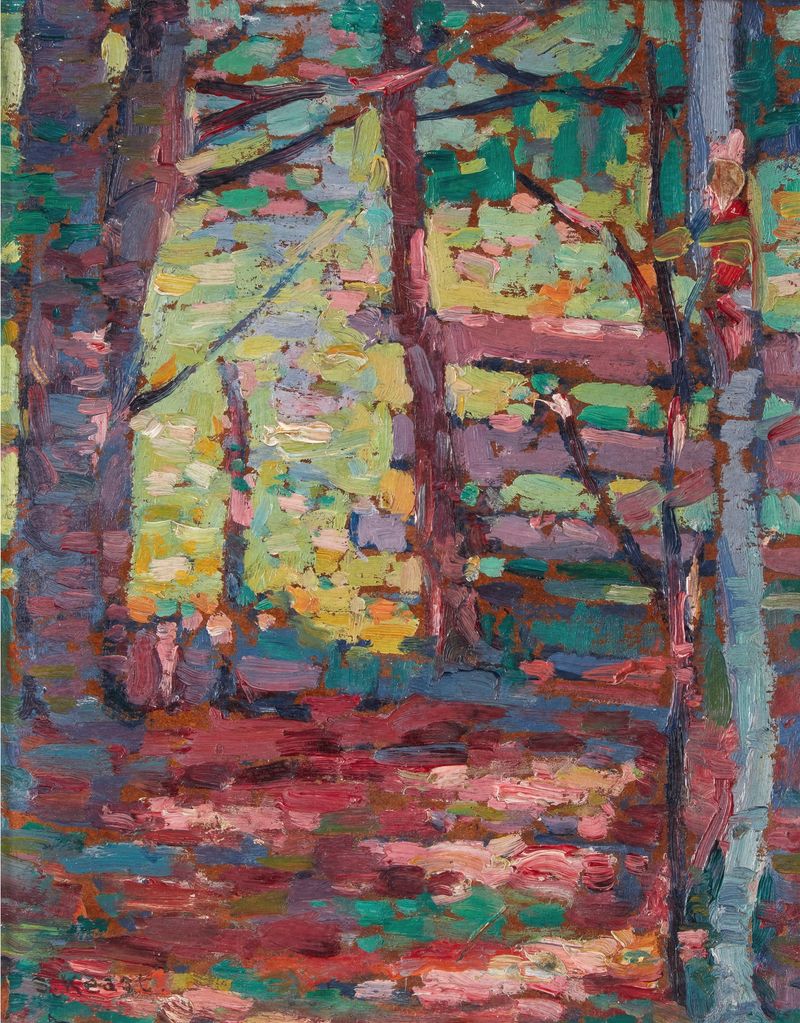
In the quiet corners of our minds lie obsessions that shape our realities, much like the scenes captured in vibrant strokes. Look closely at the center of the canvas, where a quaint house emerges, cradled by lush trees and their vivid greens. The delicate interplay of light and shadow wraps around the structure like a lingering memory, inviting the viewer to step into a world both familiar and elusive. Notice how the soft blues of the sky blend seamlessly with the earthy tones of the landscape, creating a tranquil yet vibrant atmosphere that speaks to the essence of rural life. At first glance, the house might seem a mere subject, but it represents deeper themes of nostalgia and permanence amidst change.
The subtle tension between the organic shapes of nature and the rigid geometry of the building evokes an introspective dialogue about obsession — our longing to hold on to places that anchor us in time, even when they inevitably shift or fade. The artist’s brush captures not just a scene, but an emotional tug-of-war between memory and reality. In 1918, Schultz Keast was entrenched in the artistic movements of the time, creating this piece amid the backdrop of post-World War I America. Living in Pennsylvania, she sought solace in the landscapes around her, reflecting a growing trend among artists to explore regionalism and the comforts of home.
As the world grappled with change, her art became a vessel for preserving the intimate connections to place and memory that define us.