In the Woods — History & Facts
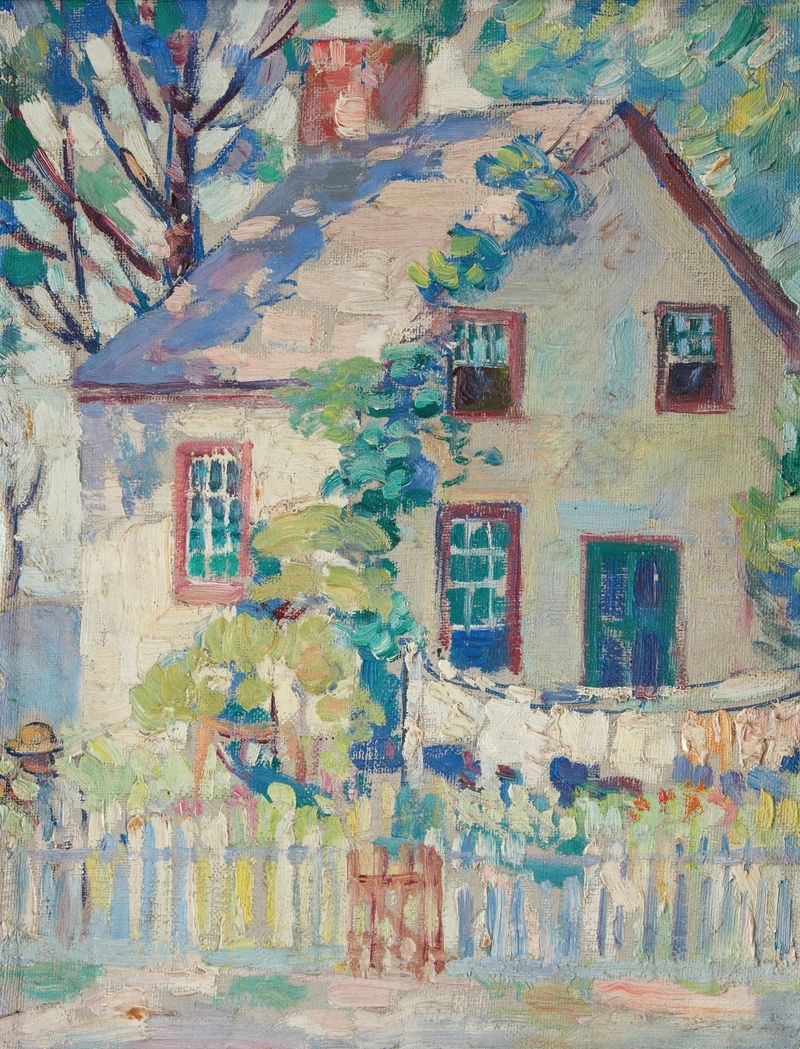
Could beauty survive in a century of chaos? The question lingers as we behold the delicate interplay of light and shadow in this enchanting work. Time weaves itself through the vibrant hues, drawing us into a realm where nature persists, resilient against external storms. Look to the left at the intertwined branches, their gnarled limbs arching gracefully to form a protective canopy. Notice how the dappled sunlight filters through the leaves, casting intricate patterns on the forest floor—each stroke of green an invitation to explore deeper into the foliage.
The artist's meticulous brushwork captures the lushness of the undergrowth, while the palette of earthy tones and emerald greens evokes a sense of tranquility, hinting at the serenity that nature offers amidst turmoil. Amidst the tranquil beauty lies an underlying tension. The dense thicket creates a feeling of both safety and isolation, reflecting the duality of human experience in tumultuous times. The contrast between the vibrant life of the woods and the historical backdrop of war whispers of a longing for peace—a sanctuary where time stands still.
The stillness embodies a moment of reflection, inviting viewers to find solace within the complexity of existence. Painted between 1916 and 1917, this piece emerged in a world ravaged by the Great War, a tumult that shaped the lives of many artists. Inloes Schultz Keast, a trailblazer in her own right, was influenced by the shifting currents of the art world, as Impressionism was giving way to modernist expressions. The embrace of nature found in this work speaks not only to her personal journey but also serves as a testament to the enduring power of beauty amid chaos.