Houses on a Beach — History & Facts
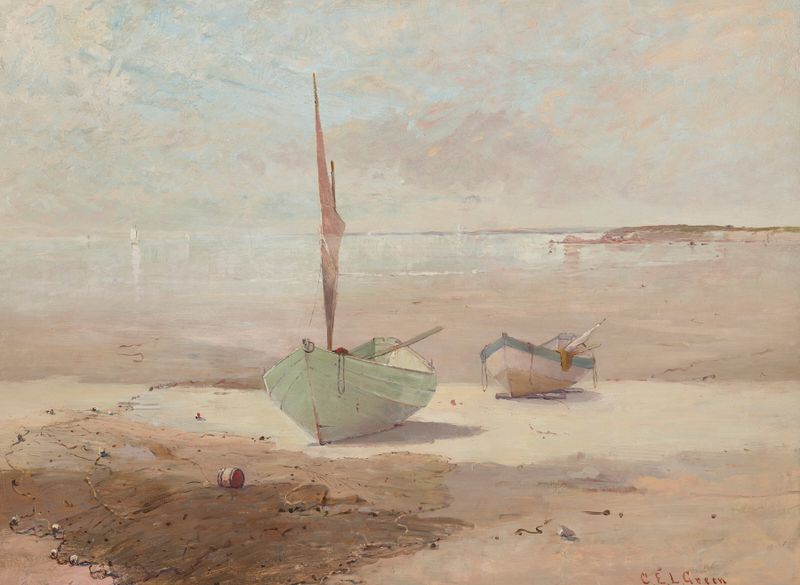
In the gentle expanse of a landscape, silence holds a profound weight, revealing the void beneath the vibrancy of life. The emptiness speaks, whispering the stories of those who inhabit it and the echoes of time that linger in the air. Focus first on the horizon where the light seems to dance upon the water, casting a shimmering path toward the distant shore. The pastel palette of soft blues, warm yellows, and subtle whites invites you to explore the tranquil seascape.
Notice how the houses, with their muted colors, nestle into the sandy beach, almost blending with the environment, suggesting a harmony between human presence and the natural world. The brushwork conveys both detail and abstraction, creating a dialogue between solidity and the fleeting nature of memory. Emotional tension arises in the contrast between the serene landscape and the hint of solitude. Each house stands as a silent witness to untold stories—perhaps familial laughter or quiet contemplation.
The space around them emphasizes a sense of isolation, a reminder that even in beauty, there exists a void that connects us all. The flowing water mirrors this contrast, suggesting movement and change yet offering the stillness of the moment. Created around 1895, the artist painted this piece during a time of transition in the art world, where Impressionism was gaining traction. Living in England, he was influenced by the evolving perspectives on light and color, further enriched by the coastal landscape that would inspire many artists.
This work reflects his engagement with both the natural environment and the emotional landscapes it evokes, capturing a poignant moment in the development of modern art.