Landscape — History & Facts
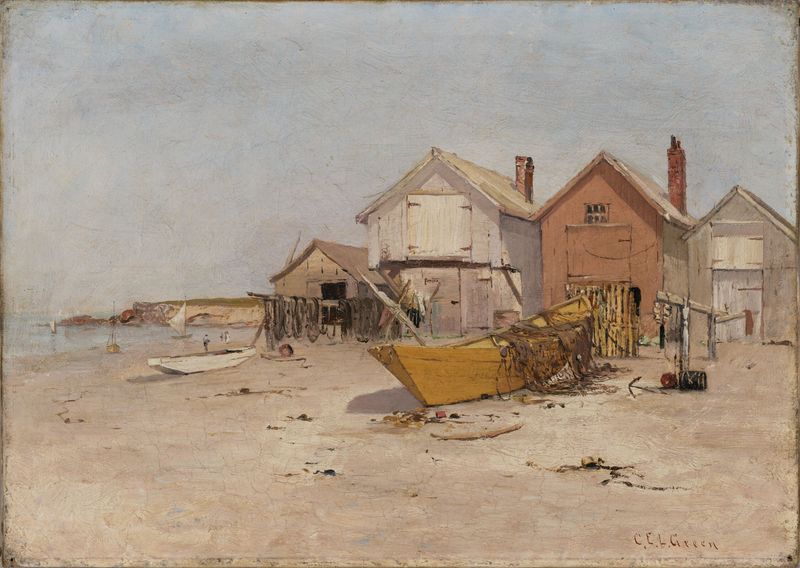
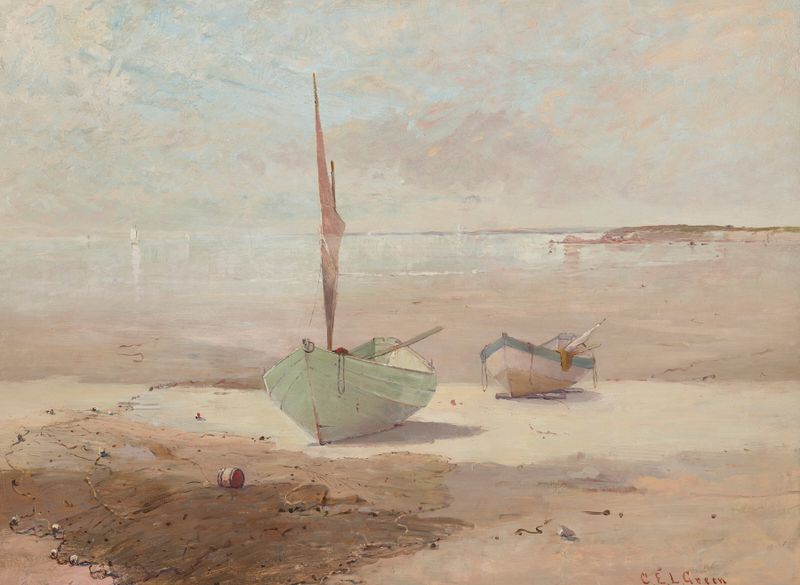
In Landscape, the somber essence of grief cloaks the serene beauty of nature, revealing layers of emotion beneath the surface of the canvas. Look to the left at the brooding clouds, their dark hues swirling with muted greens and browns, evoking a sense of heavy introspection. Notice how the artist employs gentle, sweeping strokes to guide the eye toward the horizon, where light struggles to break through, offering a glimmer of hope amidst the heaviness. The composition is carefully balanced, with a solitary figure standing sentinel at the edge of a quiet meadow, inviting the viewer to share in a moment of solitude. Delve deeper into the work’s emotional landscape, where contrasts abound.
The vibrant foliage, lush yet tinged with decay, symbolizes the bittersweet nature of memories, suggesting that joy and sorrow coexist. The figure’s posture, slightly hunched, hints at a weight carried—perhaps the loss of a loved one—intensifying the silence that permeates the scene. Green masterfully captures the tension between life and loss, crafting a narrative in which nature reflects the inner turmoil of the human experience. Painted around 1885, this work emerged during a period when the artist was exploring the themes of melancholy and the passage of time.
Living in the United Kingdom, Green was surrounded by a growing fascination with impressionism, leading him to blend traditional techniques with a fresh emotional depth. As he navigated personal struggles, Landscape stands as a poignant testament to the interplay of beauty and grief in the natural world.