Housetops and Mountains — History & Facts
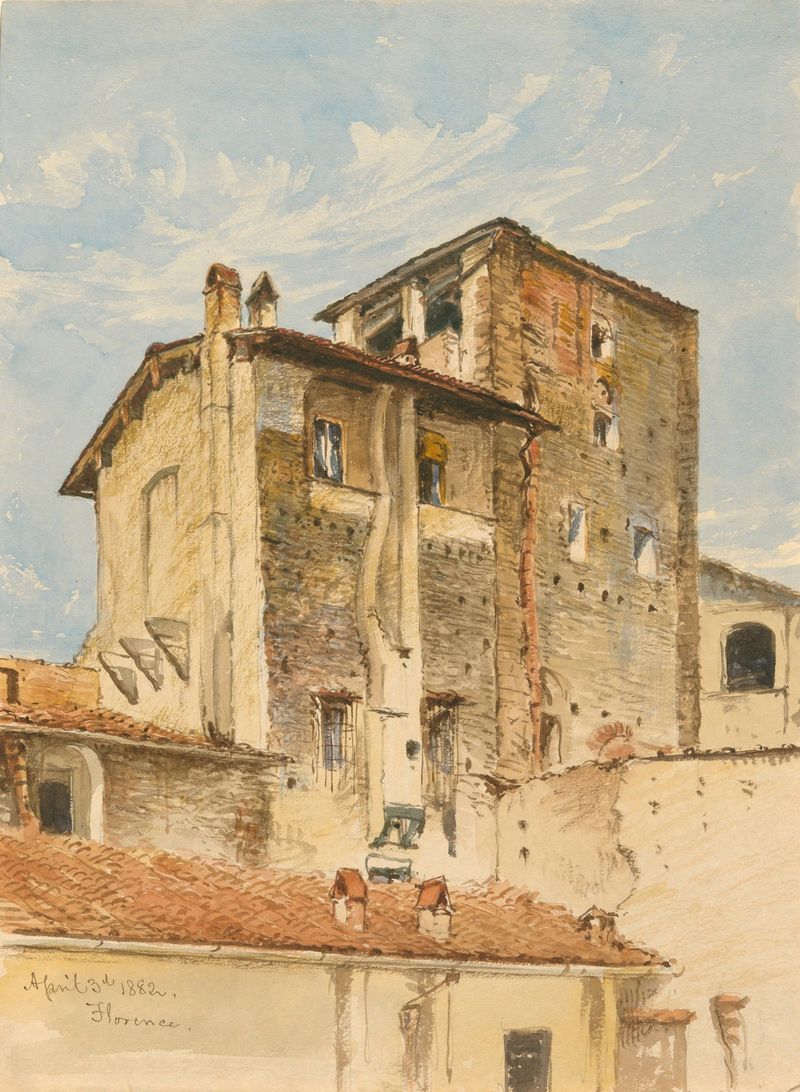
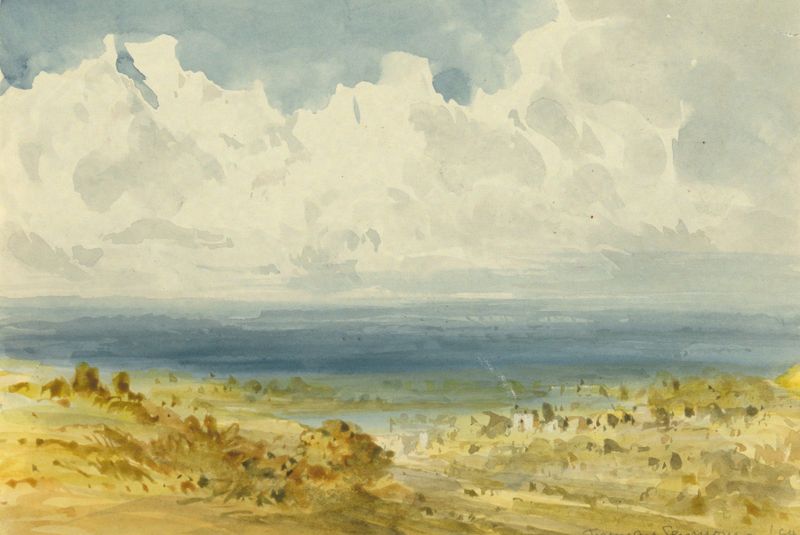
What if silence could speak through light? In Truman Seymour’s Housetops and Mountains, that silence resonates with a palpable tension, as if the world is holding its breath, caught between the familiarity of home and the vastness beyond. Look to the lower left, where quaint rooftops cradle the fading warmth of day, their earthy tones contrasting sharply with the ethereal blues and whites of the mountains looming in the background. Notice how the light spills across the scene, softly illuminating the rooftops while leaving the shadows of uncertainty in the valley below. The interplay of color—rich ochres against the cool azure—evokes a delicate balance between comfort and unease, inviting the viewer to wander into the painting’s depths. As you delve deeper, consider the juxtaposition of domesticity and nature.
The rooftops symbolize human refuge, yet the distant, imposing mountains represent both the beauty and fear of the unknown. This dichotomy speaks to the tension of existence, where safety can feel simultaneously suffocating and ephemeral. The artist captures not only a landscape but also the emotional landscape of fear—a fear of isolation, of what lies beyond the known. Truman Seymour painted Housetops and Mountains in 1884, a time when he was establishing his voice in the American art scene.
Living in the midst of a rapidly changing nation, Seymour sought to connect with the viewer’s emotional response to the natural world, reflecting both the tranquility and trepidation that accompanied the expansion into the American frontier. The work demonstrates his keen awareness of the interplay between humanity and nature, encapsulating the essence of his era.