
Houten gevel Groenplaatsstraat — History & Facts
When did color learn to lie? In Houten gevel Groenplaatsstraat, the vibrant hues of blue and ochre whisper secrets of time, each shade revealing layers of human experience and the passage of legacy. Look to the center, where the wooden facade stands proudly against the backdrop of muted streets. Notice how the sunlight dapples the surface, illuminating the intricate details of the texture. The interplay of light and shadow creates depth, inviting the viewer to explore not just the image but the stories within its walls.
This meticulous attention to the wooden grain and the contrasting colors offers a moment of pause, inviting reflection on both the craftsmanship of the structure and the artistry of the painter. Yet, beyond the charming surface lies a poignant contrast; the warmth of the colors hints at a once-vibrant life, now silently bearing the weight of history. The facade is an emblem of decay and resilience, telling tales of countless passersby who have brushed against its weathered surface. This duality captures a fleeting moment in time, as the interplay between the home’s sturdy presence and its inevitable decline speaks to the impermanence of all things. In 1840, Jozef Dyckmans created this work during a period of increasing interest in realism and everyday life in the Netherlands.
Living in Antwerp, he was part of a movement that sought to depict ordinary scenes with heartfelt authenticity. This artwork reflects not only his personal style but also the broader artistic trends of his time, emphasizing the beauty of the mundane and the stories embedded within the walls of a simple street facade.
More Artworks by Jozef Dyckmans
Browse all →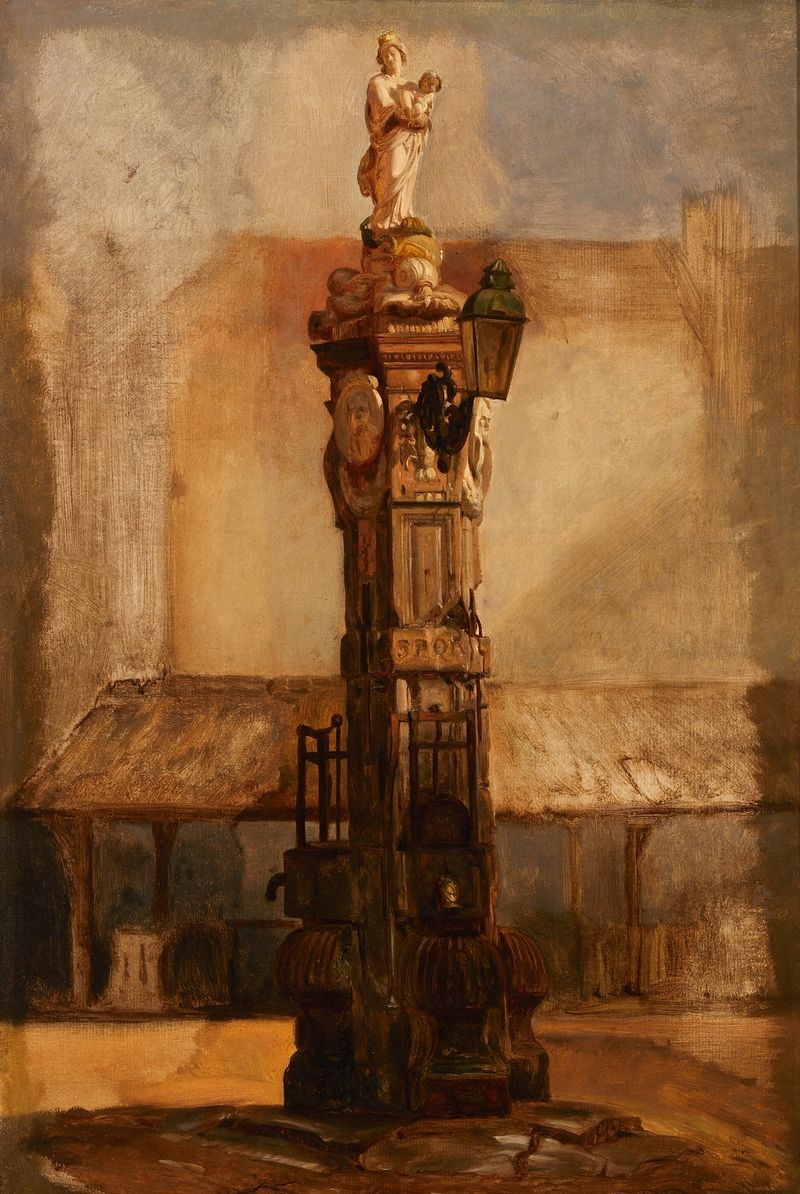
More Architecture Art
Browse all →
The statue of Liberty
Frédéric Auguste Bartholdi

View of Houses in Delft, Known as ‘The Little Street’
Johannes Vermeer

View of Houses in Delft, Known as ‘The Little Street’
Johannes Vermeer

The Cathedral in Rouen. The portal, Grey Weather
Claude Monet

The yellow house
Vincent van Gogh

The Church in Auvers-sur-Oise, View from the Chevet
Vincent van Gogh