Idylle — History & Facts
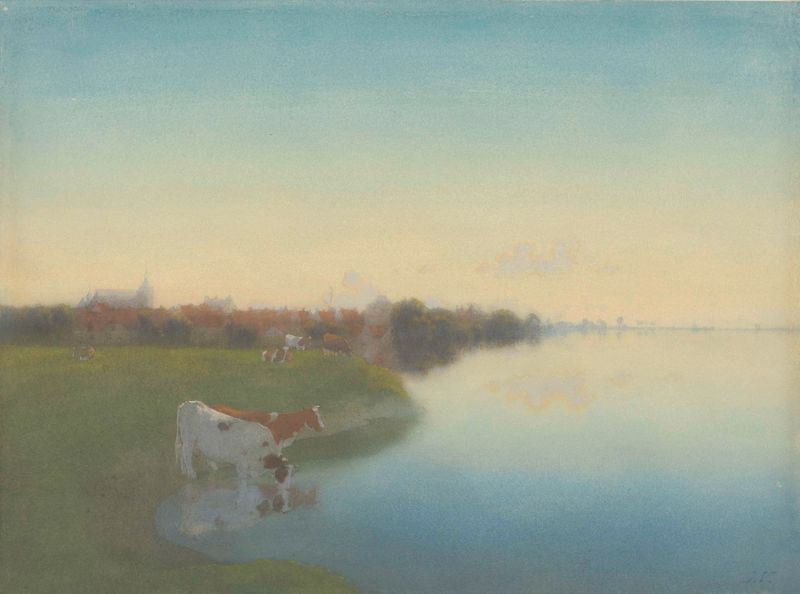
Can beauty exist without sorrow? In Idylle, the essence of divinity dances delicately on the canvas, intertwining the joyous with the melancholy. Look to the serene landscape, where gentle hills cradle a tranquil waterway. The soft hues of greens and blues draw your gaze, inviting you to wander deeper into the scene. Notice how light filters through the trees, casting dappled shadows that play upon the surface of the water, hinting at both clarity and mystery.
This juxtaposition of shadow and brilliance captures a moment suspended in time, one that reflects an idyllic yet complex existence. Delve into the details—the faint ripples in the water whisper stories of unspoken emotions. The figures, seemingly at peace in their surroundings, evoke a sense of longing despite their apparent harmony. This tension reveals that beauty is often laced with a profound sense of desire or loss, hinting at the fragility of happiness.
Each element, from the sweeping horizon to the intimate gestures of those within the landscape, speaks to a universal truth: that divinity can often be found in the balance of joy and sorrow. Jan Voerman painted Idylle during a period of artistic exploration in the Netherlands, where the late 19th and early 20th centuries were marked by shifts in artistic movements. As he developed his signature style, he captured the essence of nature and human connection, reflecting both a personal and broader societal quest for beauty amidst changing times.