Idyllische Flusslandschaft — History & Facts
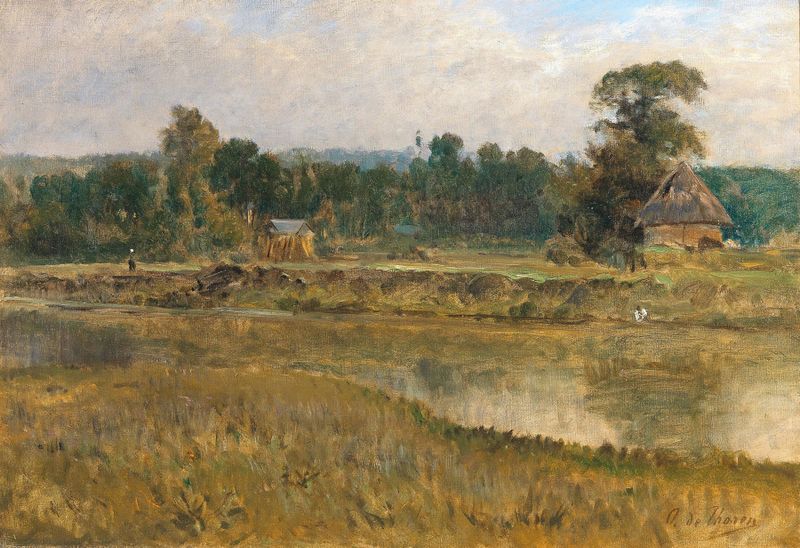
Could beauty survive in a century of chaos? This question lingers like a whisper as one gazes upon the serene landscape that unfolds in the artwork's depths. Look to the left at the gentle curve of the river, its surface glistening under a soft, golden light. Notice how the foliage dances delicately along the banks, each brushstroke evoking a sense of lushness and tranquility. The palette is infused with earthy greens and warm ochres, creating a harmonious balance that draws the viewer's eye deeper into this idyllic scene.
The composition invites you to wander along the water's edge, where the horizon melts seamlessly into a dreamy sky. Yet, beneath this serene exterior lies a tug of tension—the contrast between the peaceful landscape and the chaotic world outside its borders. The stillness of the water suggests a moment frozen in time, yet the vibrant colors hint at a longing for connection to nature, a refuge from the encroaching modernity of the era. The scene encapsulates nostalgia, a yearning for simpler days, while simultaneously addressing the transience of beauty in a rapidly changing world. Otto von Thoren painted this piece during a time when the industrial revolution was reshaping the landscape of Europe.
Working in the mid-19th century, he was influenced by Romantic ideals that celebrated nature and the sublime. Amidst the tumult of societal change, he sought to capture moments of solace and serenity, grounding his art in the timelessness of nature’s beauty as a counterpoint to human strife.