Eine Flusslandschaft — History & Facts
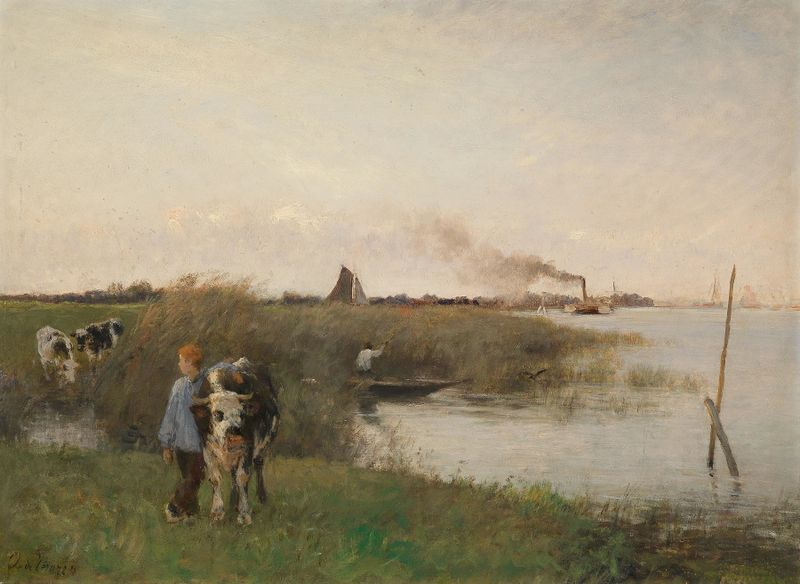
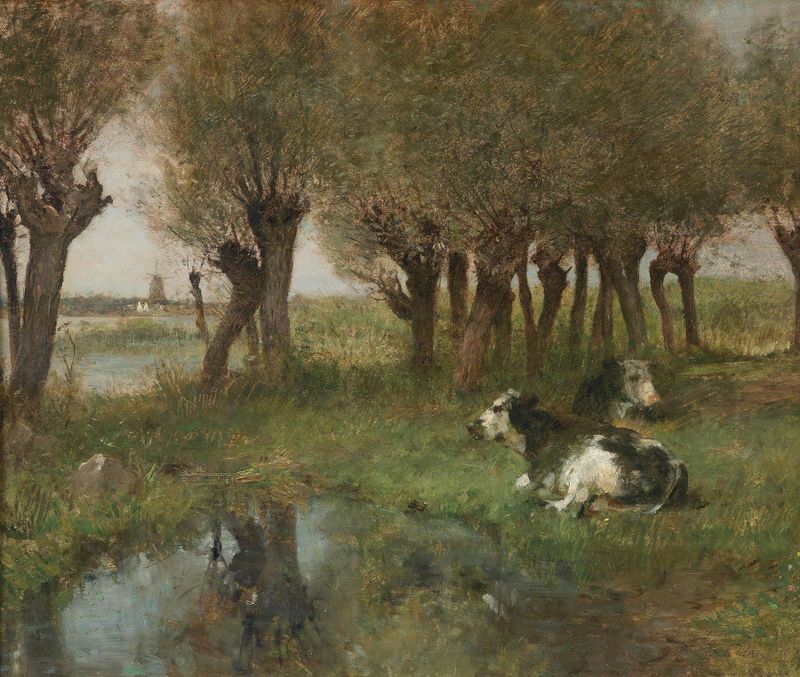
Where does light end, and longing begin? In the stillness of Eine Flusslandschaft, silence becomes a tangible presence, wrapping the viewer in an embrace of serene contemplation. Gaze first at the tranquil river that weaves through the composition, its surface glinting with soft touches of light, inviting you to trace its path. Look to the left, where a cluster of trees stands like silent sentinels, their muted greens and browns harmonizing with the gentle blues of the sky. The brushstrokes are delicate, evoking a sense of calm and stillness, while the horizon remains unobtrusively distant, allowing the landscape to breathe and the viewer to linger. Yet, amidst this tranquility, a deeper narrative unfolds.
The interplay of light and shadow suggests an underlying tension, as if the scene holds secrets not immediately visible. The subtle variations in color reflect the fleeting nature of time itself, while the sparse presence of human elements evokes a profound sense of solitude, hinting at unspoken stories and reflections that echo within the landscape. Otto von Thoren painted this work during a period when many artists were exploring the nuances of nature and emotion through landscape painting. Though the exact date remains uncertain, his works reflect the quiet introspection that characterized the late 19th century, a moment when the realm of art began to shift towards capturing the essence of feeling and place, resonating with the Romantic ideals of the time.