Ier Vue de Rome — History & Facts
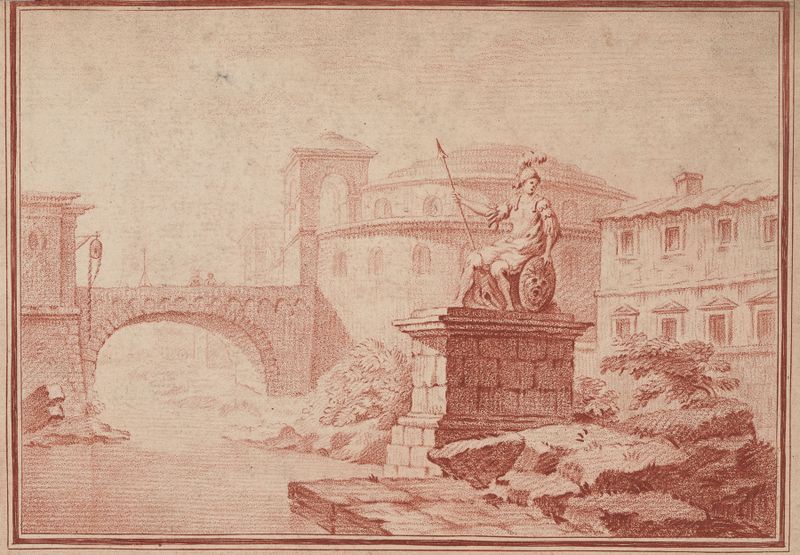
What if silence could speak through light? In that stillness, a city unfolds, revealing layers of grandeur and chaos, a landscape where madness dances just below the surface. Look closely at the sprawling panorama before you. Notice how the gentle curves of the Tiber River meander through the canvas, creating a natural path for the eye. The soft hues of dawn bathe the ancient ruins in a golden glow, while shadowy corners hint at secrets long buried.
Each building stands as a testament to history, the architecture speaking volumes through its form—some crumbling, others proud, yet all equally alive. Peering deeper, one can sense the underlying tensions of urban life captured in exquisite detail. The juxtaposition of serene landscapes against the bustling life of Rome creates a vivid contrast. The vibrant rooftops clash with the still waters, and the figures within the scene, rendered in delicate strokes, share a silent dialogue with their surroundings, embodying both hope and despair.
This interaction unveils the madness of existence in a city that is both a cradle of civilization and a cauldron of turmoil. At the time when this work was created, the artist found himself navigating the complexities of late 18th-century Europe, a period marked by political upheaval and artistic evolution. Janinet painted Ier Vue de Rome in Paris while drawing from the influences of neoclassicism and romanticism, capturing not just a view of the city but a moment in the tumultuous journey of art itself.