
Ier Vue de Rome — History & Facts
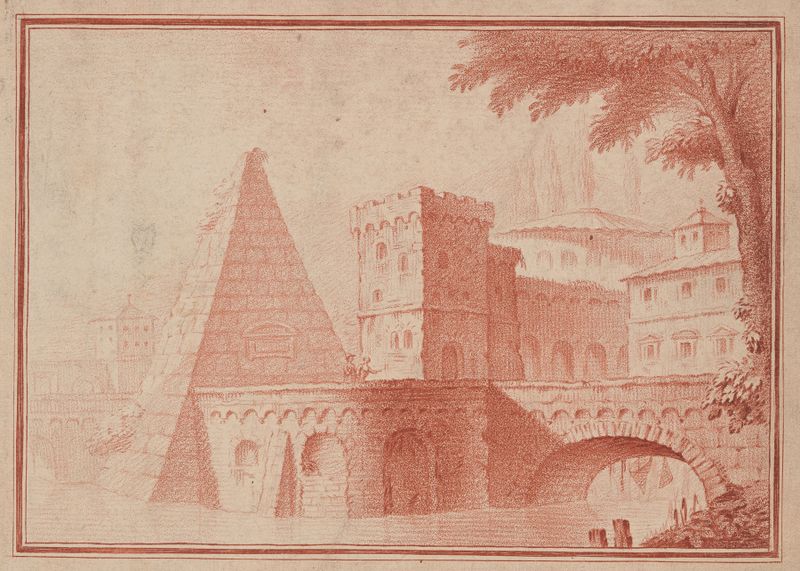
In the delicate bridges between reality and imagination, the fragility of existence reveals itself. Look closely at the intricate lines that compose the architectural marvels in Ier Vue de Rome. The sweeping curves of the ancient structures draw the eye, while the subtle use of light breathes life into the stone. Notice how the sky, a canvas of soft pastels, gently cradles the silhouettes of historic edifices, suggesting an ethereal quality that blurs the line between the past and present.
Each stroke seems to whisper secrets from centuries ago, rendering the scene as much a meditation on time as a celebration of place. Beneath the surface, an emotional tension simmers, reflecting not just beauty but also a sense of loss. The hazy atmosphere evokes a fleeting moment, a reminder that even the grandest cities are ephemeral. The juxtaposition of the opulent architecture against the fading light hints at both glory and decay, suggesting that every magnificent structure carries the weight of its history.
This duality speaks to the viewer’s heart, intertwining nostalgia with a yearning for permanence in an impermanent world. In the late 18th century, while residing in France, Janinet created this view, a moment of artistic blossoming amidst the neoclassical movement. His work encapsulates the fascination with antiquity and the Romantic spirit that was sweeping through Europe at that time, as artists sought to explore the emotional depths of landscapes and urban life. This piece stands as a testament to Janinet's keen eye and profound sensitivity to the stories held within stone and sky.
More Artworks by Jean-François Janinet
Browse all →
More Architecture Art
Browse all →
The statue of Liberty
Frédéric Auguste Bartholdi

View of Houses in Delft, Known as ‘The Little Street’
Johannes Vermeer

View of Houses in Delft, Known as ‘The Little Street’
Johannes Vermeer

The Cathedral in Rouen. The portal, Grey Weather
Claude Monet

The yellow house
Vincent van Gogh

The Church in Auvers-sur-Oise, View from the Chevet
Vincent van Gogh