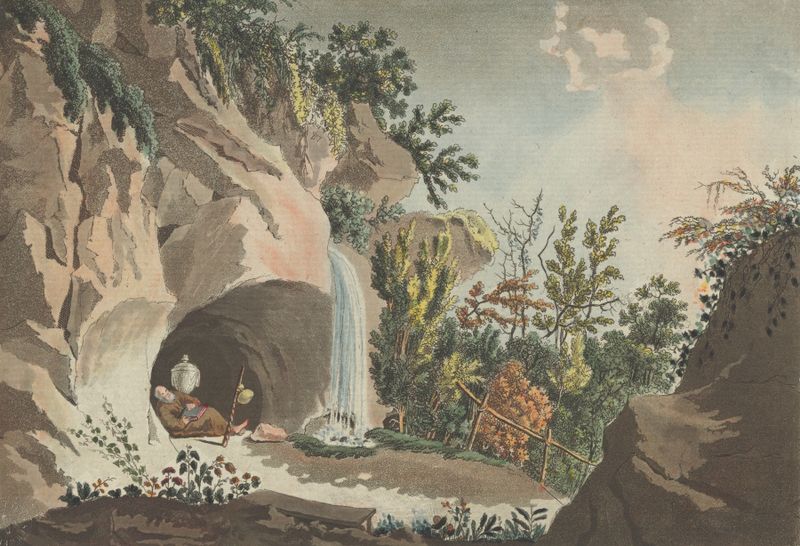
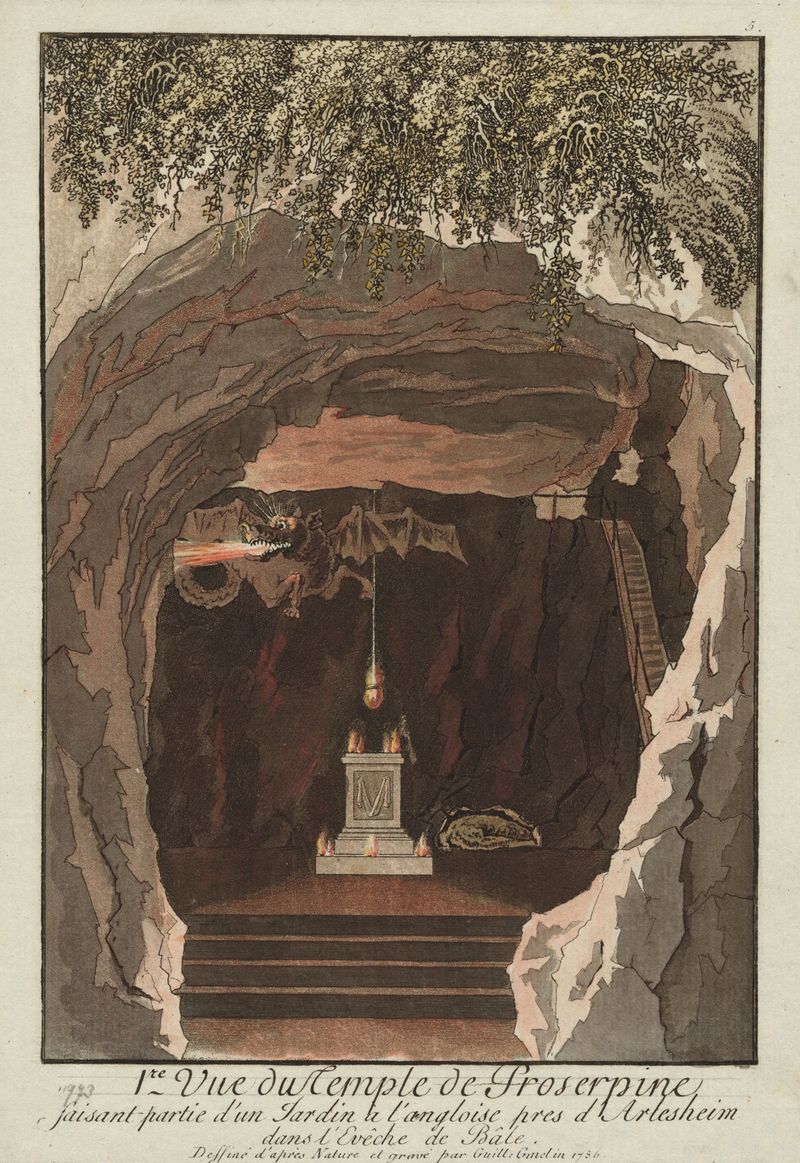
IIe Vue du temple de Proserpine faisant partie d’un Jardin à l’angloise près d’Arlesheim dans l’Evêché de Bâle — History & Facts
Could beauty survive in a century of chaos? In a world overshadowed by turmoil, the delicate interplay of light and shadow reveals the resilience of nature and art. Look to the center of the canvas where the temple of Proserpine rises, its classical form poised against the vibrant backdrop of lush greenery. The artist employs a harmonious palette of greens and earth tones, interspersed with bursts of color from blooming flowers that seem to reach toward the sky. Notice how the dappled sunlight filters through the foliage, casting intricate shadows that dance across the scene, breathing life into an otherwise still moment. These shadows, far from mere absence of light, embody a deeper narrative, hinting at the contrasts of permanence and ephemerality.
The temple represents a steadfast connection to history and culture, while the lively garden surrounding it symbolizes the transient nature of life. Each brushstroke captures an intimate relationship with the land, suggesting that even in the face of decline, beauty can flourish and offer solace. Wilhelm Friedrich Gmelin created this work during a time when Romanticism was gaining traction across Europe, reflecting a growing fascination with nature and the sublime. Although the specific date remains unknown, Gmelin was active in the late 18th to early 19th centuries, a period marked by revolutionary changes in both society and art.
The serene representation of a garden, intertwined with classical architecture, encapsulates the longing for harmony that characterized this tumultuous era in European history.