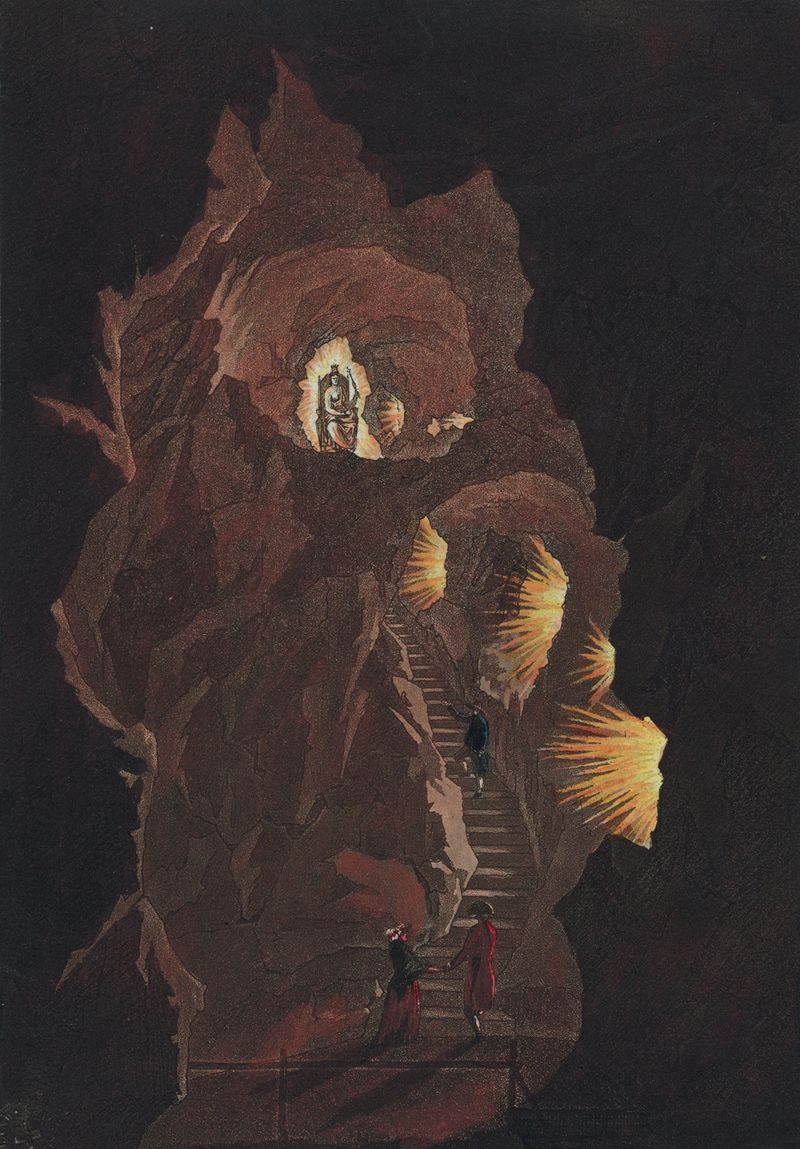
Ire Vue du Temple de Proserpine faisant partie d’un Jardin à l’angloise pres d’Arlesheim dans l’Evêche de Bâle — History & Facts
Can beauty exist without sorrow? In the quiet embrace of a garden, life unfolds in a delicate balance, where serenity and melancholy intertwine like the gentle rustle of leaves. Focus on the lush greenery that envelops the scene. The soft hues of verdant grass intermingle with the intricate blossoms, inviting the eye to explore the meticulous arrangement of nature. Notice how the light bathes the temple of Proserpine in a warm glow, casting harmonious shadows that bring depth to the composition.
Each brushstroke speaks to the artist's intention to capture a moment of tranquility, framed by the elegance of classical architecture nestled in this idyllic setting. Delve deeper into the contrasts presented in the work. The temple, a symbol of the divine, stands resolute amidst the ephemeral beauty of the garden, reminding viewers of life's transience. The juxtaposition of natural splendor against human craftsmanship evokes a sense of reverence for both nature and art.
Although serene, there lingers an undercurrent of nostalgia — a whisper of what is fleeting, suggesting that beauty often carries the weight of loss. Wilhelm Friedrich Gmelin created this piece amidst a period rich in the Romantic movement, where artists sought to evoke emotion through nature and architecture. Though the exact date remains unknown, it reflects the artist's exploration of beauty and its ties to the sublime. Living in Switzerland, Gmelin was influenced by the picturesque landscapes and the cultural currents of his time, which encouraged a deep appreciation for harmony in both nature and artistic expression.