Im Kankerthall in Krain — History & Facts
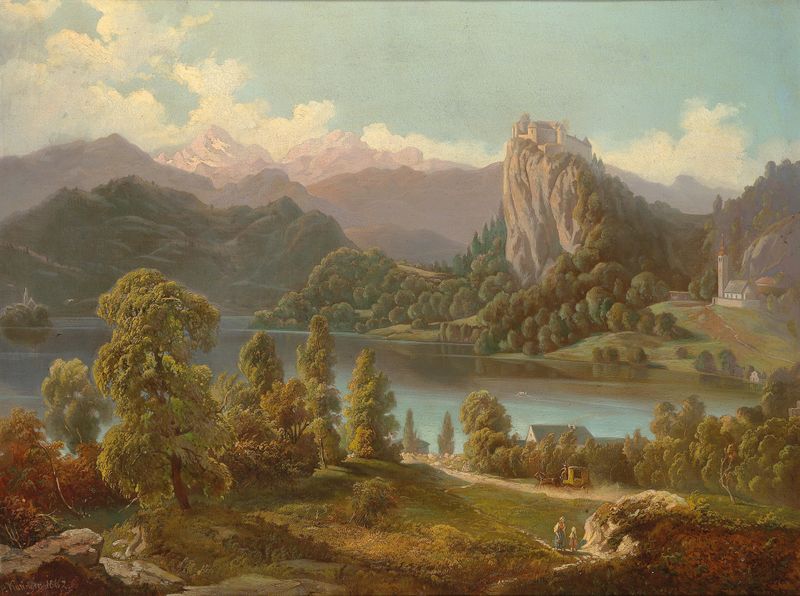
Can paint confess what words never could? In Im Kankerthall in Krain, Anton Karinger channels a silent yearning that resonates beneath the surface, whispering tales of longing and introspection through every brushstroke. Look to the center of the canvas, where the verdant landscape unfurls like a secret longing to be uncovered. The interplay of light and shadow creates depth, pulling you into the lush greenery bathed in soft, dappled sunlight. Notice how the delicate strokes of emerald and gold evoke a sense of tranquility, allowing the viewer to almost hear the gentle rustle of leaves stirred by a tender breeze.
Karinger's technique, with its rich textures and vibrant hues, invites you to linger, immersing yourself in this serene moment. As you explore further, hidden emotions emerge—each element of the composition breathes life into the ache for connection with nature and the self. The distant mountains, resolute and silent, may symbolize the barriers we face in reaching our desires, while the winding path that leads toward them signifies the journey of exploration and self-discovery. The contrast of the vibrant foreground against the muted backdrop reflects the tension between the known and the unknown, echoing the universal human experience of yearning for something just out of reach. Created in 1862, during a period when Karinger was deeply influenced by the Romantic movement, this painting emerged as he sought to convey emotional depth through natural landscapes.
At the time, the art world was transitioning toward impressionism, yet Karinger remained committed to depicting the sublime beauty of his homeland, Krain, offering viewers a glimpse into both the external world and the heart’s innermost yearnings.