Radetzky Villa And The Kamnik Alps In Krain — History & Facts
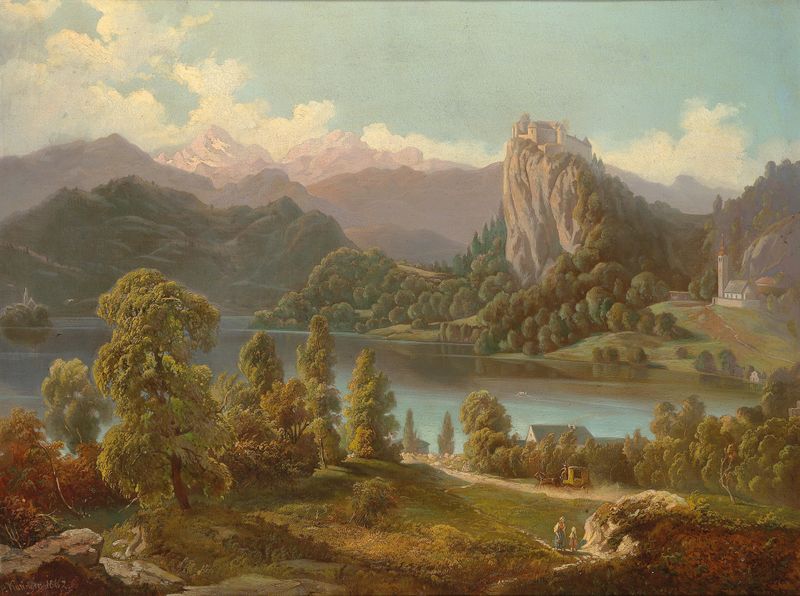
Who listens when art speaks of silence? In the stillness of Radetzky Villa And The Kamnik Alps In Krain, the landscape exudes a quiet vitality, inviting contemplation of movement both seen and felt. Look to the left at the elegant contours of the villa, its architecture harmonizing with nature’s contours. The gentle rise of the Kamnik Alps forms a majestic backdrop, their peaks rendered in cool blues and grays, contrasting with the warm, inviting tones of the villa. Notice how the sunlight delicately caresses the building's facade, creating a play of light and shadow that breathes life into the scene.
Each brushstroke captures the essence of the landscape, guiding the eye from the foreground to the distant mountains, while a soft breeze seems to whisper through the trees. As you delve deeper, consider the emotional tension between the solidity of the villa and the ethereal quality of the mountains. The villa, embodying human endeavor, stands firm against the backdrop of nature’s vastness, suggesting a fleeting moment in time. The juxtaposition of architectural stability and the impermanence of light and atmosphere invites a reflection on the passage of time and the cycles of nature.
Every detail, from the subtle variations in color to the distant peaks, conveys a sense of movement—the shifting light, the breeze, and the clouds that perpetually dance over the mountains. Anton Karinger painted this piece during a time of significant transformation in the art world, likely in the late 19th or early 20th century. The artist, influenced by the burgeoning movements in Romanticism, sought to combine natural beauty with architectural finesse. The transition from local settings to increasingly grand vistas marked his work, illustrating a personal and cultural journey amid the evolving landscape of European art.