Im Münchner Hofgarten — History & Facts
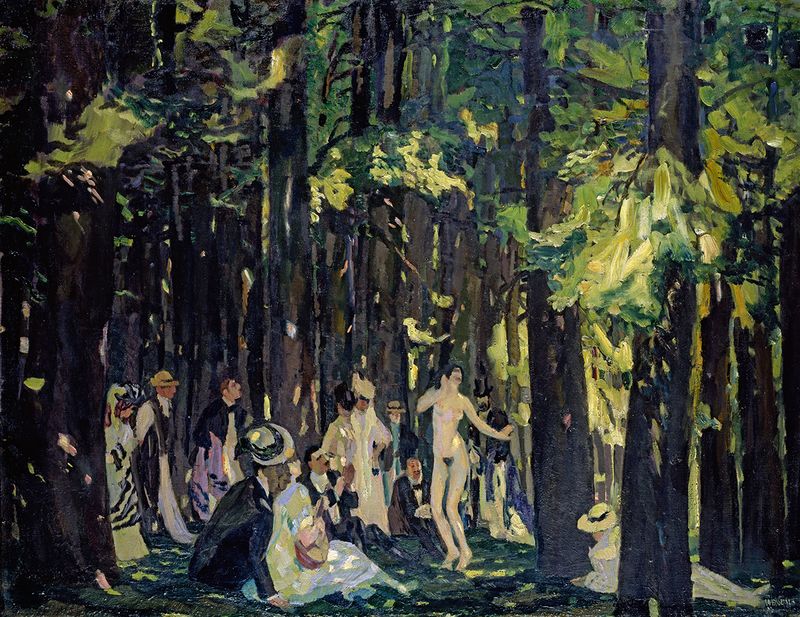
Beneath the surface of vibrant blooms and tranquil pathways lies a complex emotional landscape that invites introspection. Look to the center where the intricate interplay of light and shadow breathes life into the scene. The sun-dappled garden is awash in soft greens and warm earth tones, skillfully captured through Weisgerber's precise brushwork. Notice how the delicate petals of flowers, highlighted in vivid hues, draw the eye, while the surrounding foliage anchors the composition with a sense of calm.
The gentle curvature of pathways leads the viewer deeper into the sanctuary, inviting them to explore its serene beauty. Yet, beneath this idyllic façade, a sense of melancholy seeps through the vibrant colors. The contrast between the bright blossoms and the shadowy corners creates an emotional tension, suggesting that beauty can harbor sorrow. The figures scattered throughout the garden appear momentarily lost in thought, engaging with their surroundings yet distant in spirit, evoking a universal feeling of longing and reflection.
Each petal, each shadow tells a story of transience, hinting at the underlying fragility of life. In 1911, Weisgerber painted this piece while living in Munich, a time of artistic upheaval and experimentation. As the burgeoning modern art movement began to disrupt traditional aesthetics, the artist sought to capture the fleeting moments of beauty in a world that was rapidly changing. His work reflects both a personal quest for meaning and a broader commentary on the complexities of life, blending joy and melancholy within the confines of this garden.