Sommertag — History & Facts
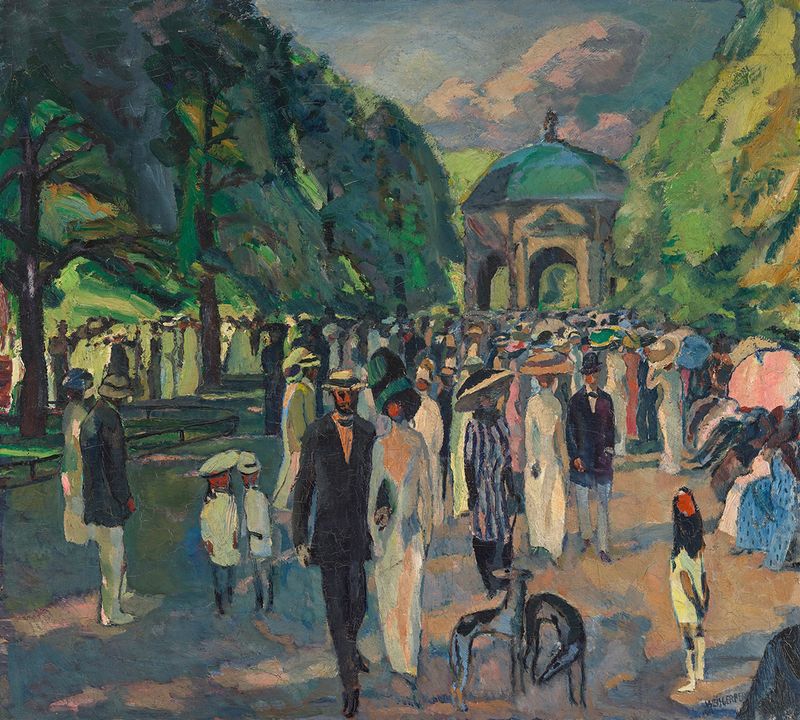
Did the painter know this moment would outlive them? As summer’s golden light bathes the scene, the layers of tranquility and undercurrents of violence intertwine in a delicate balance. Look to the left at the figure reclining in the lush grass, their posture relaxed yet strangely rigid, as if caught between peace and turmoil. Notice how the soft greens and blues of the landscape contrast starkly with vivid splashes of vibrant flowers, almost as though they’re grasping for attention in the serene backdrop. The use of light is masterful; it spills around the figures, illuminating their faces while casting elongated shadows that whisper of hidden tensions lurking just beneath the surface. As you delve deeper, observe the expressions of the subjects—smiles that seem joyous yet carry an unsettling edge, hinting at the discord that often accompanies leisure.
The juxtaposition of the idyllic setting with this subtle emotional tension raises questions about the nature of happiness and its fragility. Each brushstroke holds a story, a reminder that beauty can coexist with the chaos of the human experience. Created in 1907, this piece emerged at a time when Weisgerber was establishing his reputation in the Munich art scene, influenced by the vibrant colors and forms of Impressionism. The early 20th century was a period marked by rapid social change and impending conflict, mirroring the contrasts present in this work.
It reflects not only the artist's personal journey but also the broader turmoil of a world on the brink, capturing a fleeting moment infused with deeper shadows.