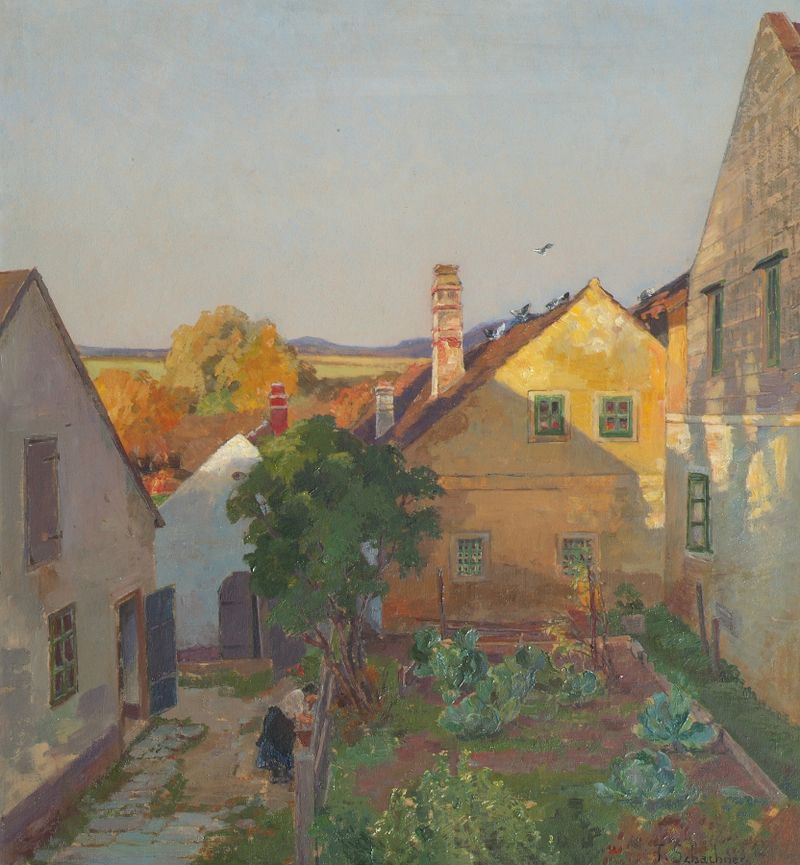
Im Spätherbst. Motiv aus Hadersdorf — History & Facts
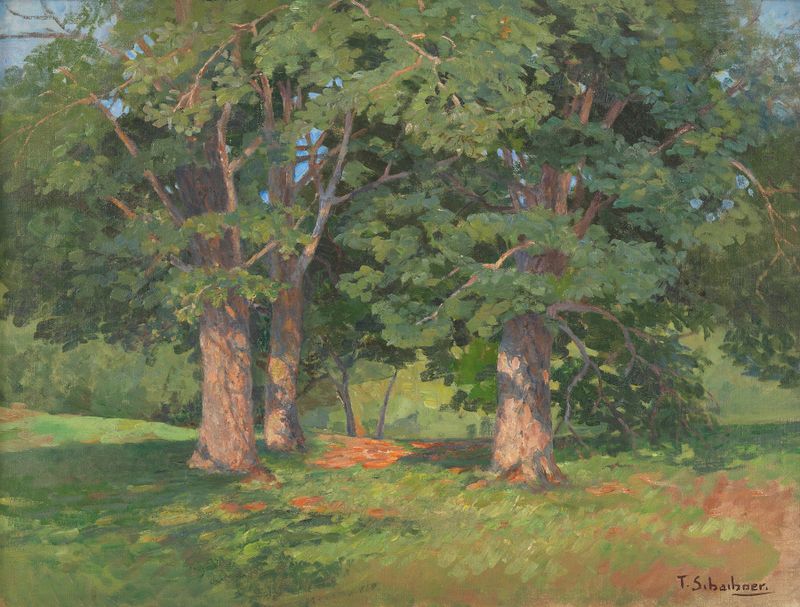
Did the painter know this moment would outlive them? In the soft embrace of fading autumn light, the essence of a fleeting scene is captured, holding eternity within its brushstrokes. Look to the center of the canvas, where delicate trees stand sentinel against a backdrop of warm golds and muted browns. Notice how the light filters through their branches, casting intricate shadows on the ground—a dance of illumination and obscurity. The composition guides your eye through layers of texture, blending the raw beauty of nature with the precision of technique.
Each leaf seems to whisper stories of the season, while the earthy palette creates a serene, contemplative atmosphere. As you gaze deeper, consider the contrast between the vibrancy of life and the inevitable quiet of decay. The painter’s careful attention to detail reveals a moment of transition—where the lushness of summer yields to the stillness of winter. The interplay of warm hues against the cooler tones of the earth evokes a sense of nostalgia and melancholy, hinting at the passage of time and the beauty found in impermanence. Therese Schachner created this work during a period when the art world was embracing the emotive power of nature.
Although the exact date remains unknown, her commitment to capturing the essence of a moment reflects the broader trends in late 19th to early 20th-century art, where artists sought to explore emotional depth through landscape and environment. During her life, the influence of Impressionism and the burgeoning appreciation for natural beauty transformed how art was perceived, echoing through the vibrant strokes of her brush.