Pötzleinsdorf — History & Facts
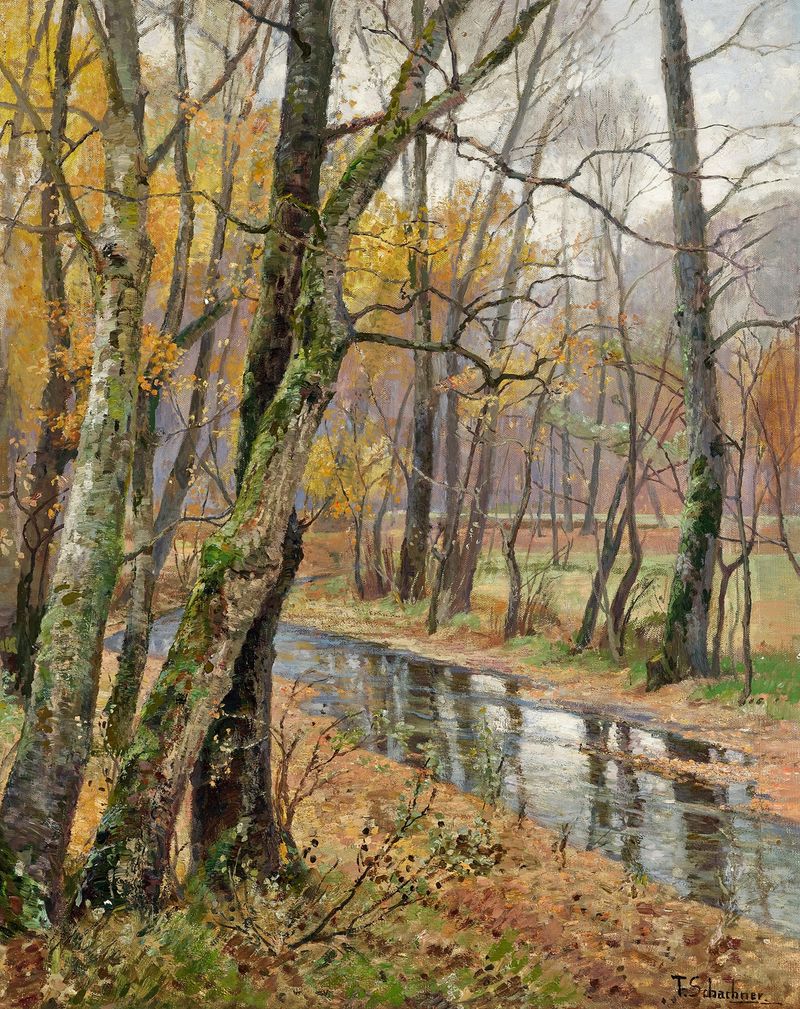
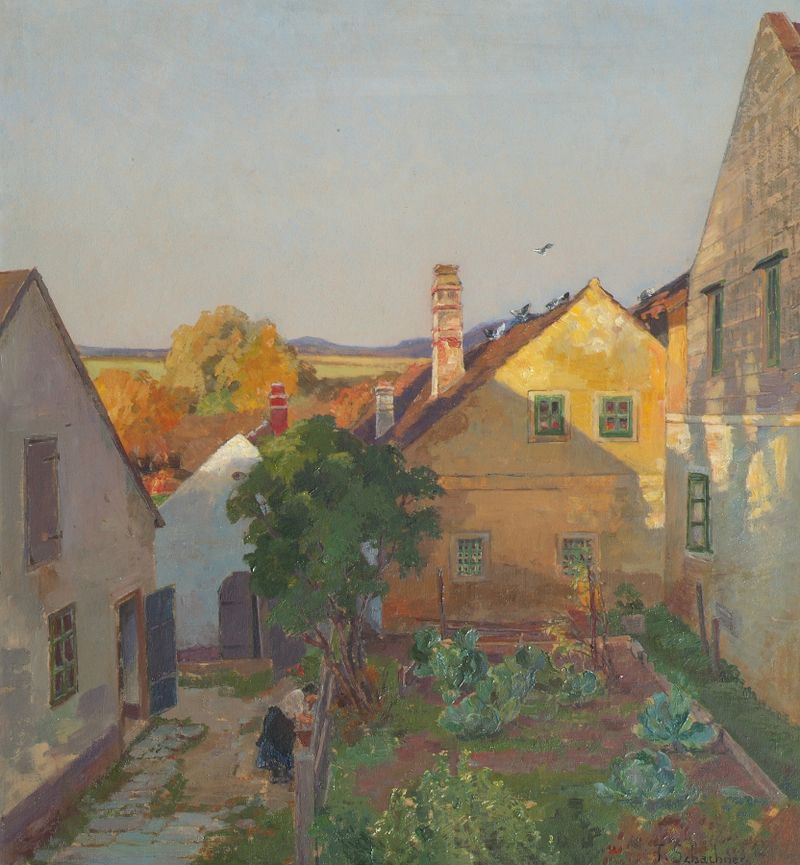
What if beauty was never meant to be finished? In Pötzleinsdorf, Therese Schachner invites us into a dreamlike landscape that exists on the brink of reality and imagination, where nature’s tranquility intertwines with the artist’s innermost thoughts. Look to the center of the canvas, where a shimmering lake reflects the soft hues of a fading sunset. The gentle waltz of colors—pinks, oranges, and deep blues—merges seamlessly, creating a serene atmosphere that pulls the viewer into its depths. Notice how the brushwork captures the fleeting moments of light, with soft strokes giving life to the rippling water and the delicate foliage surrounding the shore.
Each stroke seems to whisper secrets, inviting a sense of introspection. Yet, amid this serene beauty lies a tension between the idyllic and the ephemeral. The meticulously painted trees, grounded and resolute, stand in stark contrast to the ethereal quality of the water, suggesting a dichotomy between stability and impermanence. The figures in the foreground, though serene, appear to hover between existence and solitude, hinting at the quiet yearning inherent in human experience.
This balance of tranquility and introspection speaks to the fragility of dreams and the landscapes we construct in our minds. In 1930, Schachner created this piece in an era marked by profound social change and artistic exploration. Living in Vienna, she was influenced by the burgeoning movements of modernism and expressionism. As Europe grappled with the aftermath of the First World War, her work reflects both a yearning for solace and a deep engagement with the natural world, capturing the spirit of an age that sought beauty in the midst of uncertainty.