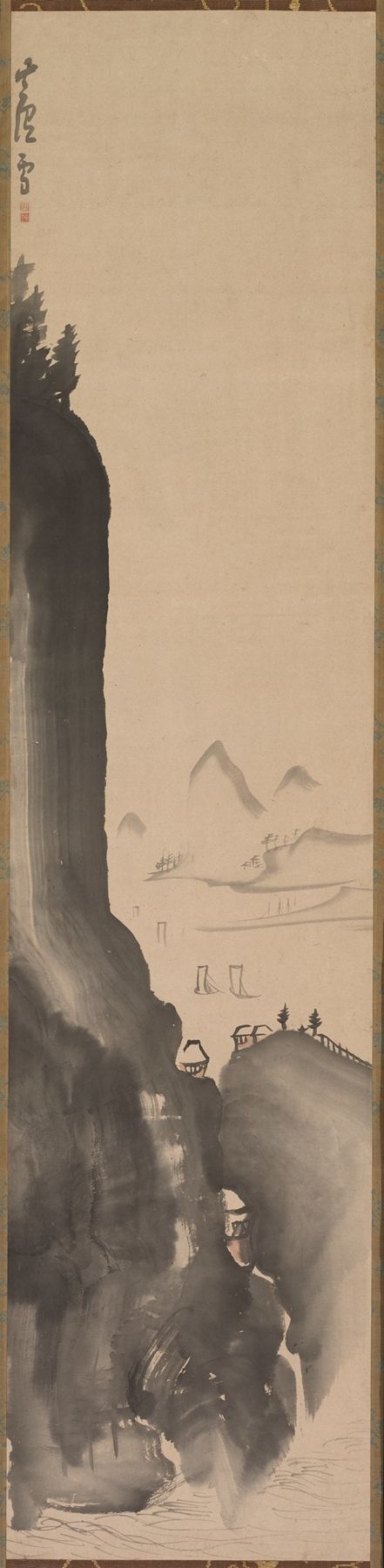
Image of Daikoku and the Artist's Seals — History & Facts
This reflection captures the delicate interplay of dreams and reality in the world of art. Through the lens of creativity, we glimpse the ethereal realms that beckon to our subconscious, embodying a bridge between the mundane and the mystical. Look closely at the vibrant colors swirling around the figure of Daikoku, the beloved deity of prosperity. Your gaze is immediately drawn to the intricate details of his attire, where rich reds and deep blues collide, exuding both power and serenity.
Notice the artist’s seals nestled at the corners, their presence grounding the fantastical scene, while their elegant strokes brim with assurance. The contrasting elements of movement within Daikoku's flowing robes and the stillness of the background create a sense of harmony, inviting the viewer to linger in this dreamscape. As you delve deeper, the composition reveals layers of meaning. The deity’s joyful expression juxtaposes against the solemnity of his role, suggesting that prosperity is intertwined with inner peace.
Each brushstroke resonates with the duality of existence—earthly desires and spiritual fulfillment—echoing the universal quest for balance. The artist’s choice of a celestial background further blurs the line between the earthly realm and the dreams that inspire them, inviting contemplation on what lies beyond the visible. Nagasawa Rosetsu created this masterwork in the late 18th century, a period marked by rich cultural exchange in Japan. During this time, the art world was experiencing a shift, with traditional Ukiyo-e gaining popularity alongside new styles.
Rosetsu, an influential figure within this movement, sought to capture the essence of folklore and the transient nature of life. His work reflects both personal exploration and the broader artistic innovations of his time, ultimately creating a legacy that resonates within the realms of dream and reality.