In der Schwemme — History & Facts
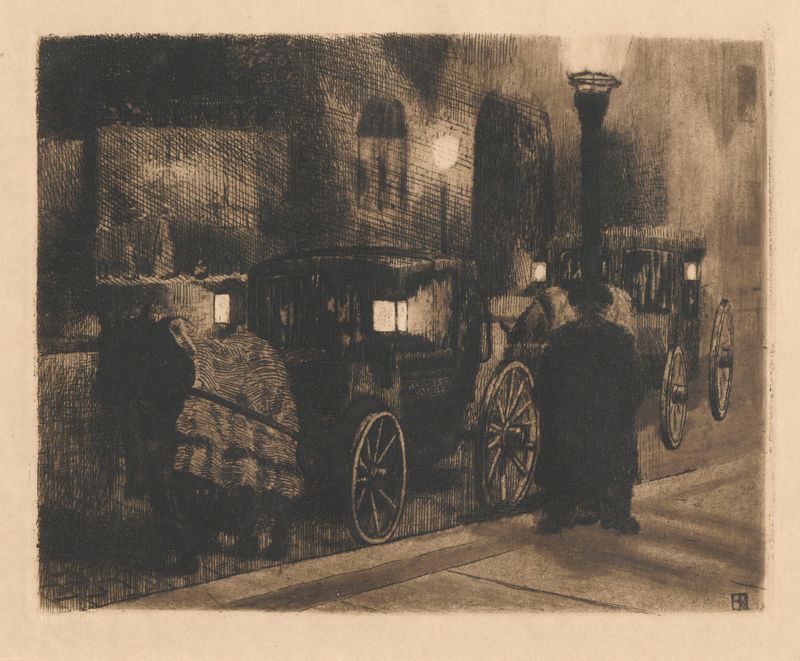
In In der Schwemme, a quiet yearning emerges, a longing that transcends the canvas and whispers directly to the heart. Look to the left where the gentle curves of the figures unfold under soft, diffused light, creating a serene connection. The muted palette, dominated by earthy greens and browns, evokes a sense of nostalgia, drawing the viewer deeper into the world Bud has created. Notice how the flowing water reflects the tender gestures of the subjects, intertwining their forms with nature, suggesting an intimacy that is both timeless and fleeting. Within this tranquil scene lies an exploration of solitude versus companionship.
The juxtaposition of the solitary figure leaning against the edge of the water, seemingly lost in thought, contrasts starkly with the dynamic movement of the more animated figures, hinting at the emotional tensions of connection and separation. The careful brushwork amplifies the yearning inherent in the composition, inviting a contemplation of the human experience – a delicate balance of longing for connection while grappling with the pangs of solitude. In 1901, Walter Bud created this work during a period marked by the rise of modernism, when artists began to diverge from traditional techniques to explore more expressive forms. Living in Germany, Bud was influenced by the sweeping changes in society and art, reflecting a desire to capture the essence of human emotion against an evolving backdrop.
This painting stands as a testament to that moment, revealing not only the artist's personal journey but also the broader narrative of an era in transition.