In Portsmouth Harbor — History & Facts
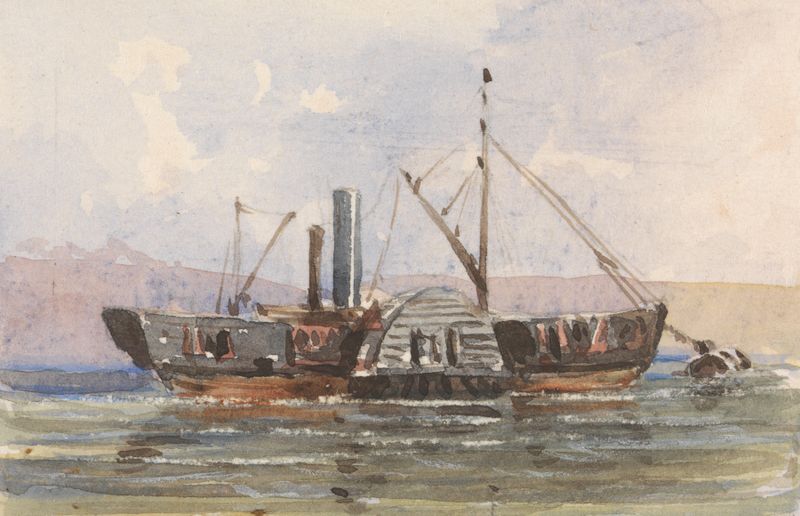
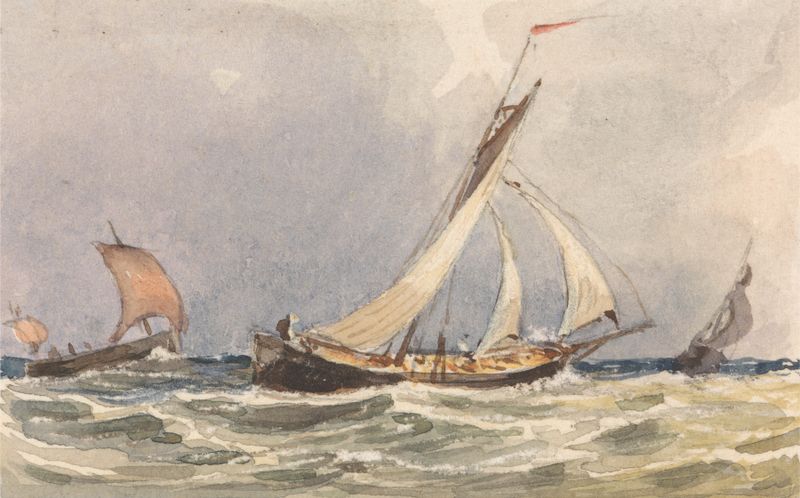
Who listens when art speaks of silence? In the stillness of In Portsmouth Harbor, a profound sense of loss lingers beneath the surface of the tranquil waters. Look to the left at the distant horizon, where gentle waves caress the shore, their ebb and flow contrasted by the solid, steadfast ships moored in the harbor. The muted blues and greens create a soothing palette, yet the darkening clouds overhead hint at an impending storm, suggesting an unease that belies the scene's beauty. Notice how the light falls upon the ships, illuminating their silhouettes while casting long shadows that stretch across the glittering water, merging reflection with reality. The composition evokes a delicate balance between solitude and the weight of absence.
Each vessel, deserted and anchored, symbolizes both safety and isolation, as if they await the return of those lost to the tides of time. The seemingly serene landscape echoes with unspoken stories of departure, evoking emotions tied to longing and reminiscence, inviting the viewer to reflect on what was and what remains unseen. During the creation of this piece, the artist found himself in a context of change and uncertainty. Working in the late 19th century, he was influenced by the shifting tides of artistic expression, embracing realism while grappling with the loss of traditional values in the face of modernity.
This period of transition mirrored personal struggles and societal upheavals, ultimately shaping his artistic vision as he sought to capture the essence of both place and memory.