
In the Alleghenies — History & Facts
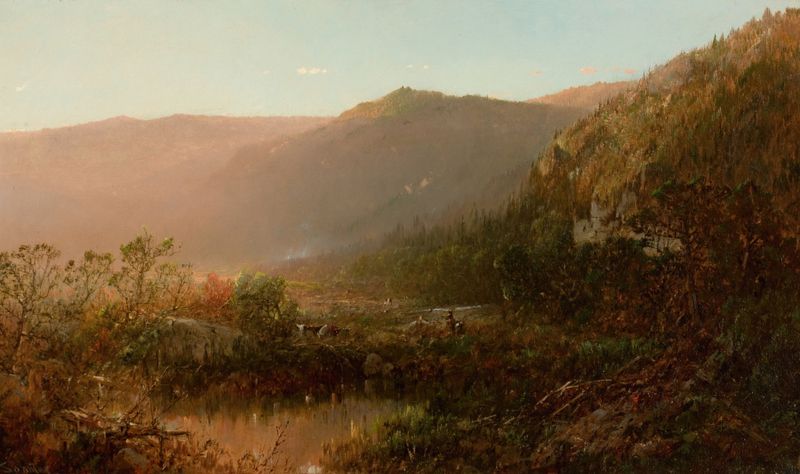
Can beauty exist without sorrow? In the heart of the Alleghenies, the landscape unfolds, whispering secrets of both grandeur and desolation. Look to the left, where rugged mountains rise, their peaks dusted with a hint of snow, creating a striking contrast against the deep greens and earthy browns below. The soft interplay of light and shadow dances across the canvas, drawing the eye toward the tranquil river that snakes through the valley. Notice how the artist employs a palette of muted tones, allowing the scene to breathe, a serene moment captured in time, yet thick with the weight of untold stories. Beneath the apparent tranquility lies a tension between presence and absence.
The distant figures, small and solitary, seem to carry the burden of the landscape’s vastness, suggesting both isolation and the potential for transcendence. The gentle ripples in the water may symbolize the passage of time, while the looming mountains evoke a sense of permanence, hinting at life’s fleeting nature amidst enduring beauty. During an unspecified year, William Louis Sonntag created this work, deeply influenced by the Romantic movement, which sought to capture emotional depth and the awe of nature. Emerging from the evolving American art scene, Sonntag was drawn to landscapes that reflected both the sublime and the personal, navigating the duality of human experience in a world grappling with rapid change.
His paintings often embodied the spirit of the age, yearning for a connection to nature amidst the encroachment of industrialization.
More Artworks by William Louis Sonntag
Browse all →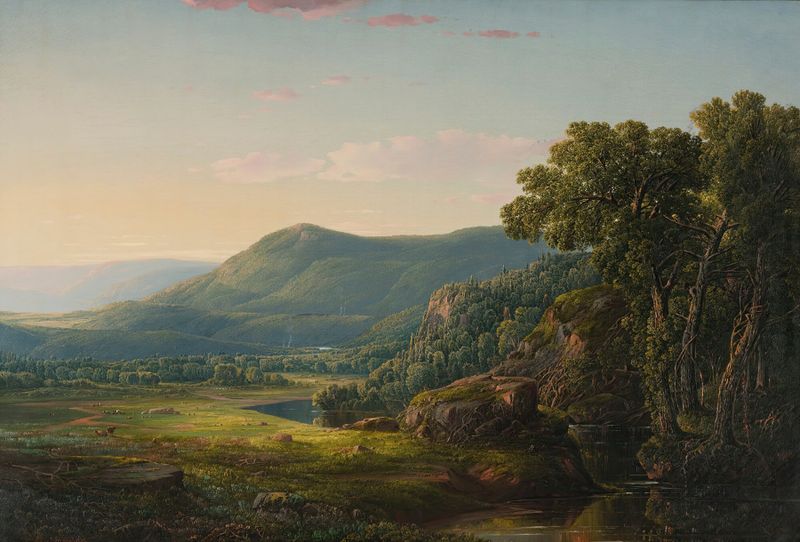
Morning In The Alleghenies
William Louis Sonntag
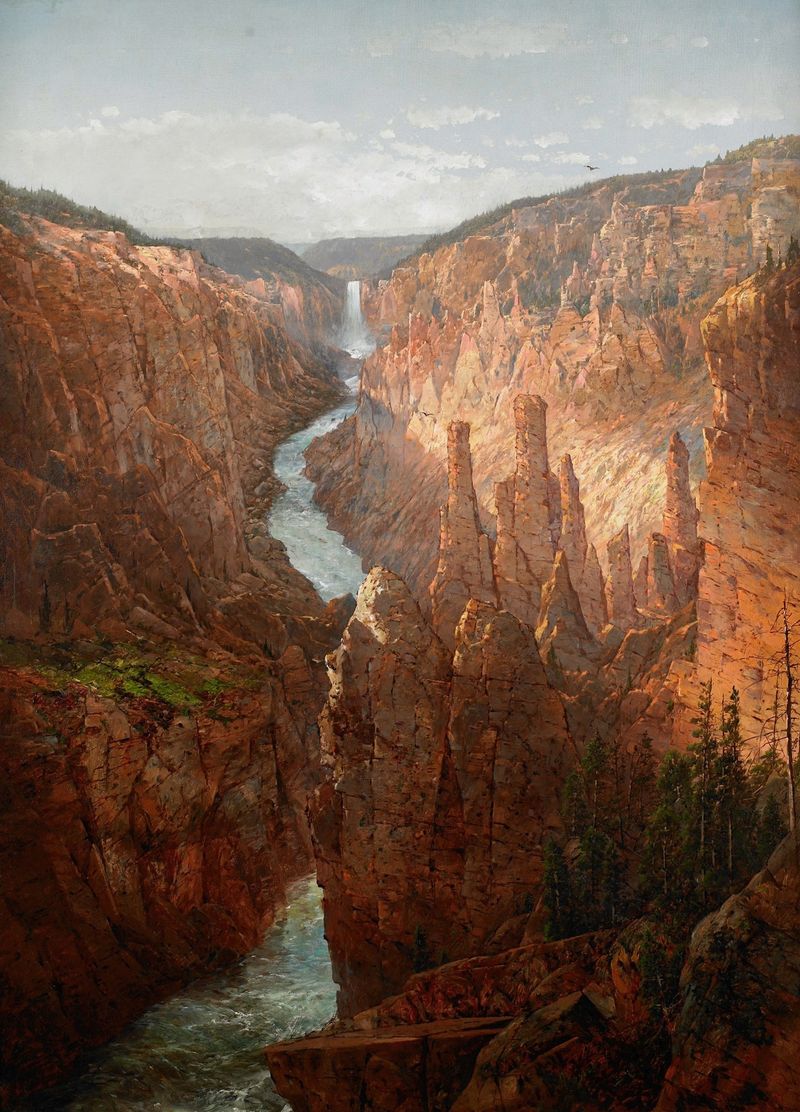
Grand Canyon, Yellowstone River, Wyoming
William Louis Sonntag
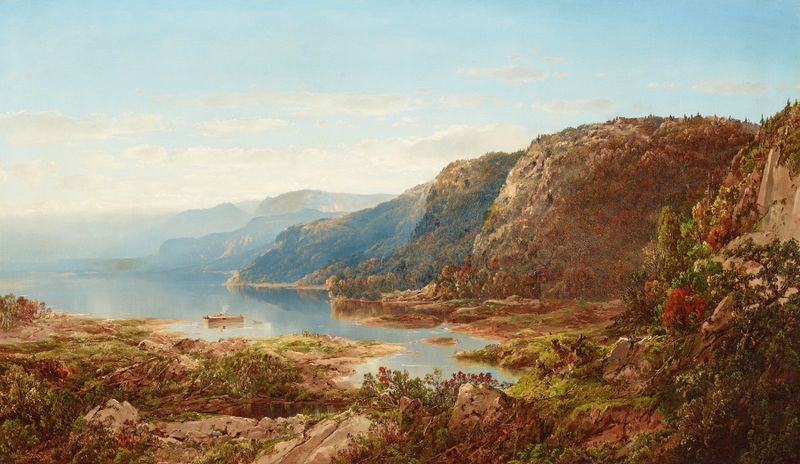
On the Upper Hudson
William Louis Sonntag
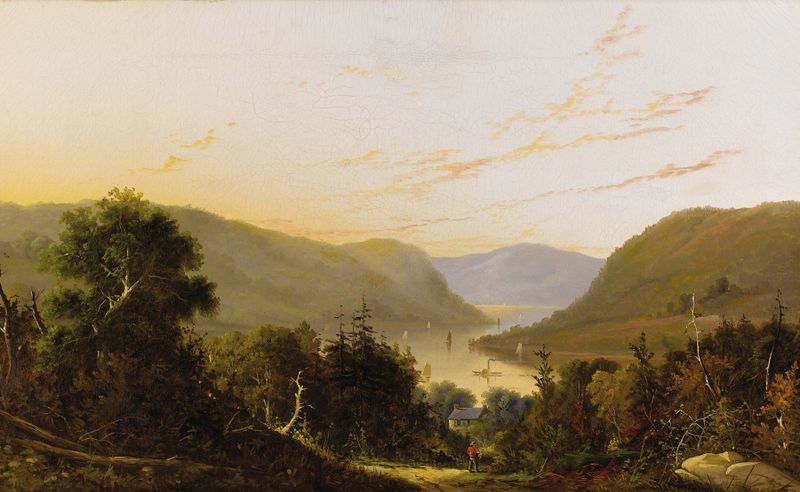
Hudson River Landscape with River Traffic
William Louis Sonntag
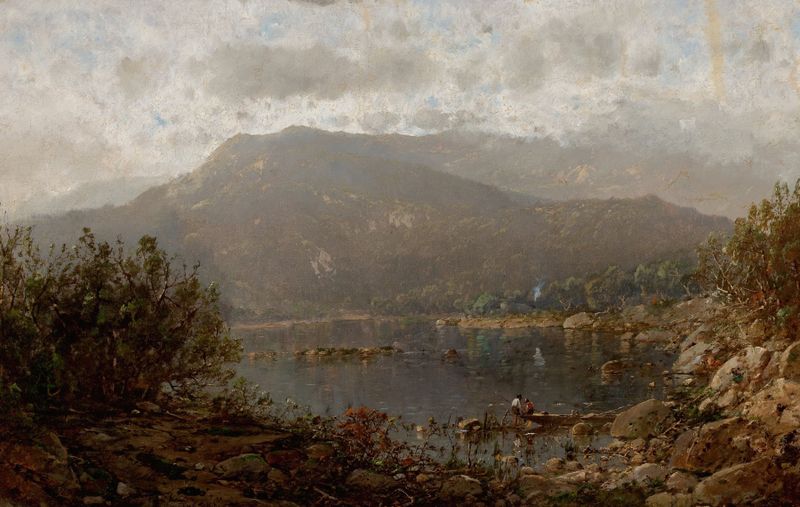
Mountain Lake in the Blue Ridge Mountains
William Louis Sonntag
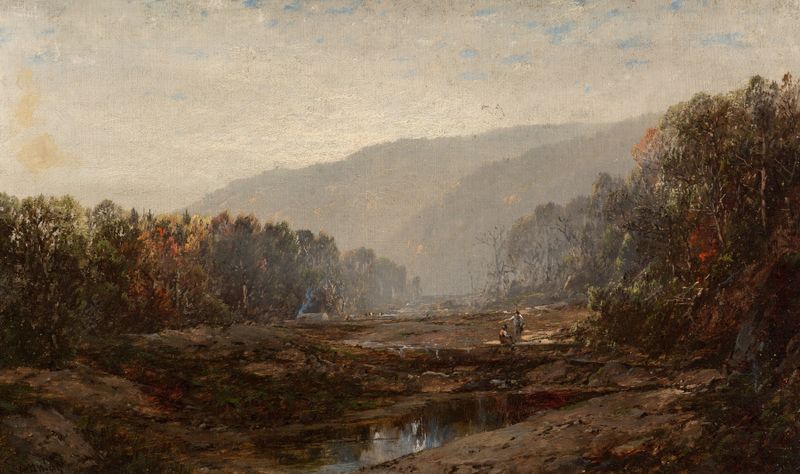
River Landscape
William Louis Sonntag
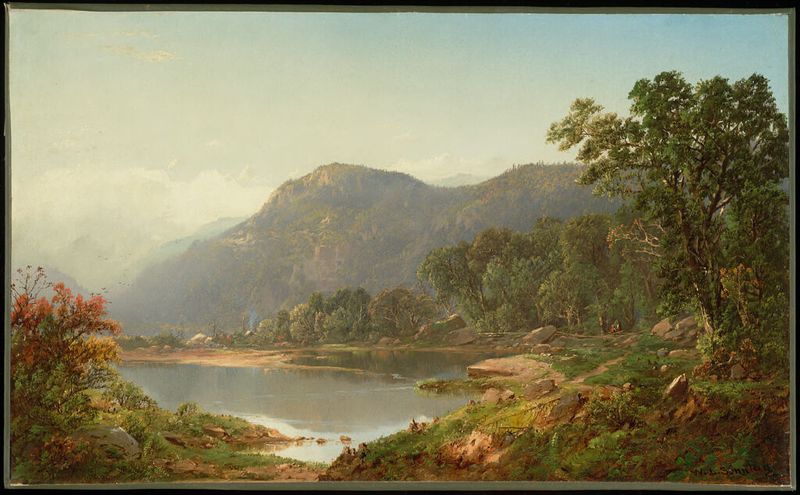
On the Shenandoah
William Louis Sonntag
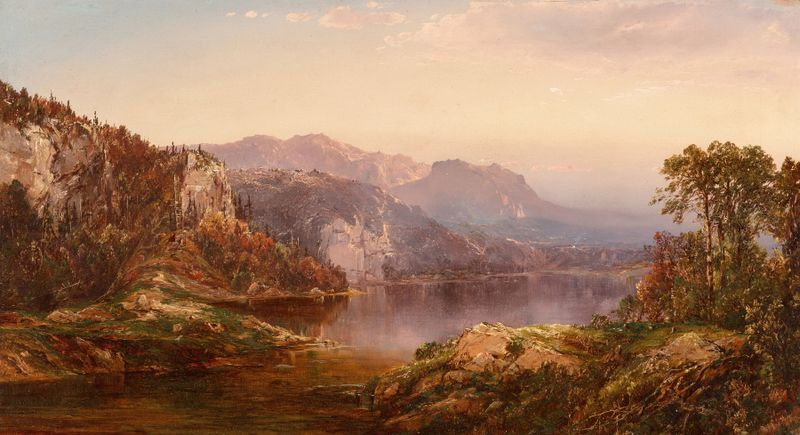
Golden Sunlight
William Louis Sonntag
Among the Pilot Mountains, New Hampshire
William Louis Sonntag
New England Mountain Lake at Sunrise
William Louis Sonntag





