In the White Mountains — History & Facts
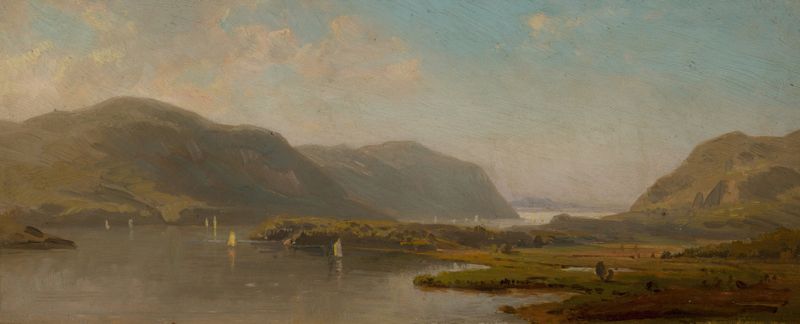
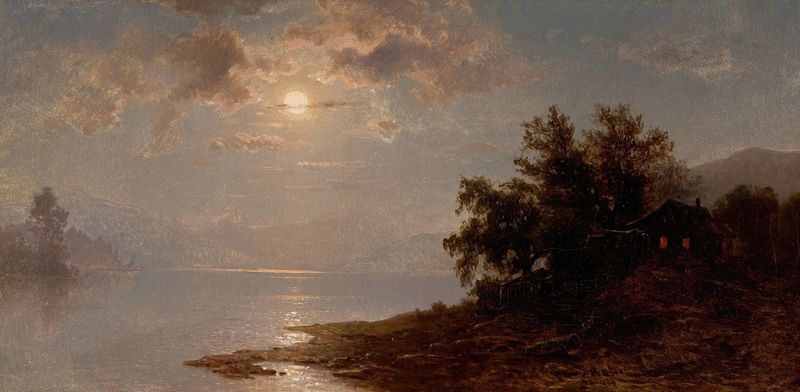
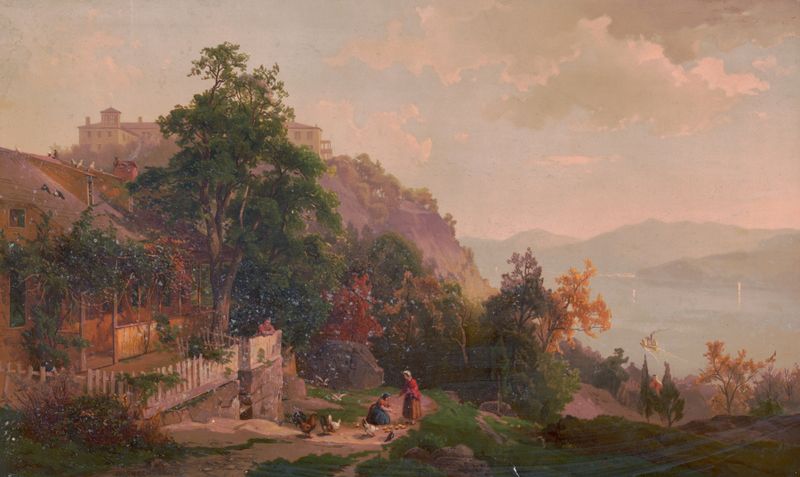
Can beauty exist without sorrow? In the heart of the serene yet imposing landscape, juxtaposed feelings of longing and tranquility reside, inviting viewers to reflect on the delicate balance of joy and pain. Look to the horizon where the majestic peaks rise, their snowy caps glimmering under a soft, diffused light. The palette is dominated by ethereal whites and muted blues, evoking a sense of icy stillness, while touches of earthy greens in the foreground ground the scene in reality. Notice how the brushstrokes pulse with texture, particularly in the foliage, allowing the eye to travel from the foreground into the vastness of the mountains, creating a depth that draws the viewer in. Beneath the surface, a tension simmers between the beauty of nature and human insignificance.
The grandeur of the mountains, towering and eternal, contrasts starkly with the fleeting human experience. This landscape serves as a reminder of nostalgia—memories that linger like shadows, evoking a bittersweet longing for moments passed. The interplay of light and shadow suggests that every joy carries a trace of sadness, that tranquility may hide deeper emotions just out of reach. Hermann Fuechsel painted this piece between 1876 and 1881, during a period of personal and artistic maturation.
Living in Germany, he was influenced by the Romantic movement, which emphasized emotion and individual experience, often depicting nature as both splendid and overwhelming. Fuechsel’s work resonated with the German fascination for the sublime, exploring how landscapes could reflect the complexities of human sentiment against the backdrop of a changing world.