Moonlit Lake, White Mountains — History & Facts
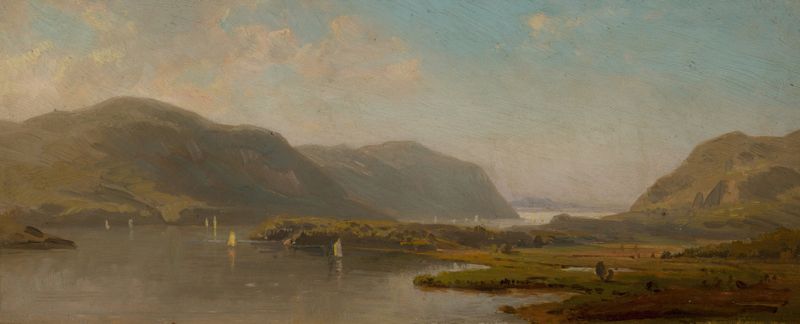
Did the painter know this moment would outlive them? In the quiet embrace of nostalgia, Moonlit Lake, White Mountains captures the haunting beauty of a tranquil night, inviting viewers to linger in its serene depths. Focus on the luminous expanse of the lake at the center, where gentle ripples reflect the soft silver light of the moon. Look closely at the interplay of shadows cast by the surrounding trees, their silhouettes reaching towards the water, as if yearning to connect with the magical scene. The cool blues and soft whites dominate the palette, creating a dreamlike quality that envelops the observer in a calm, contemplative atmosphere. Beneath the surface of this idyllic landscape lies a complex emotional tension.
The stillness of the lake suggests peace, yet the darkened mountains loom in the background, hinting at nature's vastness and the mysteries it holds. The contrast of light and shadow evokes both solace and solitude, as if the painter is inviting us to reflect on our own quiet moments of introspection. Each brushstroke reveals a longing for connection, both to nature and to the ephemeral beauty of life itself. Hermann Fuechsel painted this work in 1894, during a time of great change in the art world, as Impressionism was transforming traditional landscapes into emotive expressions.
Living in the United States, Fuechsel found inspiration in the breathtaking scenery of New Hampshire, capturing the essence of its nocturnal wonders. The late 19th century was a period ripe with artistic exploration, and Fuechsel’s delicate rendition stands as a poignant reminder of nature’s ability to evoke nostalgia and wonder.