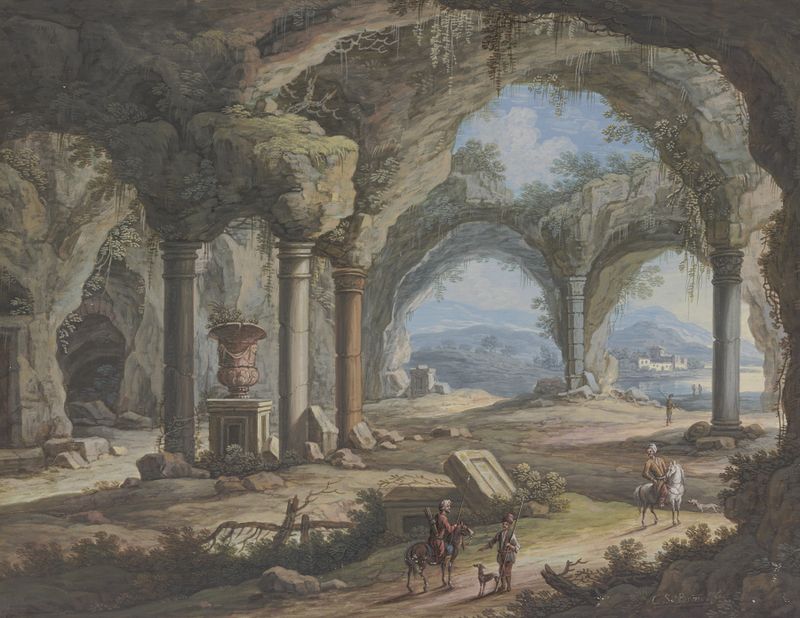
Inneres einer säulengestützten Grotte, darin in einer Nische eine große Vase — History & Facts
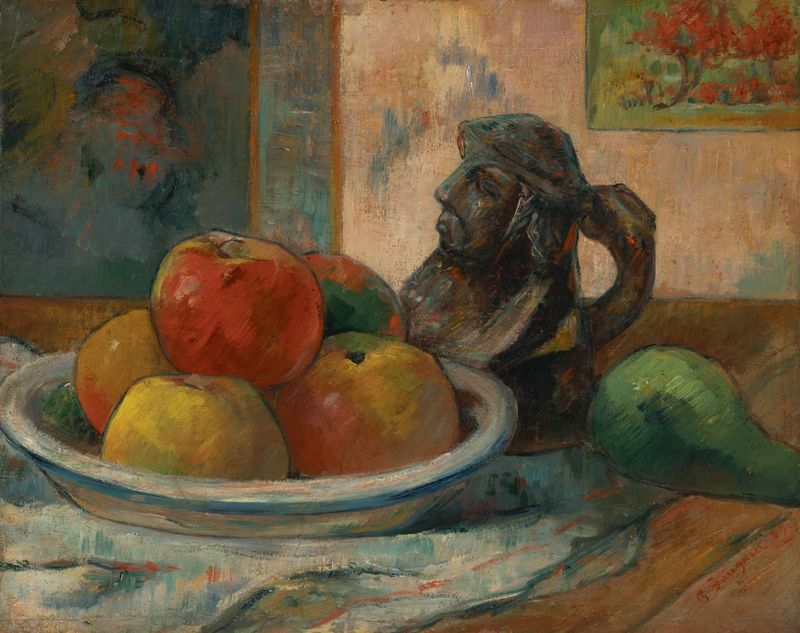
When did color learn to lie? In the depths of Inneres einer säulengestützten Grotte, darin in einer Nische eine große Vase, the lush vibrancy of paint conceals a tumultuous narrative beneath its surface, inviting viewers to ponder the fragility of perception. Focus on the grand vase nestled within the serene niche, where the interplay of shadow and light breathes life into its porcelain form. Notice how the cool blues and greens of the grotto contrast sharply with the warm, vibrant hues decorating the vase. This juxtaposition not only establishes a visual hierarchy but also evokes a sense of tension, as if the sanctuary of the cave is both a refuge and a place of hidden turmoil. Delve deeper into the intricate details — the delicate brushwork that hints at the fragility of the natural world, and the imposing columns that stand like sentinels witnessing unseen violence within.
The composition evokes a sense of confinement, where beauty and peril coexist, raising questions about the violence hidden behind or within art. Each color becomes an emotional thread, weaving a narrative of suppressed chaos masked by aesthetic allure. Created during a time when the art world was navigating the complexities of realism versus idealism, the artist was influenced by the Baroque period's dramatic contrasts. There is little documentation of the exact year, but the work reflects an exploration of perception amidst the tumult of a rapidly changing society, where the allure of beauty often veils a deeper, unsettling truth.