
Art movement · c. 1715–1770s · France
Rococo Art and Paintings
Rococo is a style of art that began in France in the early 1700s, after the death of Louis XIV in 1715, as a light, playful answer to the grandeur of the Baroque. It used pastel colors, curving, asymmetrical forms and subjects of love, leisure and myth, and it was out of fashion by the 1780s. Its painters include Antoine Watteau, François Boucher, Jean-Honoré Fragonard, Giovanni Battista Tiepolo and Thomas Gainsborough.
The name comes from rocaille, the shell-covered rock-work of 18th-century grottoes. Fragonard's The Swing, painted around 1767 for a courtier who wanted his mistress shown on a swing, fundamentally shaped how people see Rococo art, the Wallace Collection says.
Browse 3,367 Rococo paintings and artworks below, all public domain and free to download.
Selected and written by Pavel MazuelasUpdated November 5, 2026
Part of Art Movements and Painting StylesRelated: Baroque, Neoclassicism, Famous Portrait Paintings
All Rococo paintings and artworks
Portraits, views of Venice, landscapes, scenes of daily life, myths and decorative designs. All public domain, free to download.











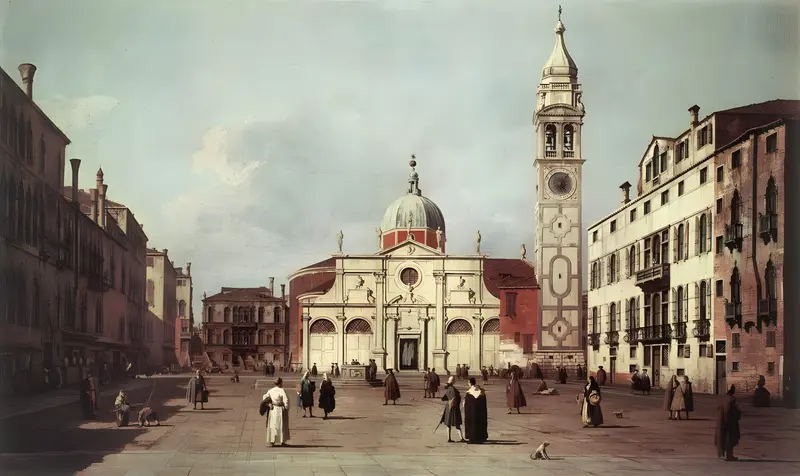
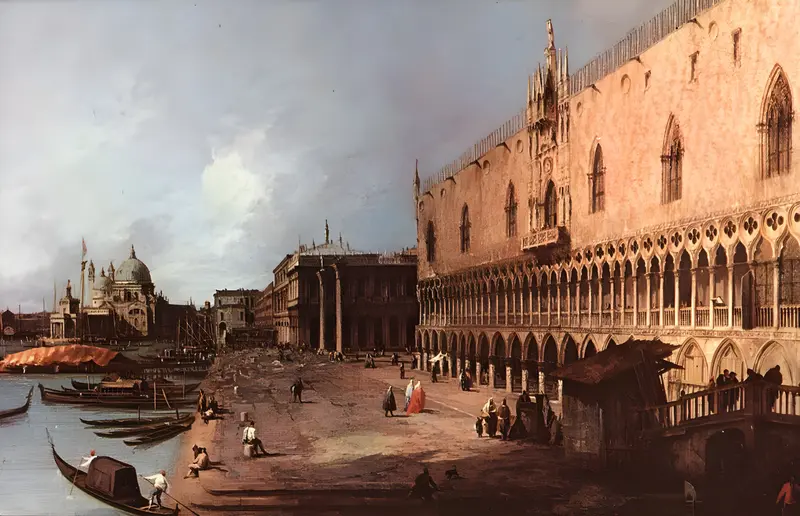




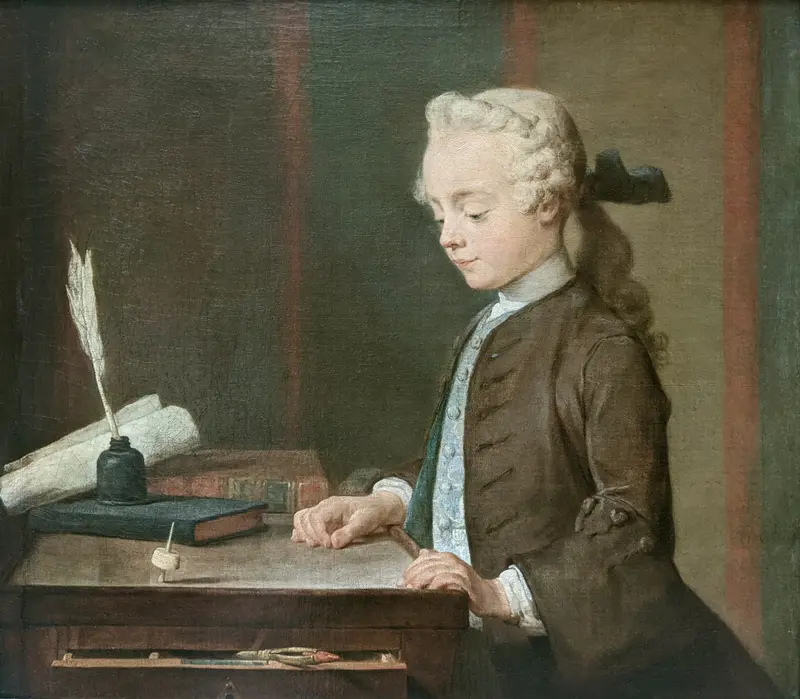
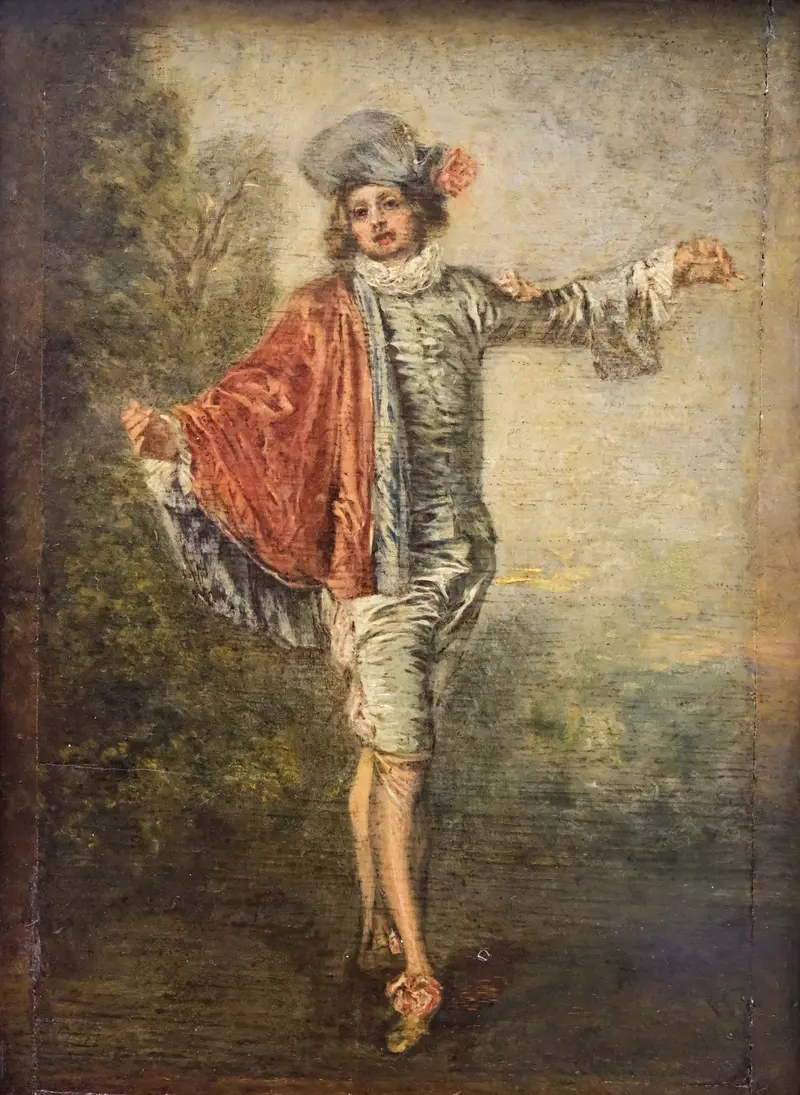
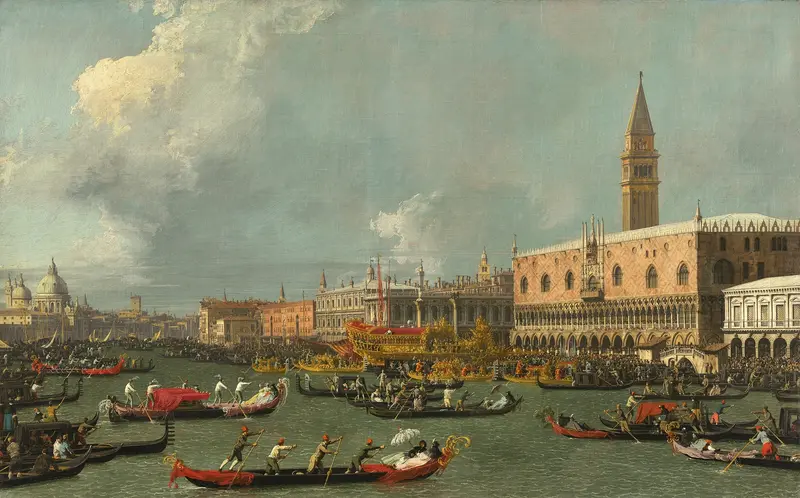
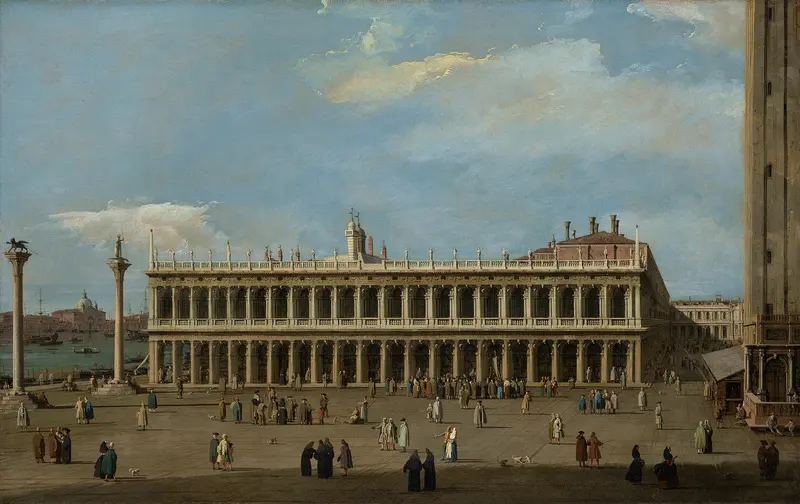



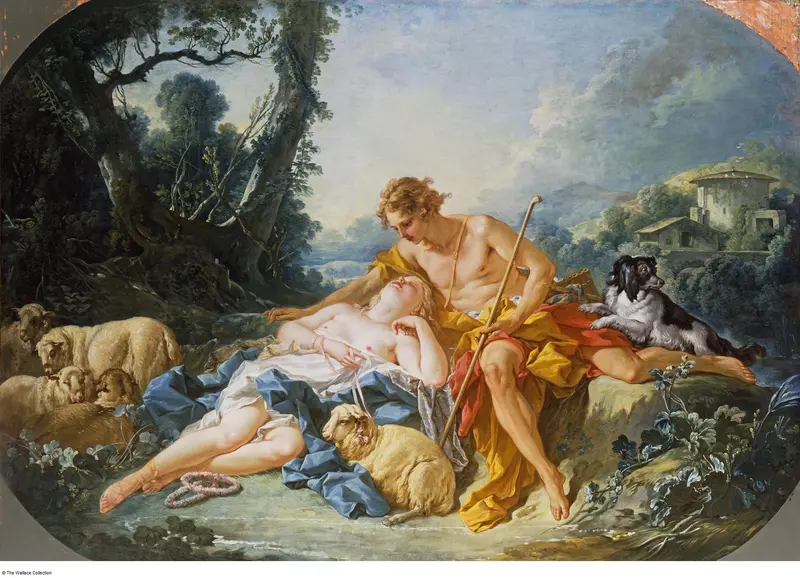

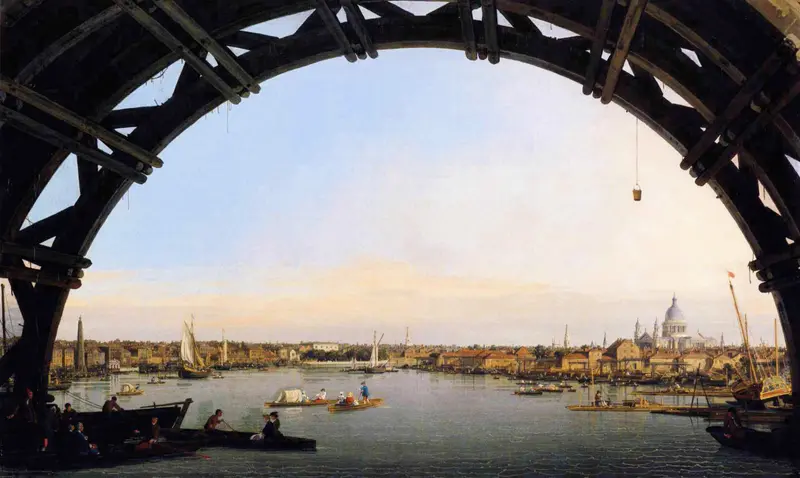
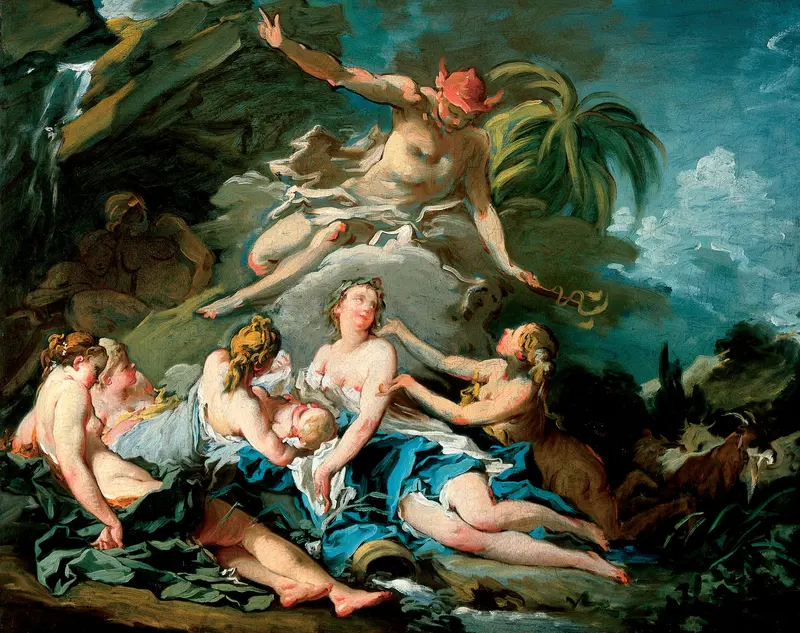
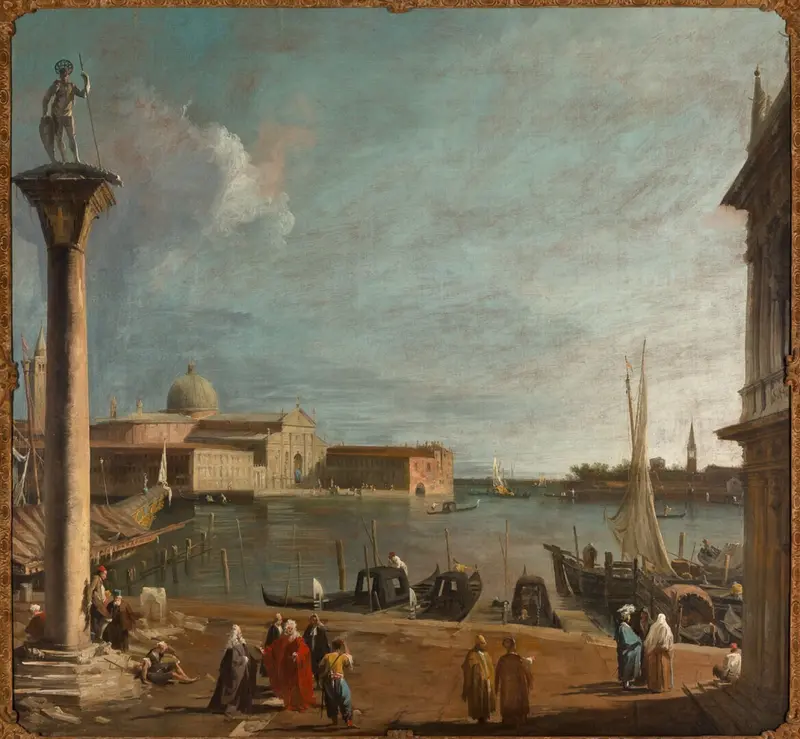


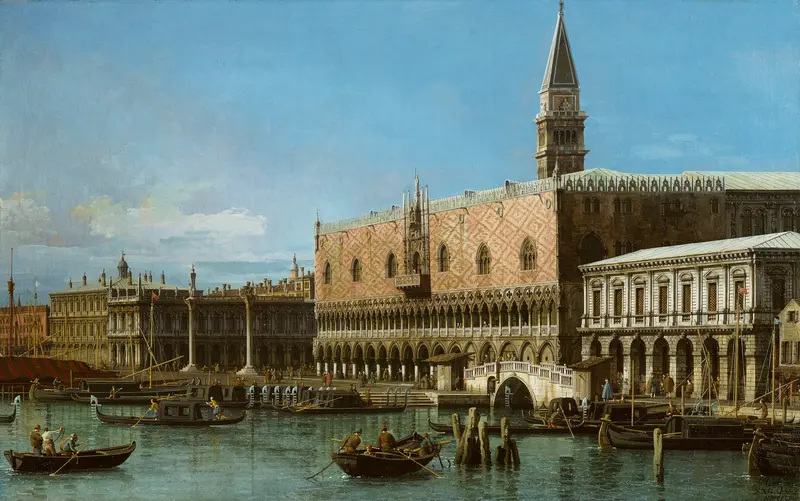
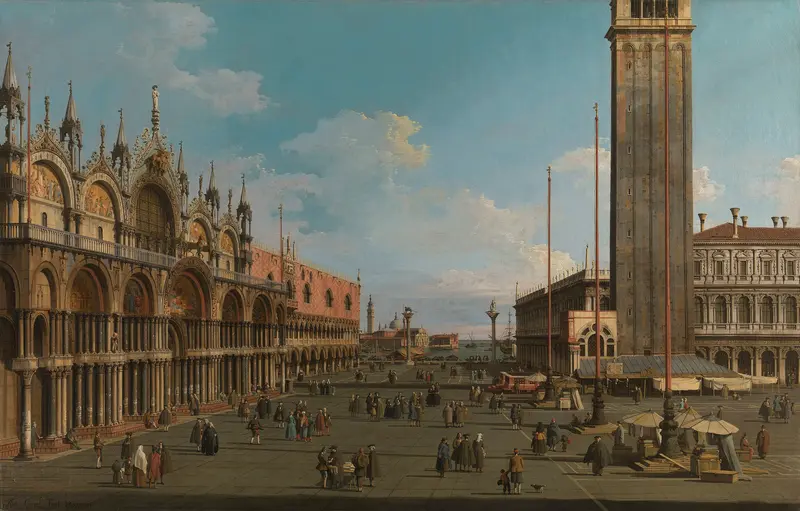
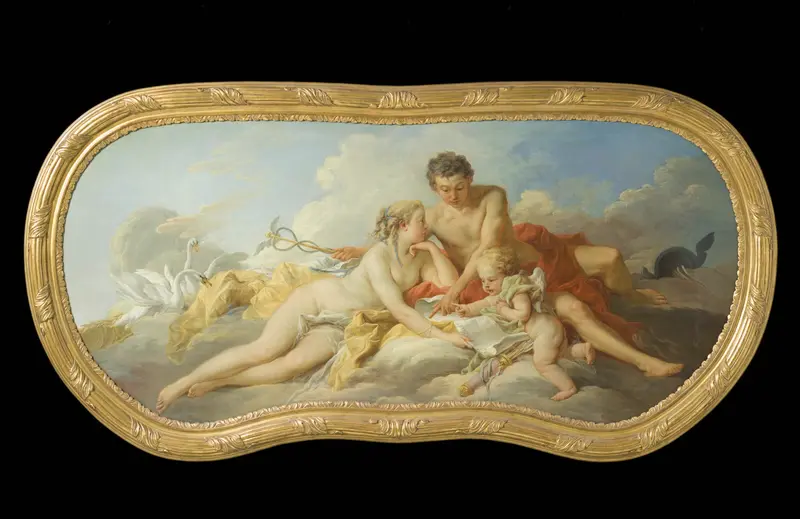

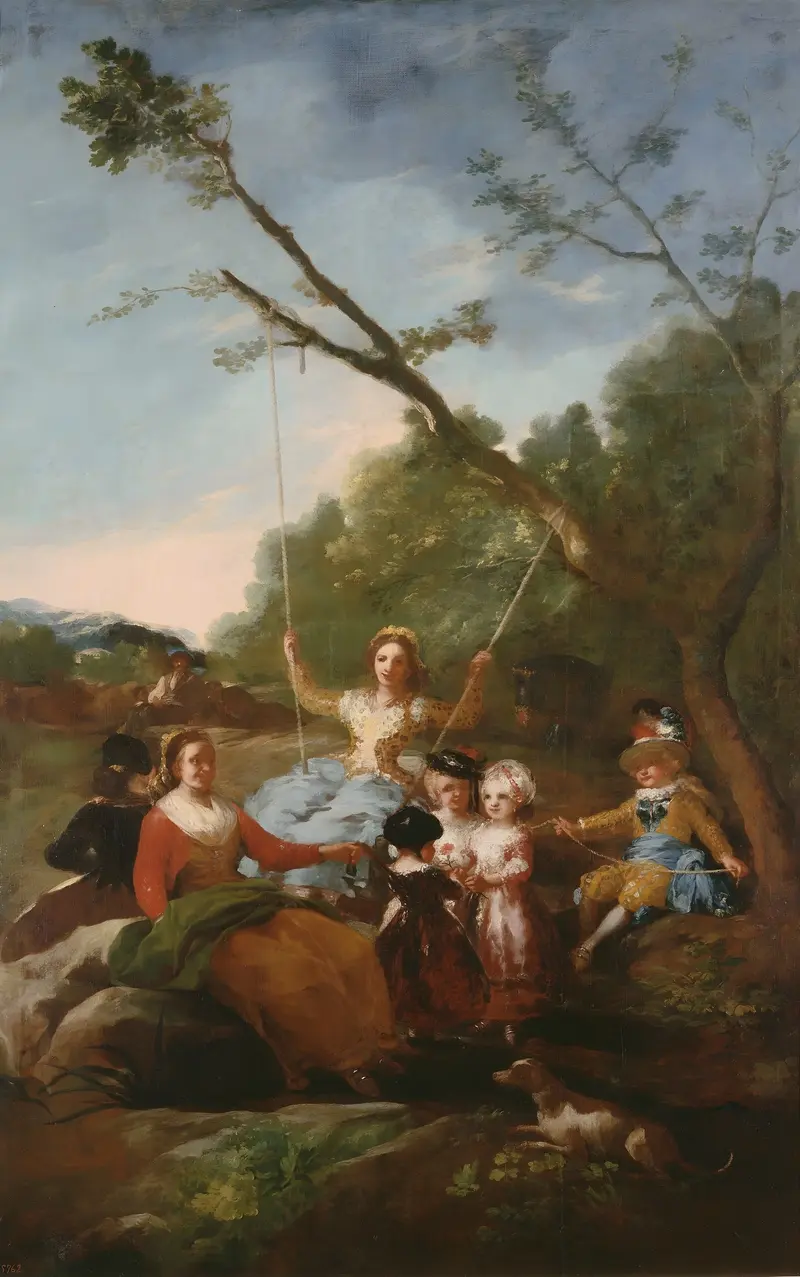

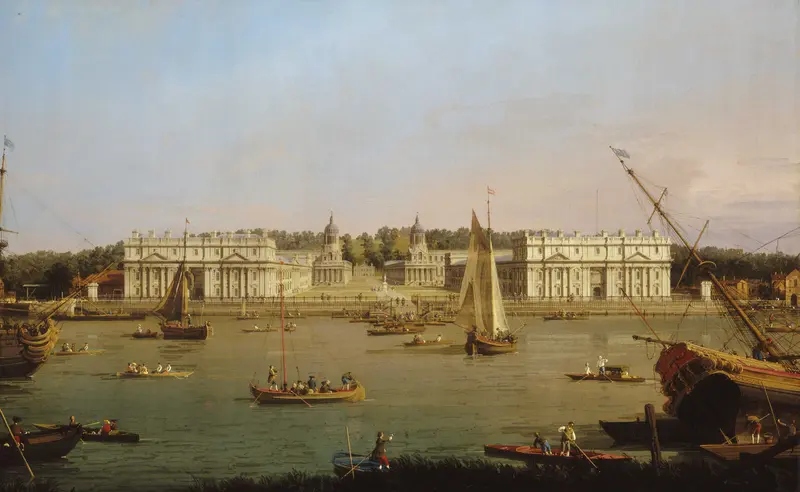
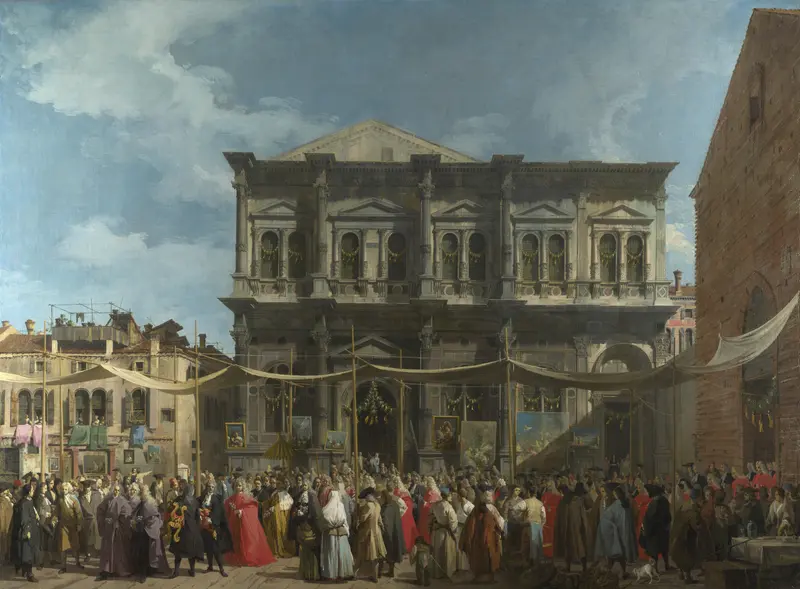
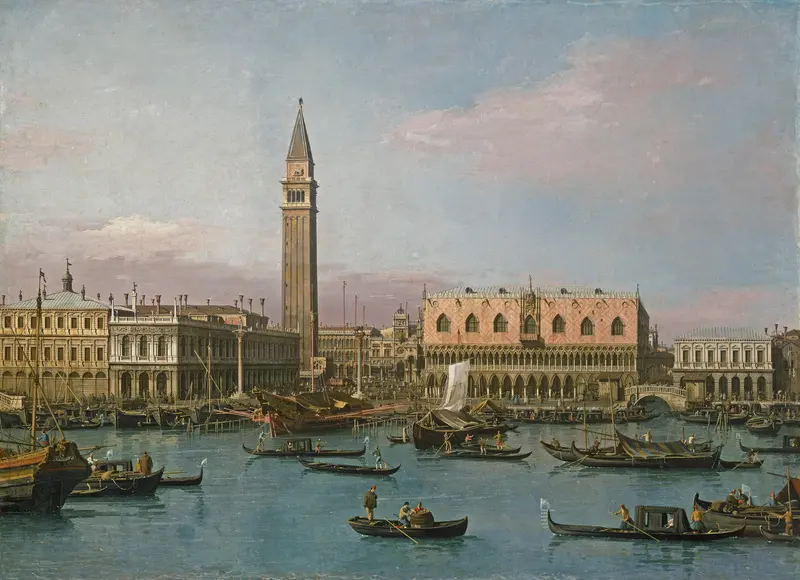

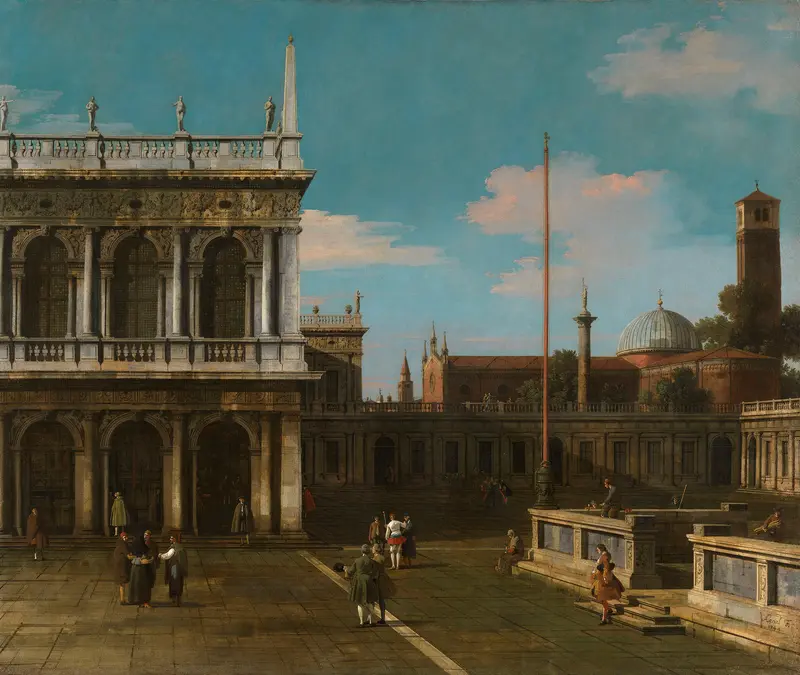

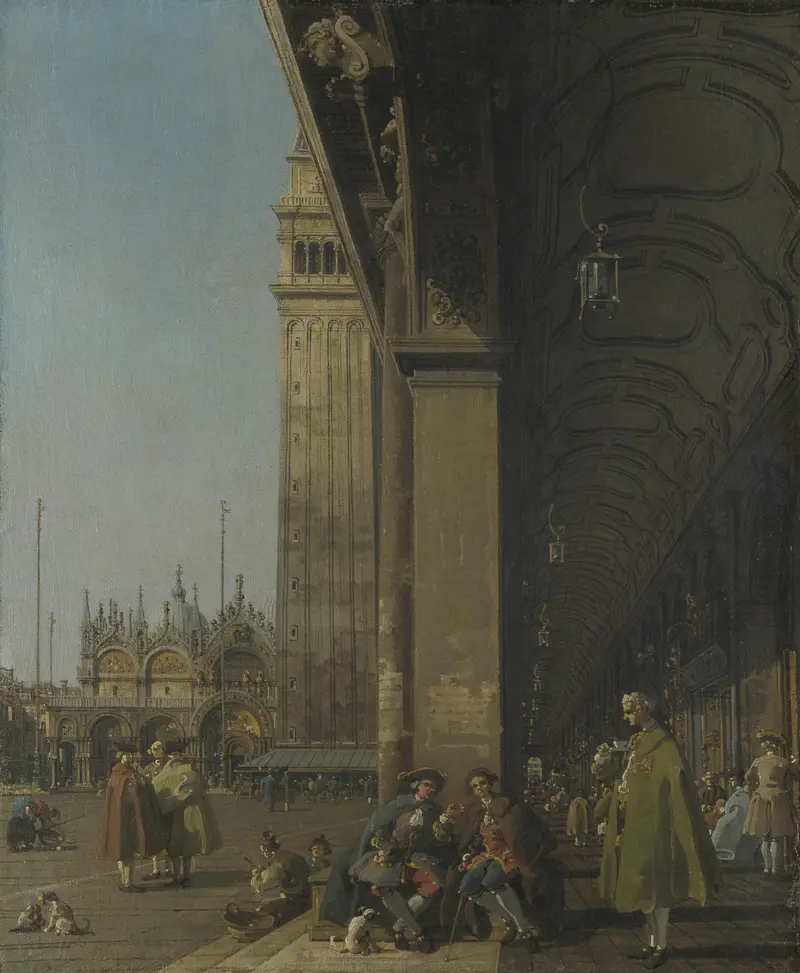

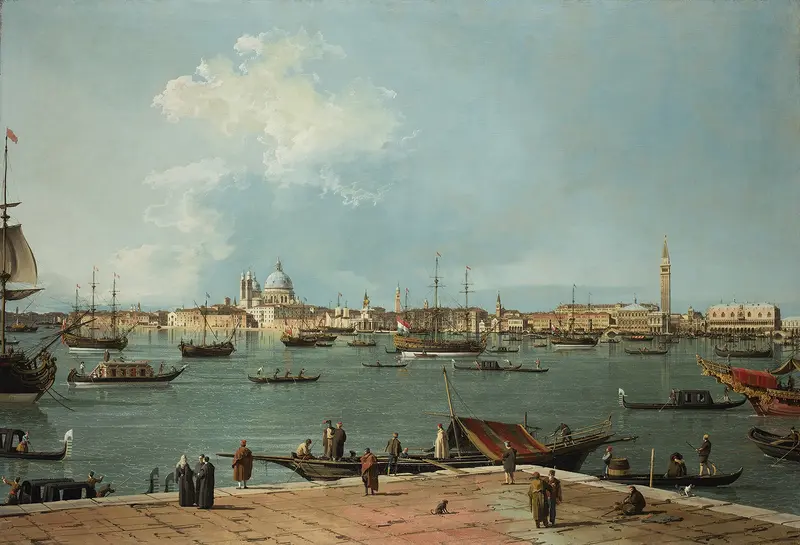
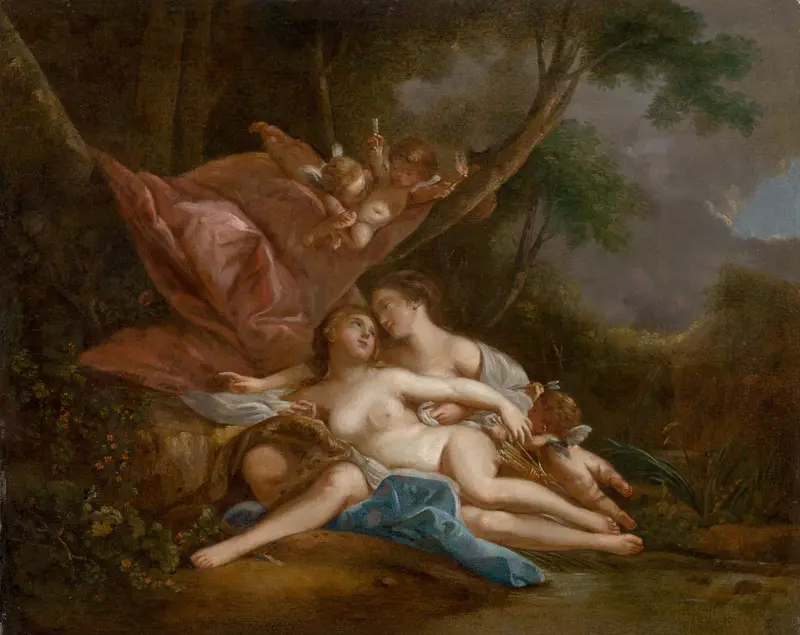
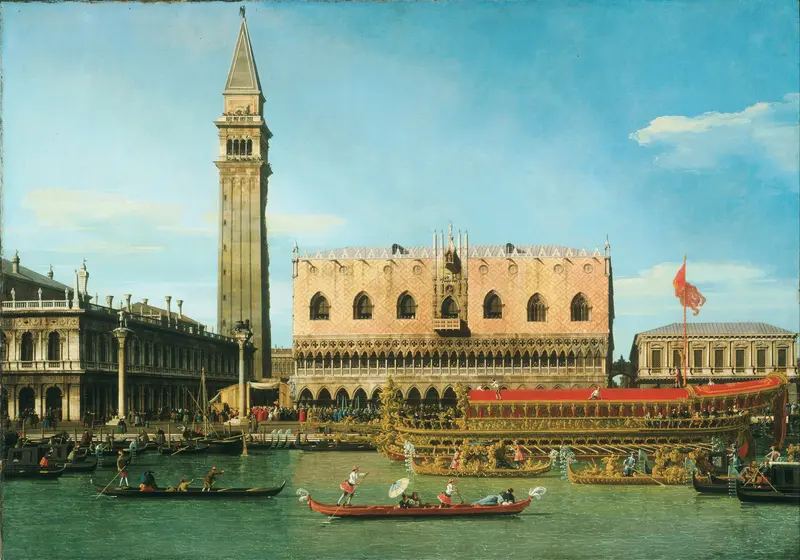
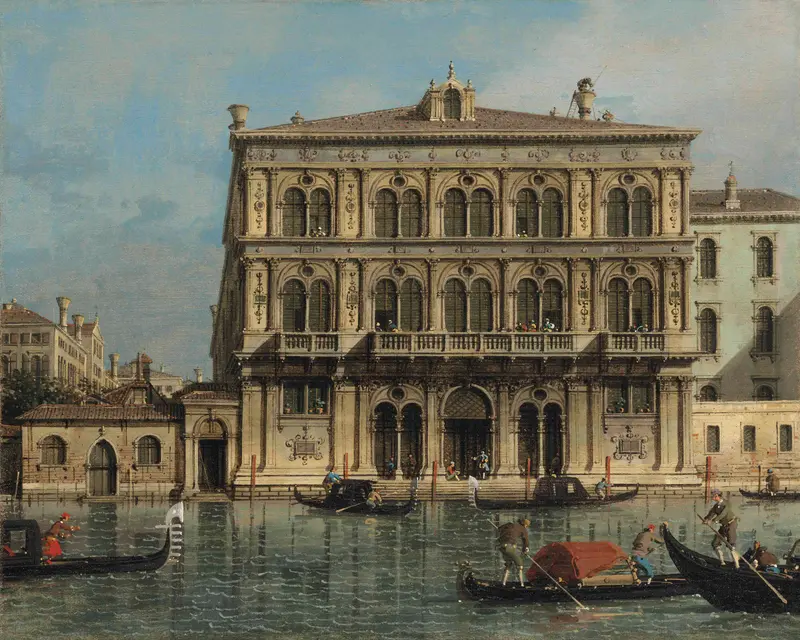
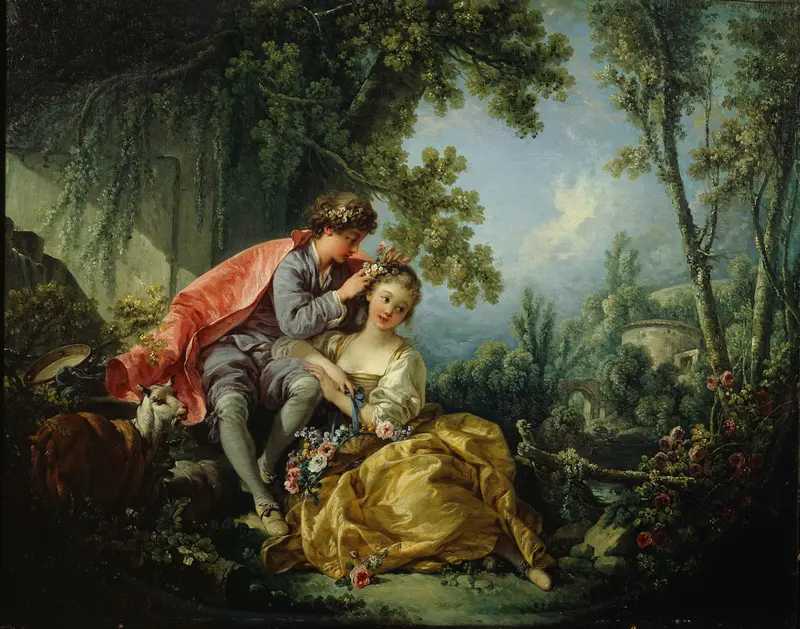
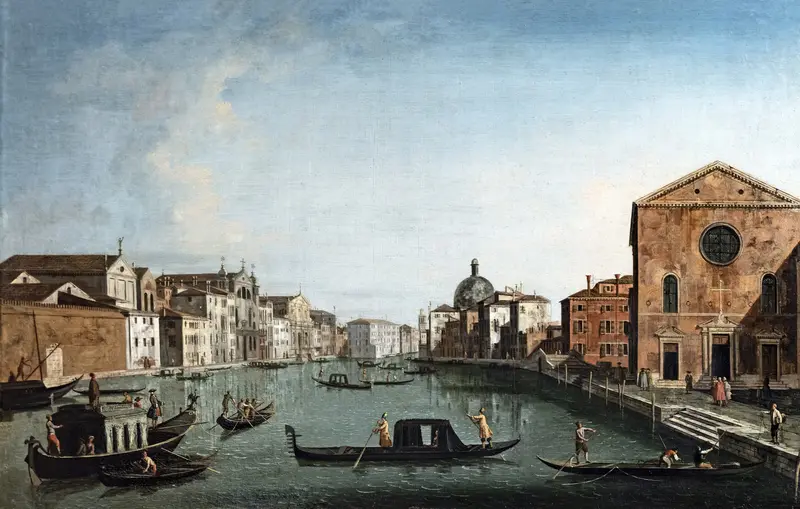
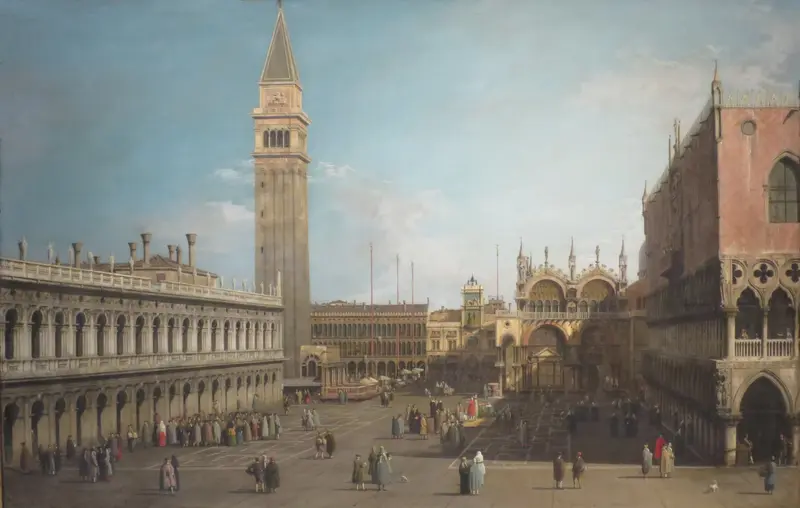
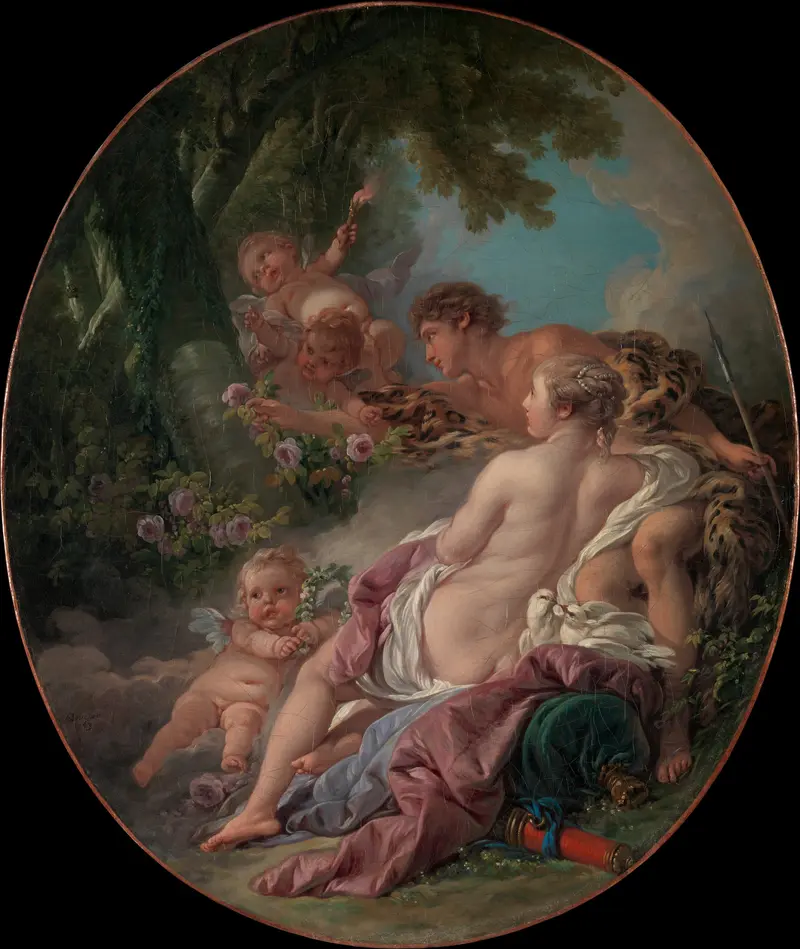
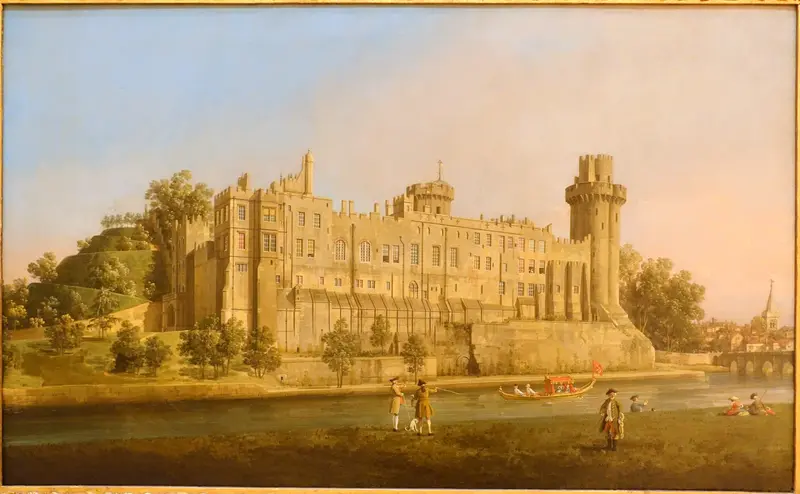

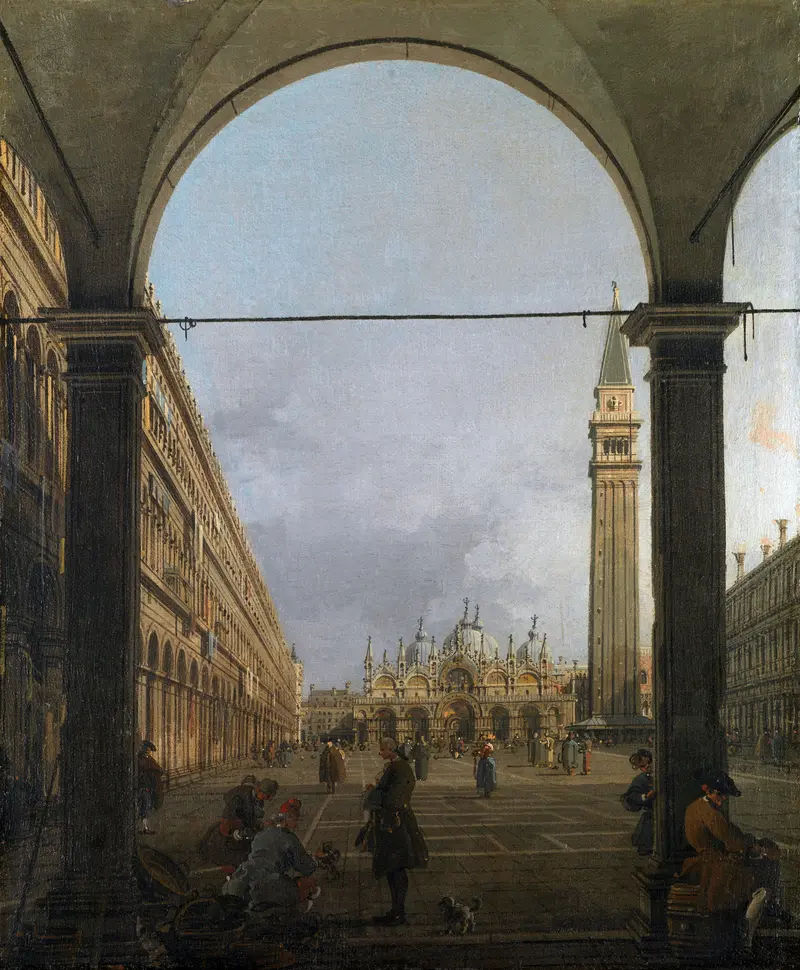
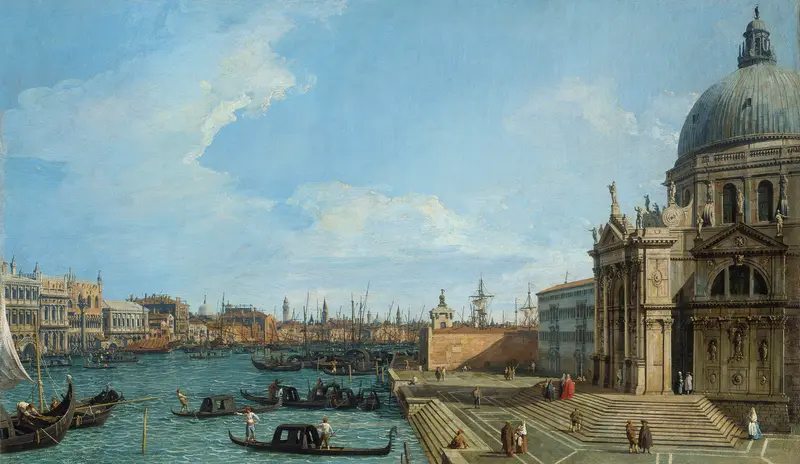
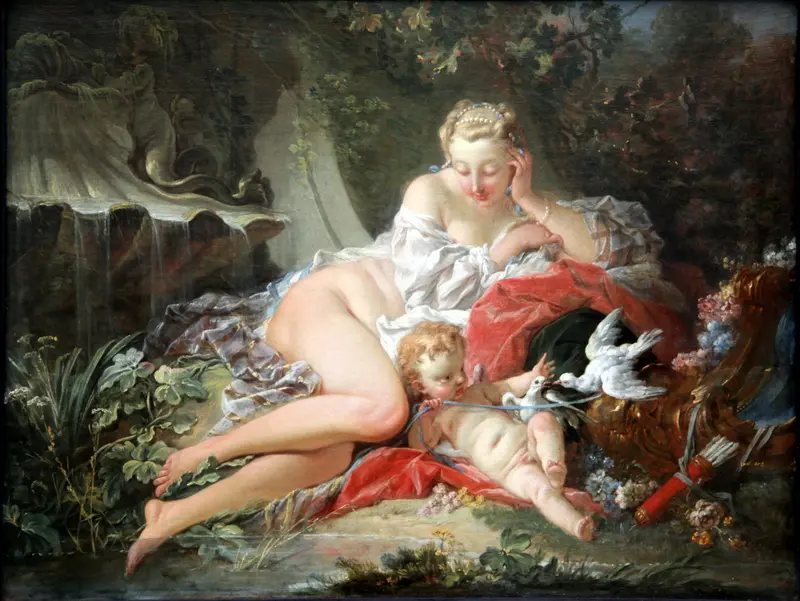
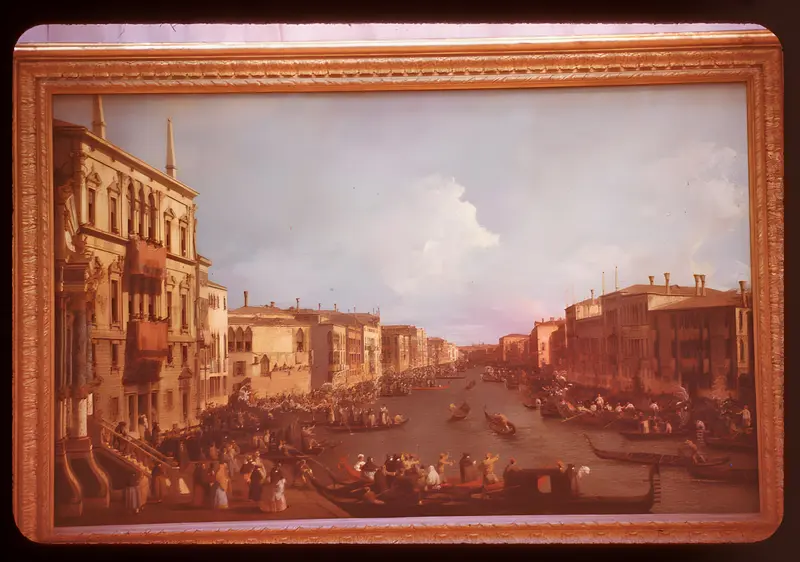
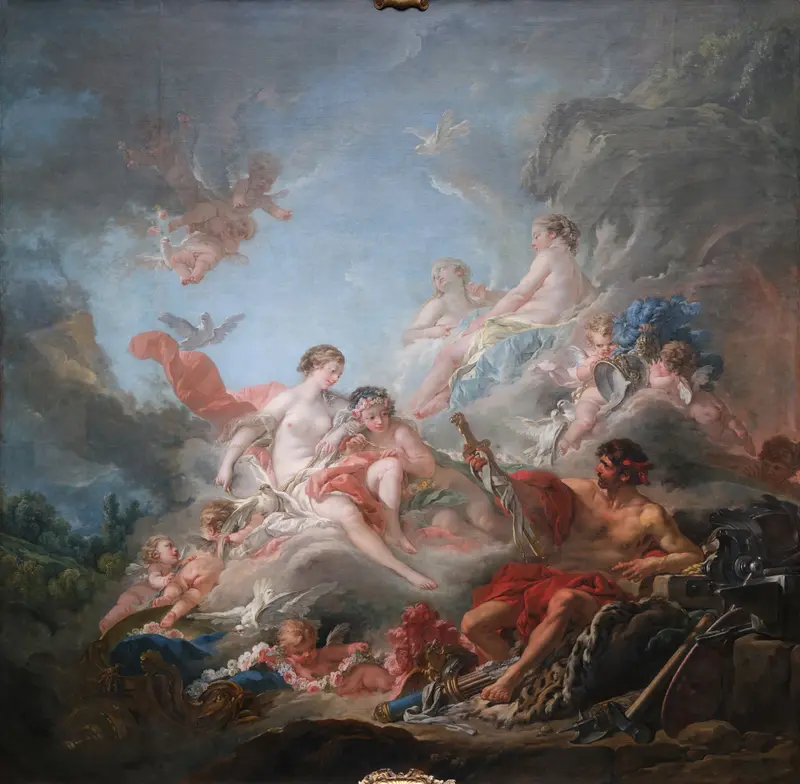
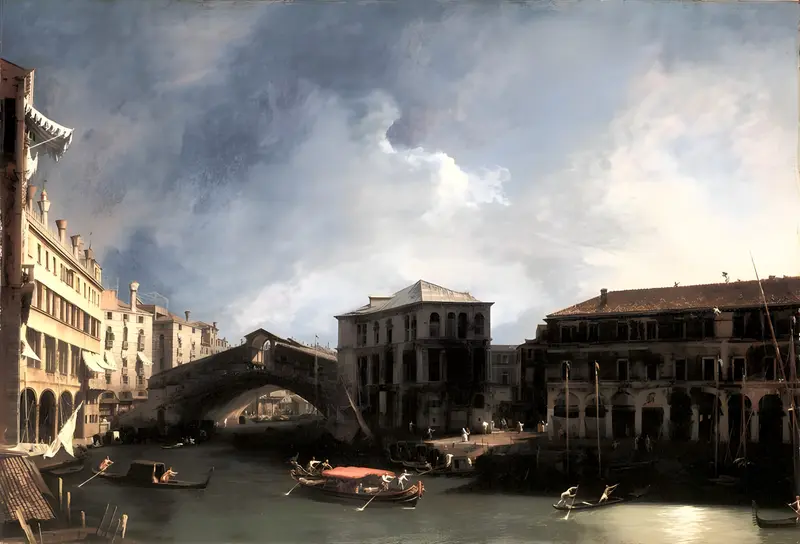
Famous Rococo paintings
The best-known paintings of the Rococo age. Click any painting to see it up close and download it free.
 The SwingJean-Honoré Fragonard
 A Young Girl ReadingJean-Honoré Fragonard
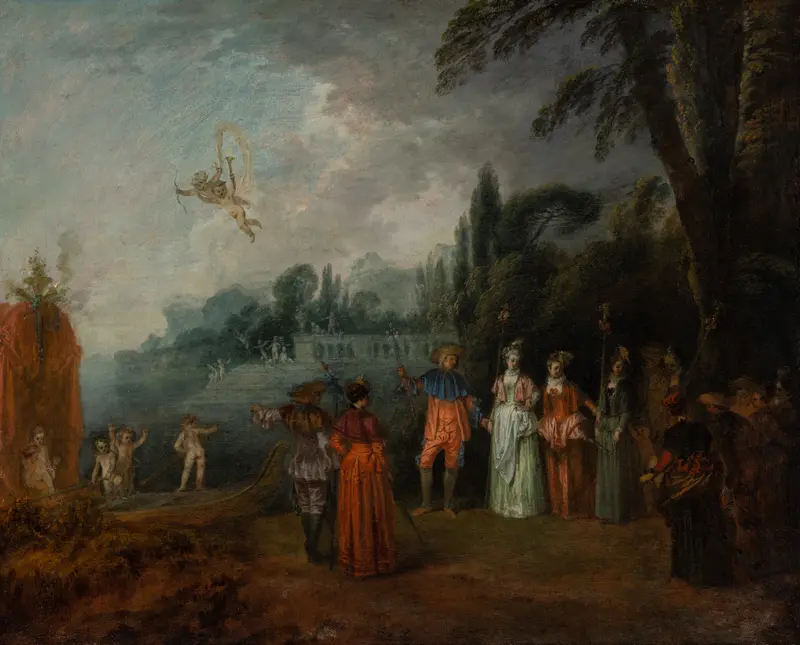
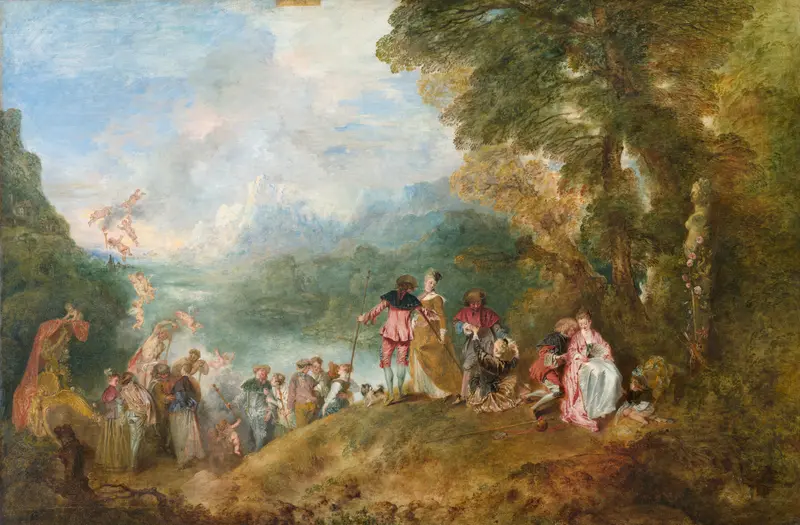 The Embarkation for CytheraJean-Antoine Watteau
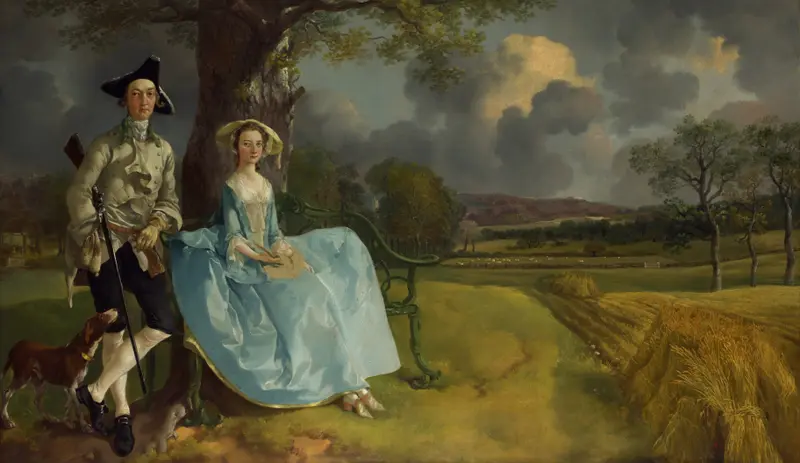 Mr and Mrs AndrewsThomas Gainsborough
 Diana Leaving Her BathFrançois Boucher
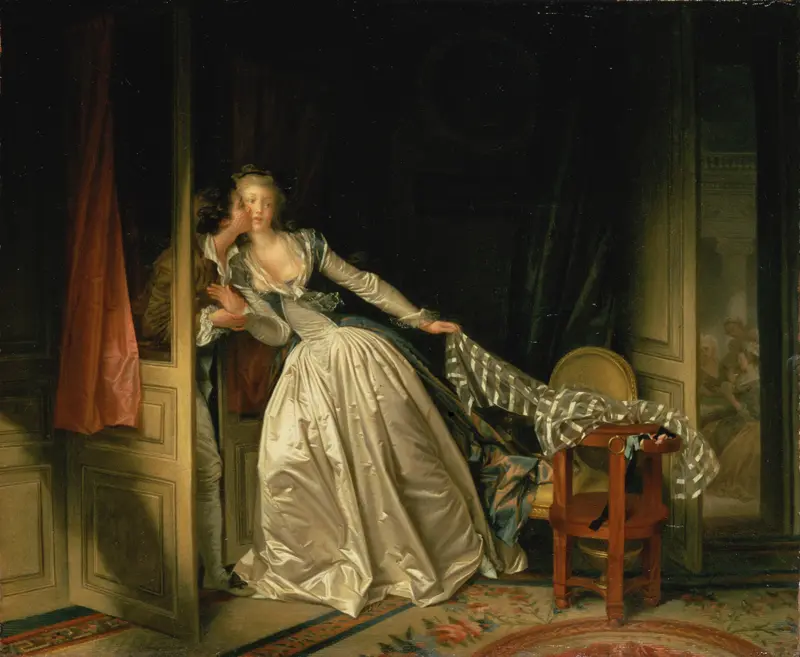 The Stolen KissJean-Honoré Fragonard
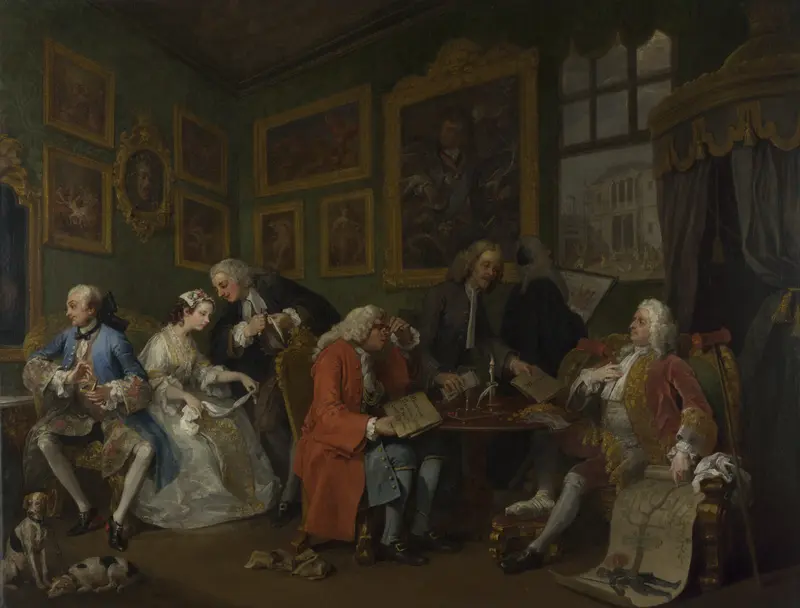 Marriage A-la-Mode: 1, The Marriage SettlementWilliam Hogarth
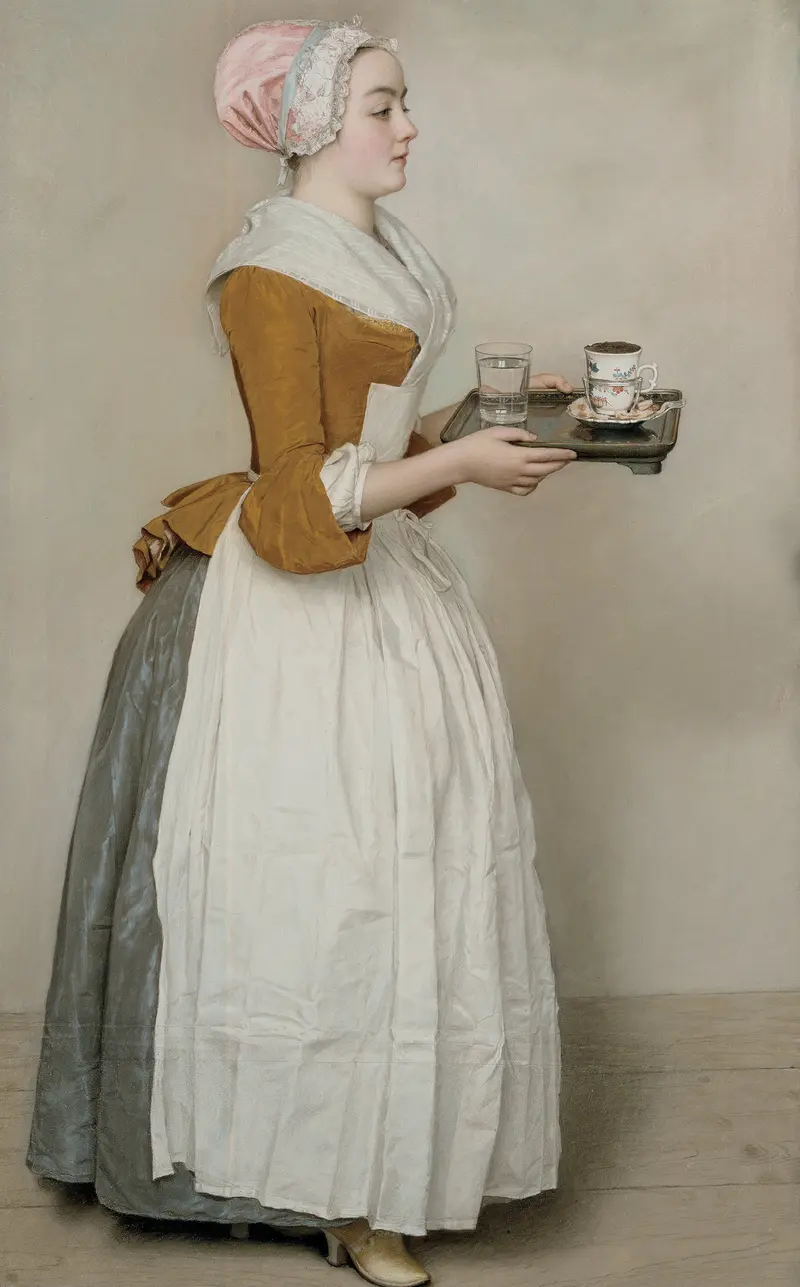 The Chocolate GirlJean-Étienne Liotard
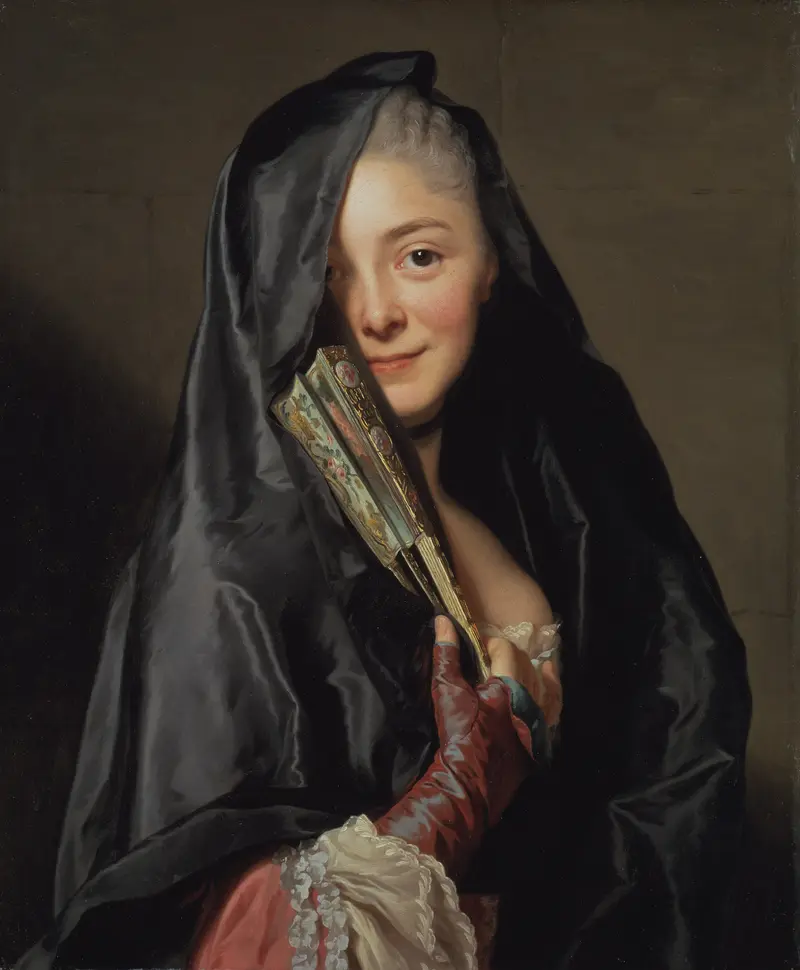 The Lady with the VeilAlexander Roslin
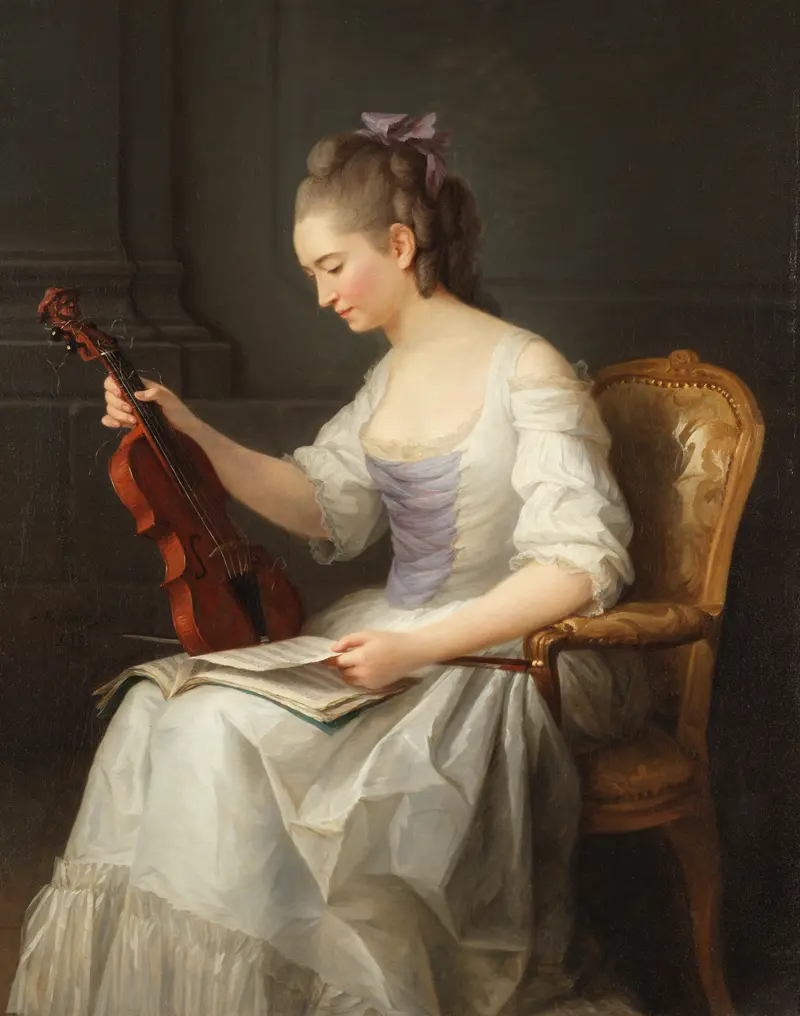 Portrait of a ViolinistAnne Vallayer-Coster
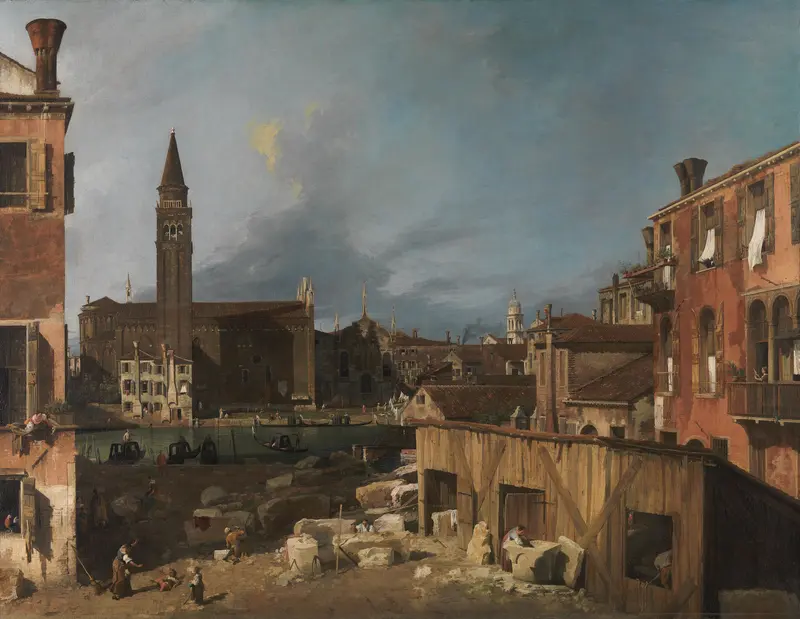 The Stonemason's YardCanaletto
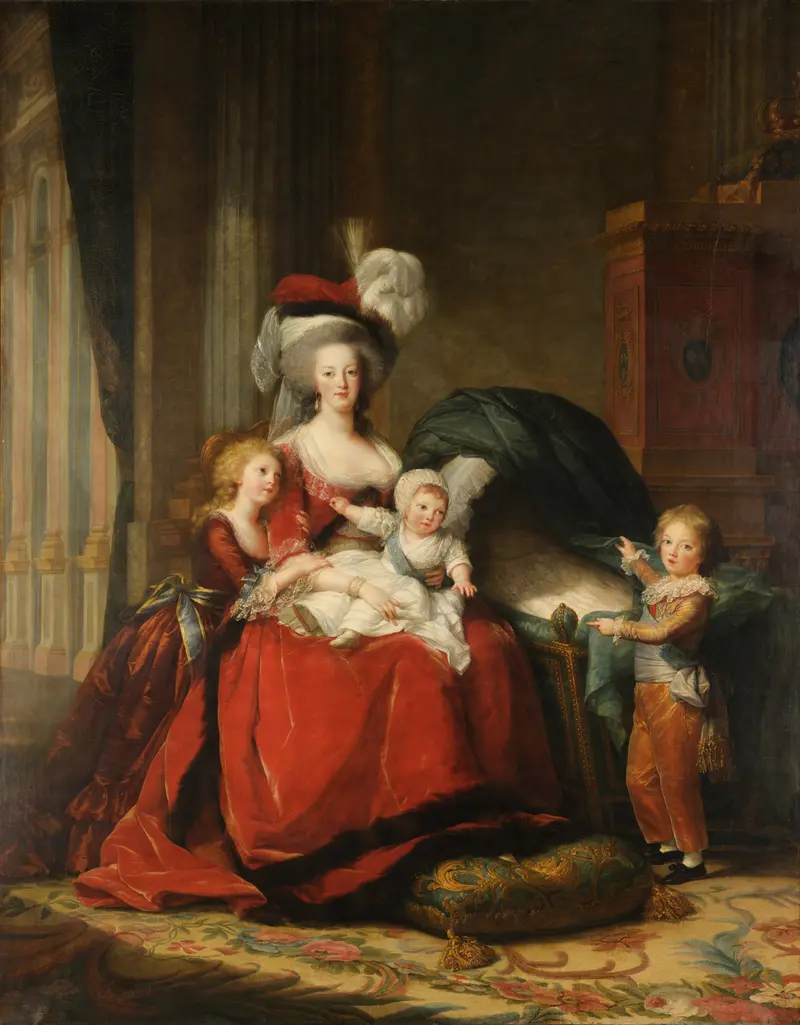 Marie Antoinette and Her ChildrenÉlisabeth Vigée Le Brun
Famous Rococo artists
Ten painters at the heart of the Rococo, from Watteau and Boucher in France to Tiepolo and Canaletto in Venice and Hogarth and Gainsborough in Britain. Each link opens all their paintings.
 Antoine Watteau1684–1721. Born in Valenciennes, he invented the fête galante; the French Academy created a new category for his Pilgrimage to Cythera in 1717. He also painted many actors of the Italian comedy.
 François Boucher1703–1770. Painter of myths, pastorals and portraits and designer of tapestries and porcelain. Madame de Pompadour was his chief patron, and in 1765 he became First Painter to the King.
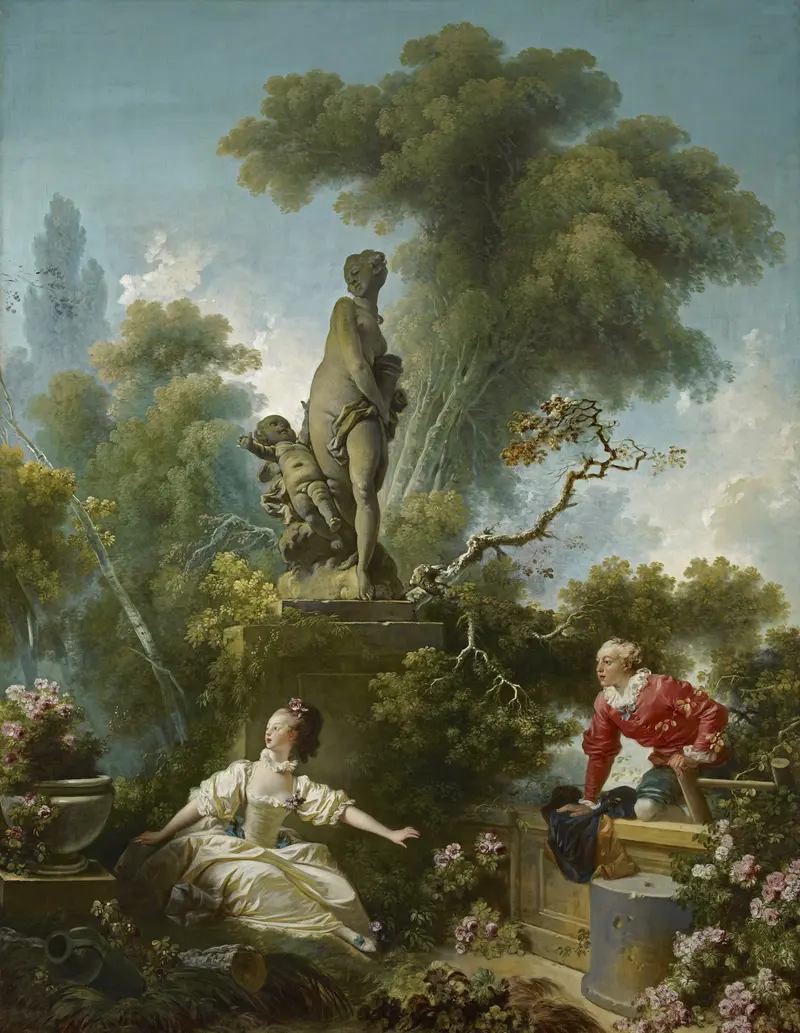 Jean-Honoré Fragonard1732–1806. Trained with Chardin and Boucher and won the Prix de Rome in 1752. Madame du Barry rejected his series The Progress of Love in favor of classicizing scenes by Vien.
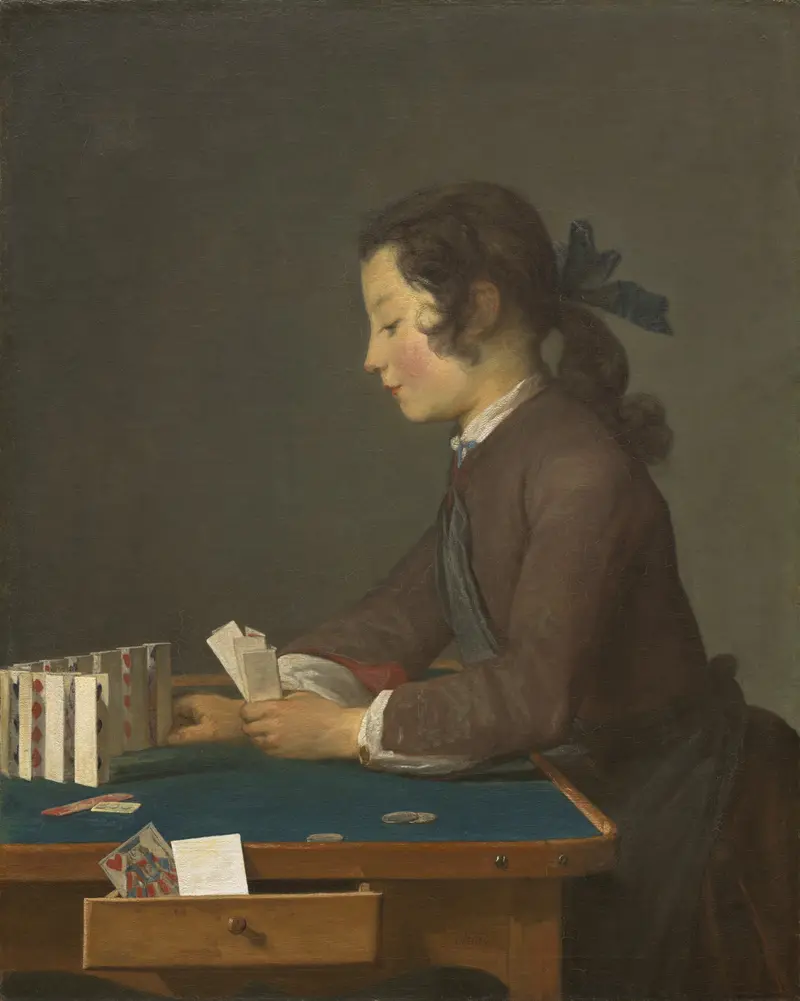 Jean-Siméon Chardin1699–1779. Entered the Academy in 1728 as a painter ‘of animals and fruits’, then painted quiet scenes of domestic life drawn from Dutch art. The young Fragonard trained with him.
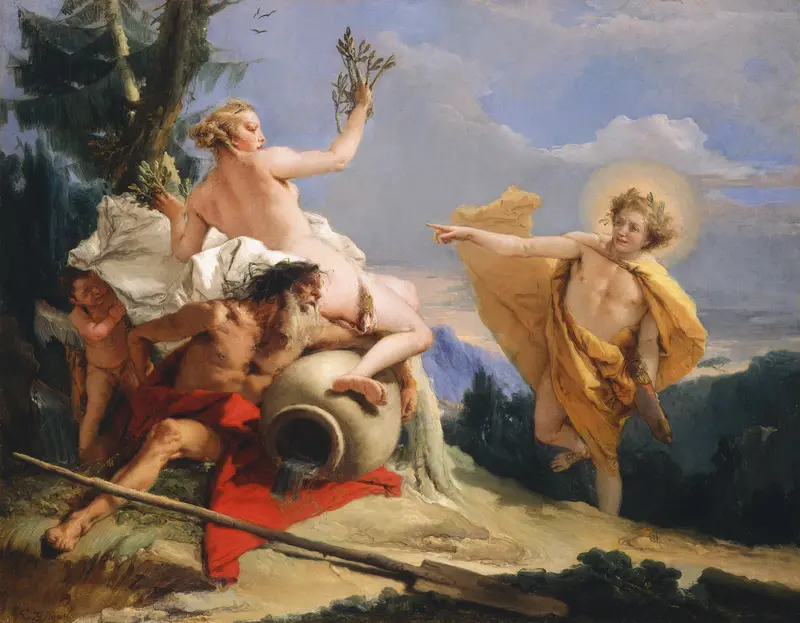 Giovanni Battista Tiepolo1696–1770. Venetian painter whom the National Gallery in London calls the greatest Italian Rococo painter. He decorated the prince-bishop's residence in Würzburg from 1750 and died in Spain.
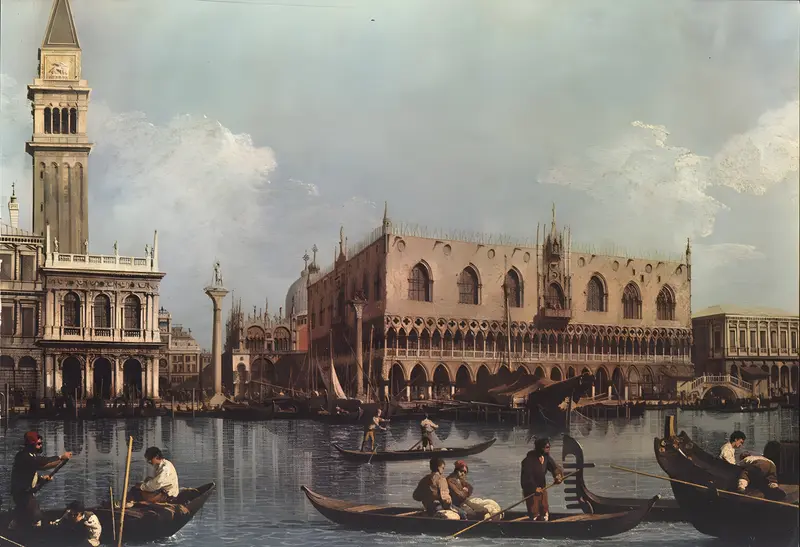
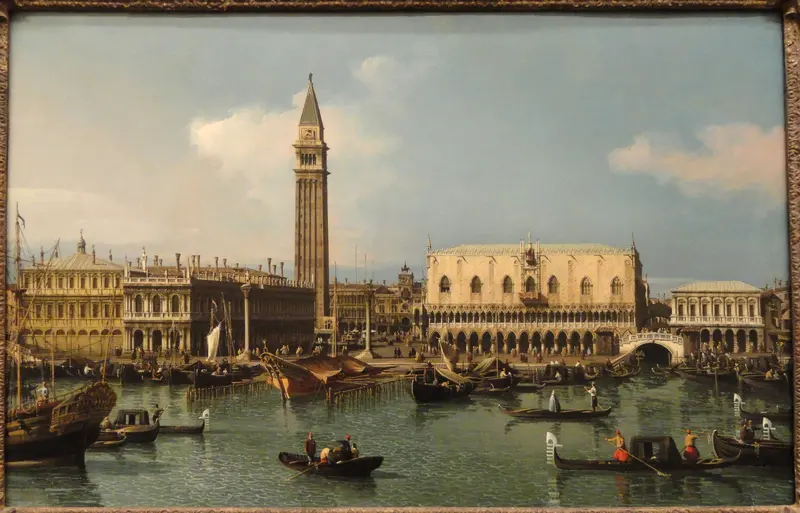
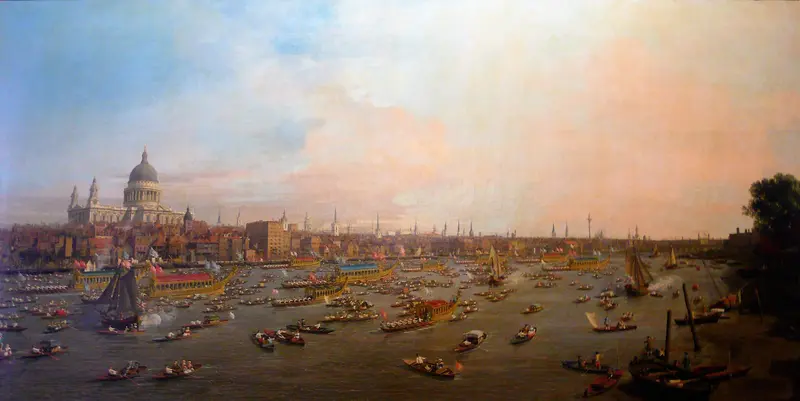
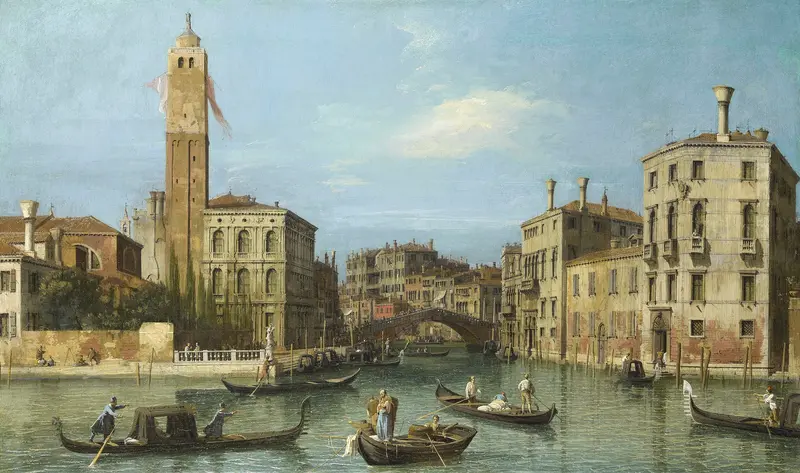
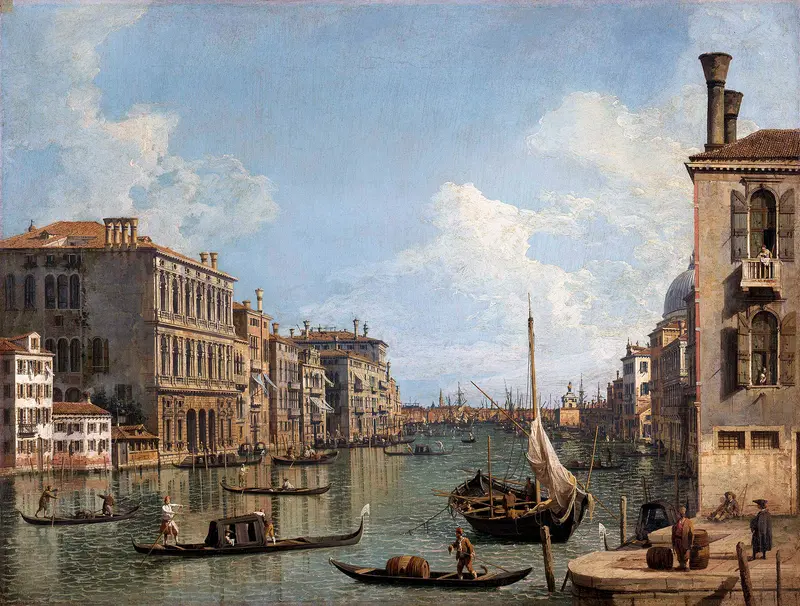
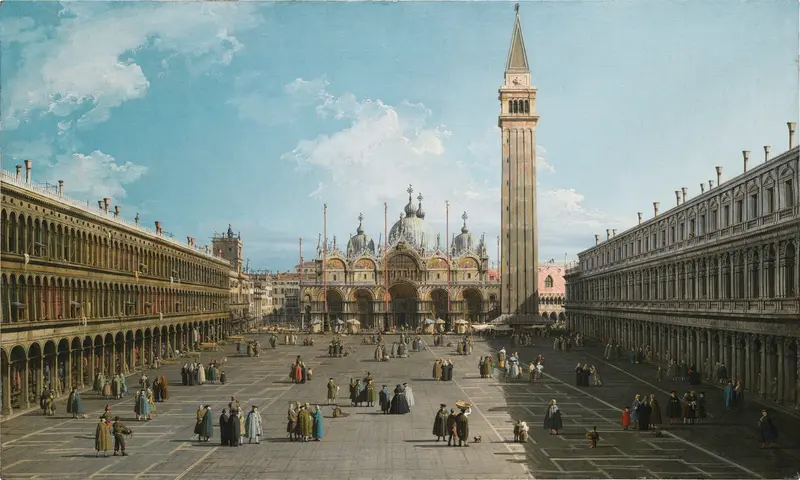
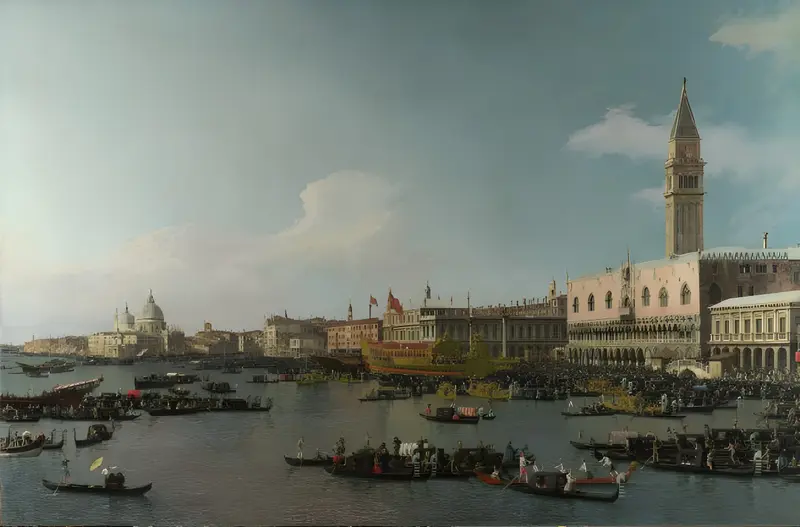 Canaletto1697–1768. Famed for precise, evocative views of Venice, many bought by English collectors; he visited England repeatedly between 1746 and 1756. His nephew Bellotto was his assistant.
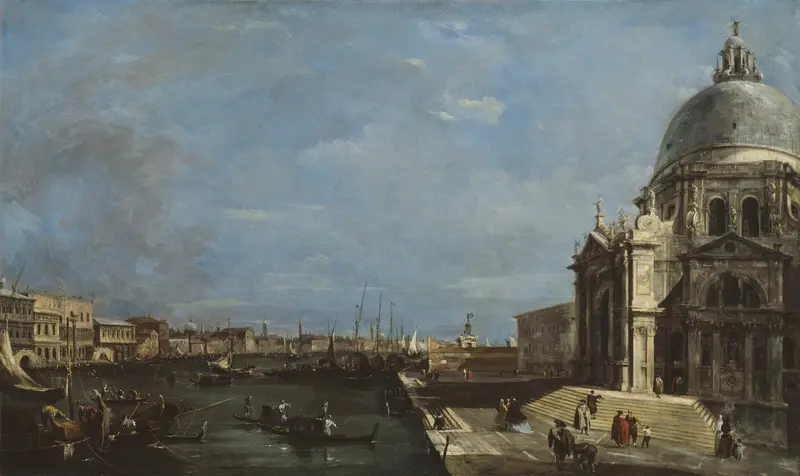 Francesco Guardi1712–1793. After Canaletto, the main painter of Venice in the 18th century. His sister married Tiepolo, and his freer handling of paint caught the city's light on water.
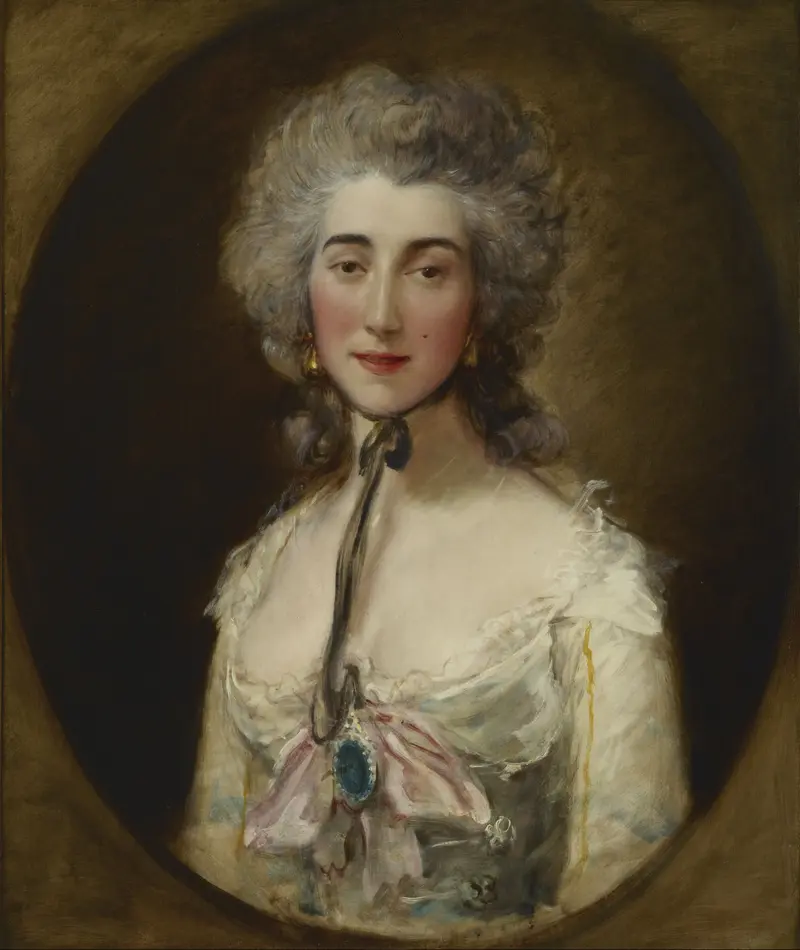 Thomas Gainsborough1727–1788. With Reynolds, the leading English portraitist of the later 18th century. Tate sees the Rococo's influence in Britain best in his dazzling portraits of women.
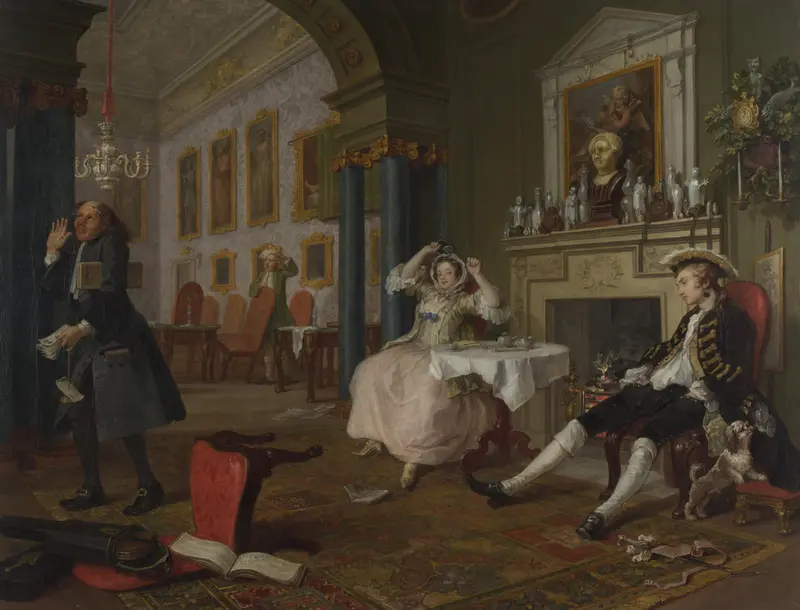 William Hogarth1697–1764. Best known for series of ‘modern moral subjects’ painted to be engraved, such as Marriage A-la-Mode. Tate sees a robust British version of the Rococo in his work.
 Élisabeth Vigée Le Brun1755–1842. Marie Antoinette's favorite painter, with over 30 portraits of the queen and her family; one of only four women admitted to the French Royal Academy in the 18th century.
Fêtes galantes: Watteau and his followers
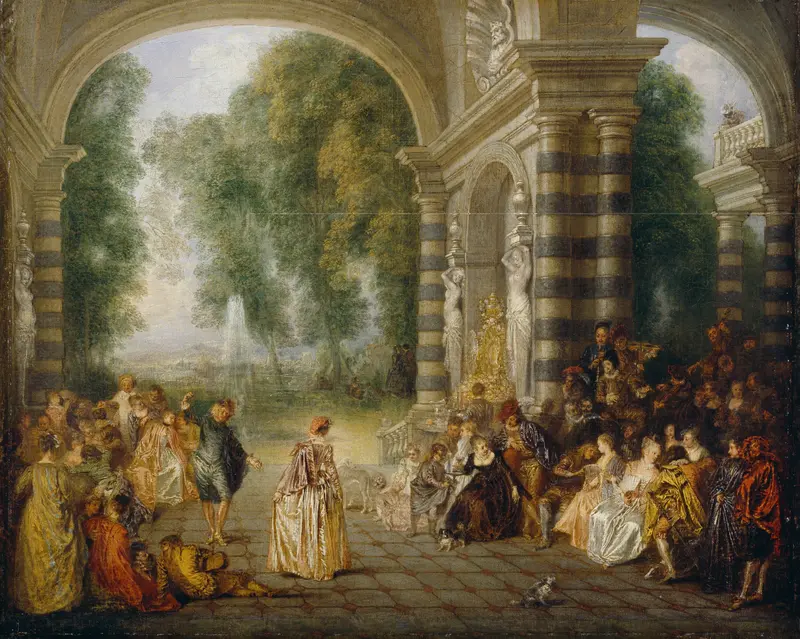
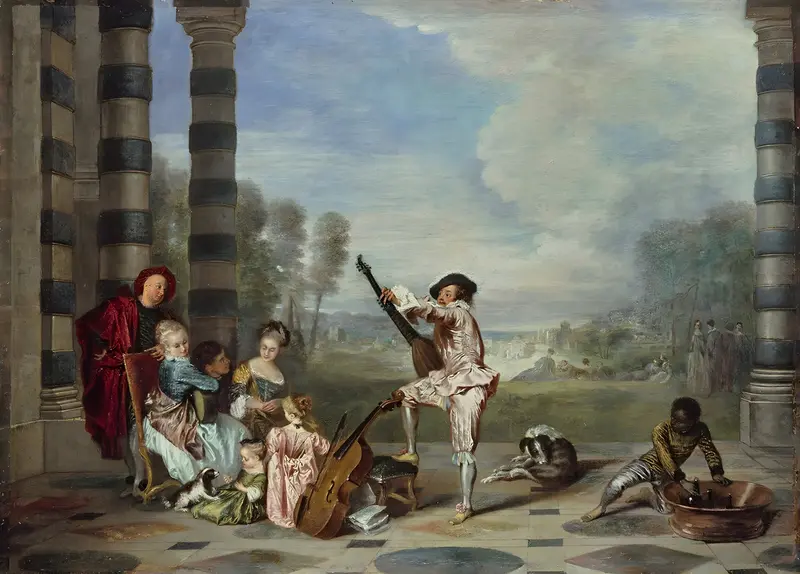
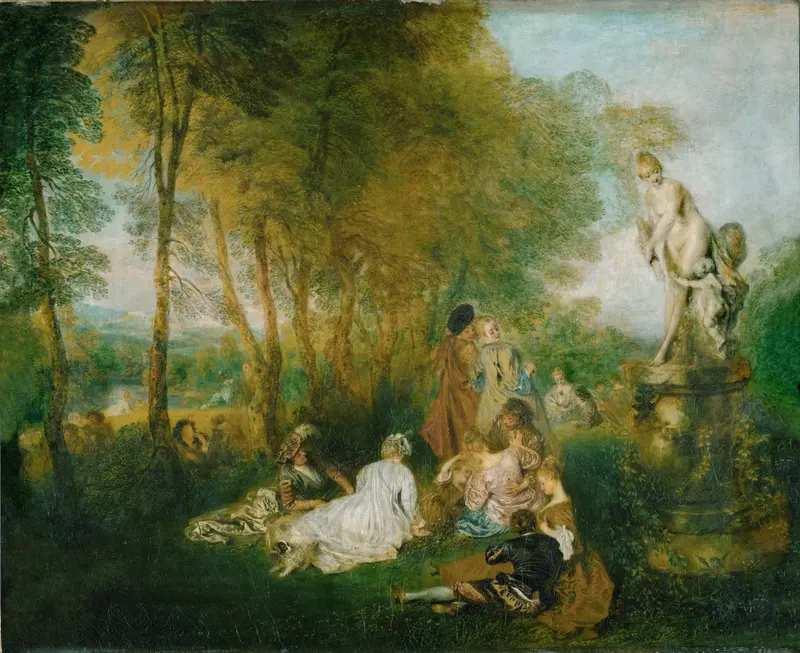
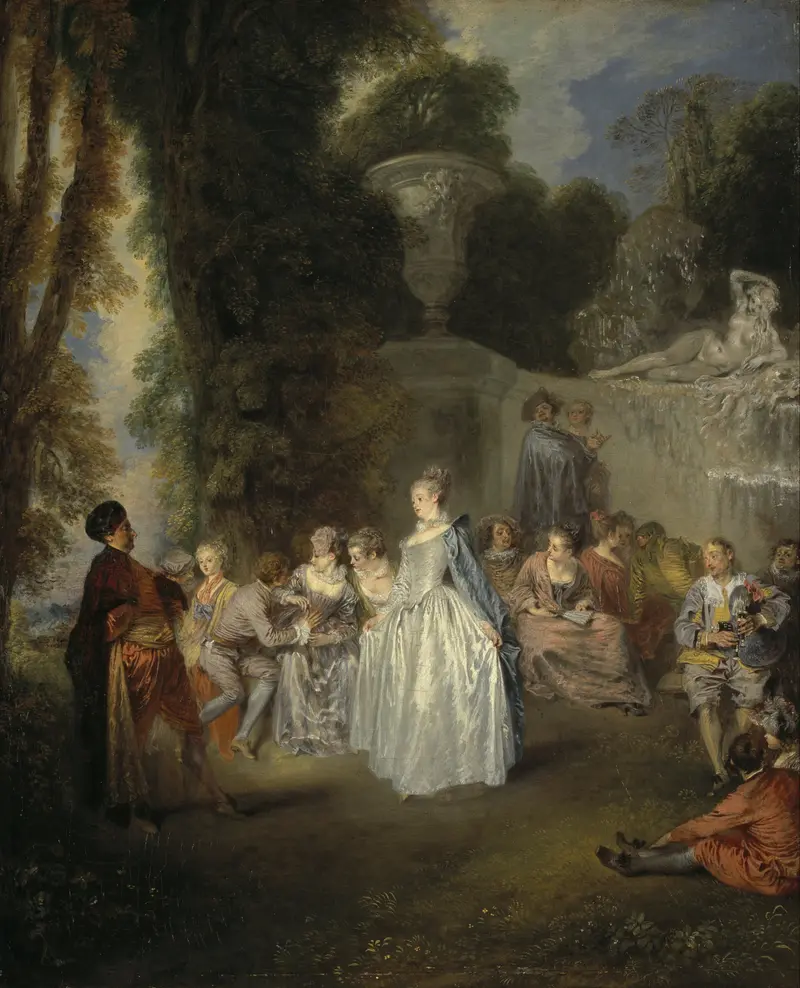
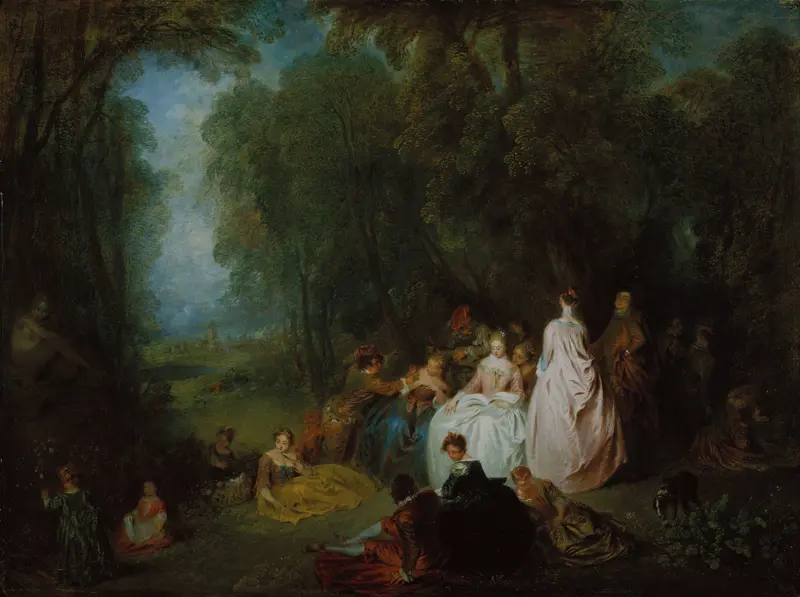
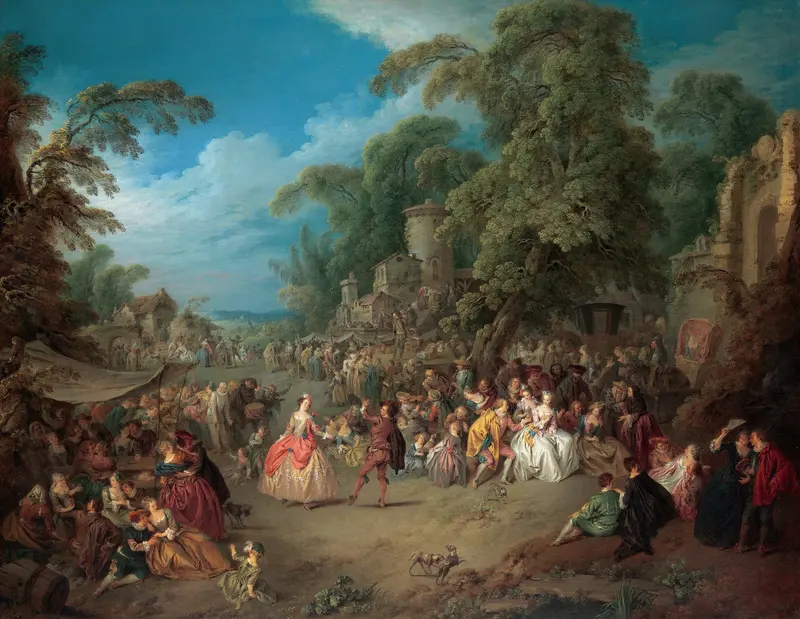
Watteau invented the fête galante, small pictures of elegant couples flirting, dancing and making music in parks, and the French Academy created a new category for it in 1717. After his death, Nicolas Lancret and his pupil Jean-Baptiste Pater took up the theme.
Rococo portraits of women
Rococo portraitists dressed their sitters in silk, flowers and the costumes of goddesses. Nattier was known above all for his portraits of women at the court of Louis XV, and Tate sees the Rococo in Britain best in Gainsborough's dazzling portraits of women.
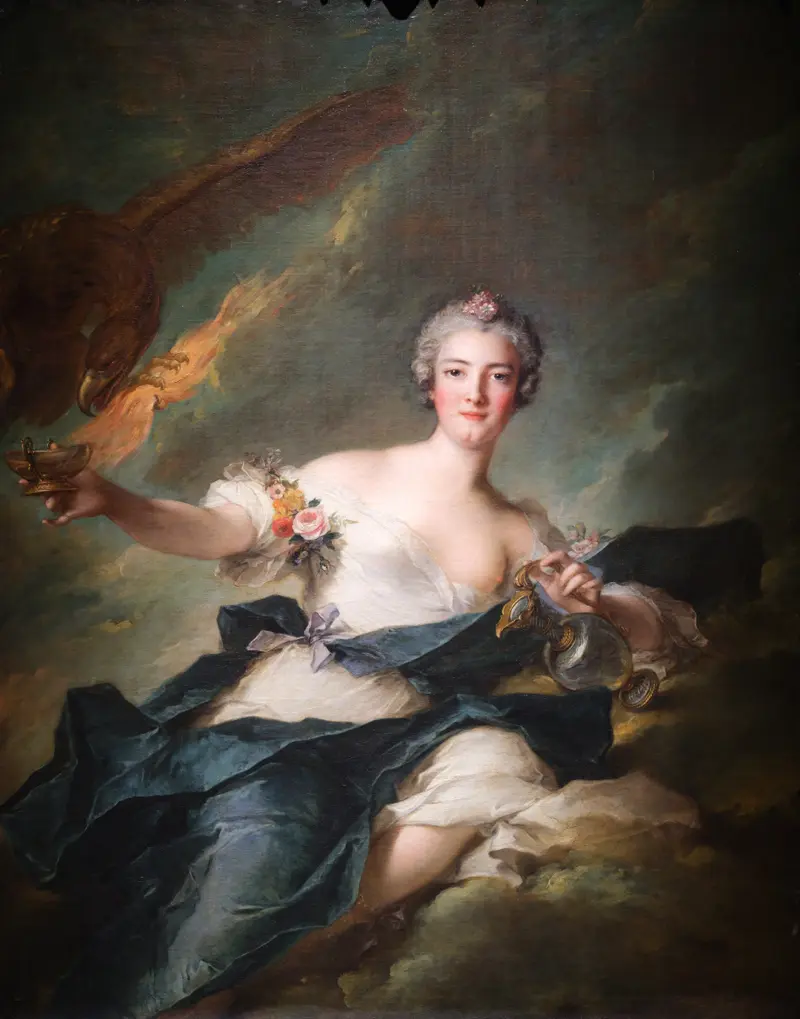 The Duchess of Chaulnes as HebeJean-Marc Nattier
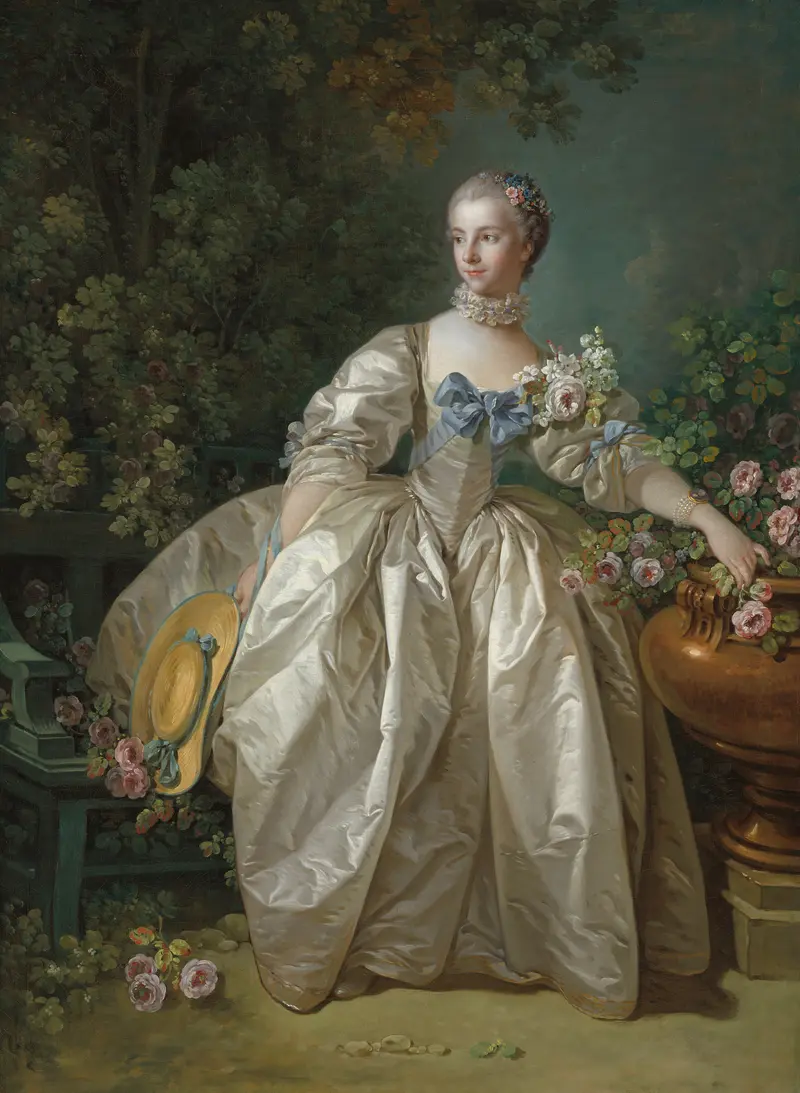 Madame BergeretFrançois Boucher
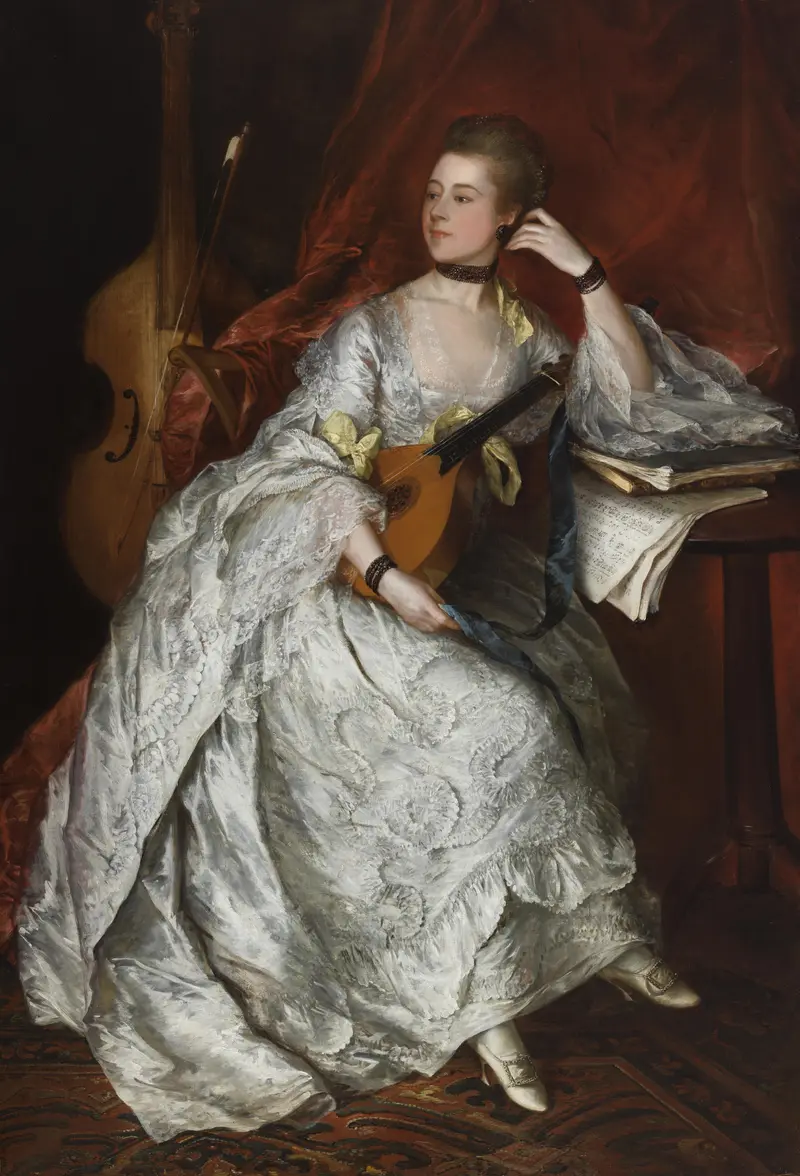 Ann Ford (later Mrs Philip Thicknesse)Thomas Gainsborough
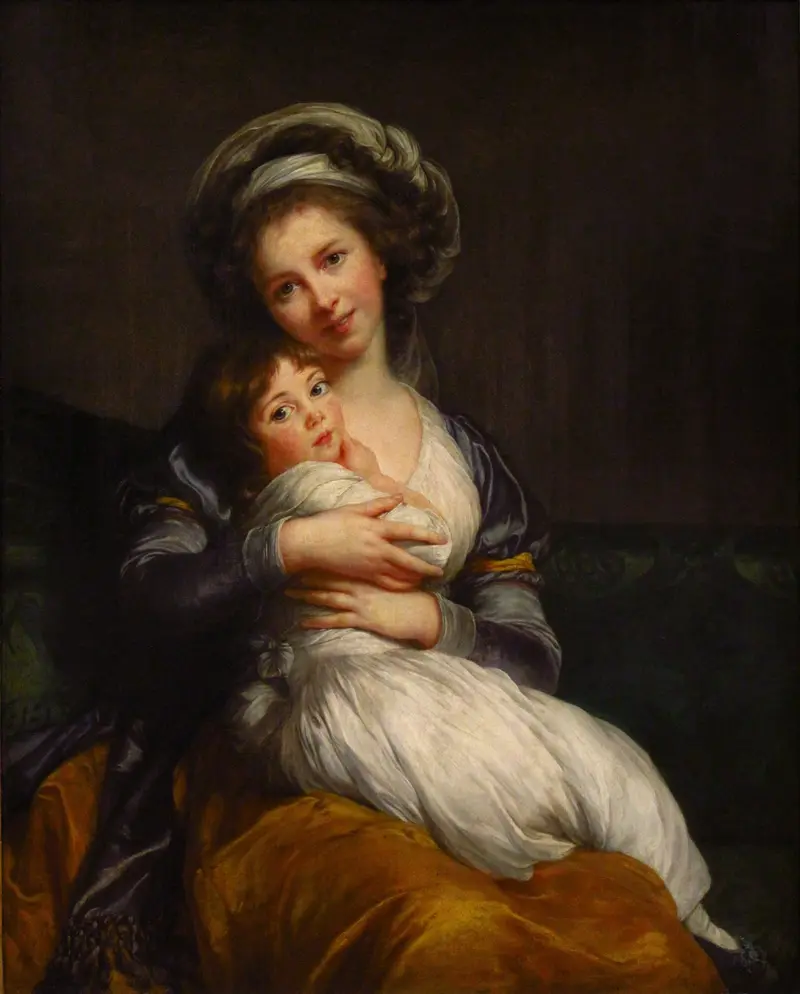 Self-Portrait with Her Daughter, JulieÉlisabeth Vigée Le Brun
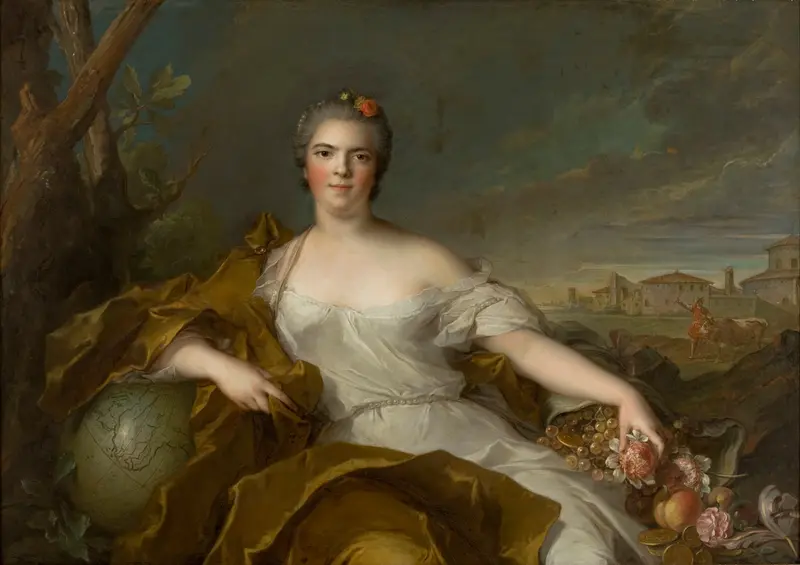 Princess Louise-Élisabeth of France as the EarthJean-Marc Nattier
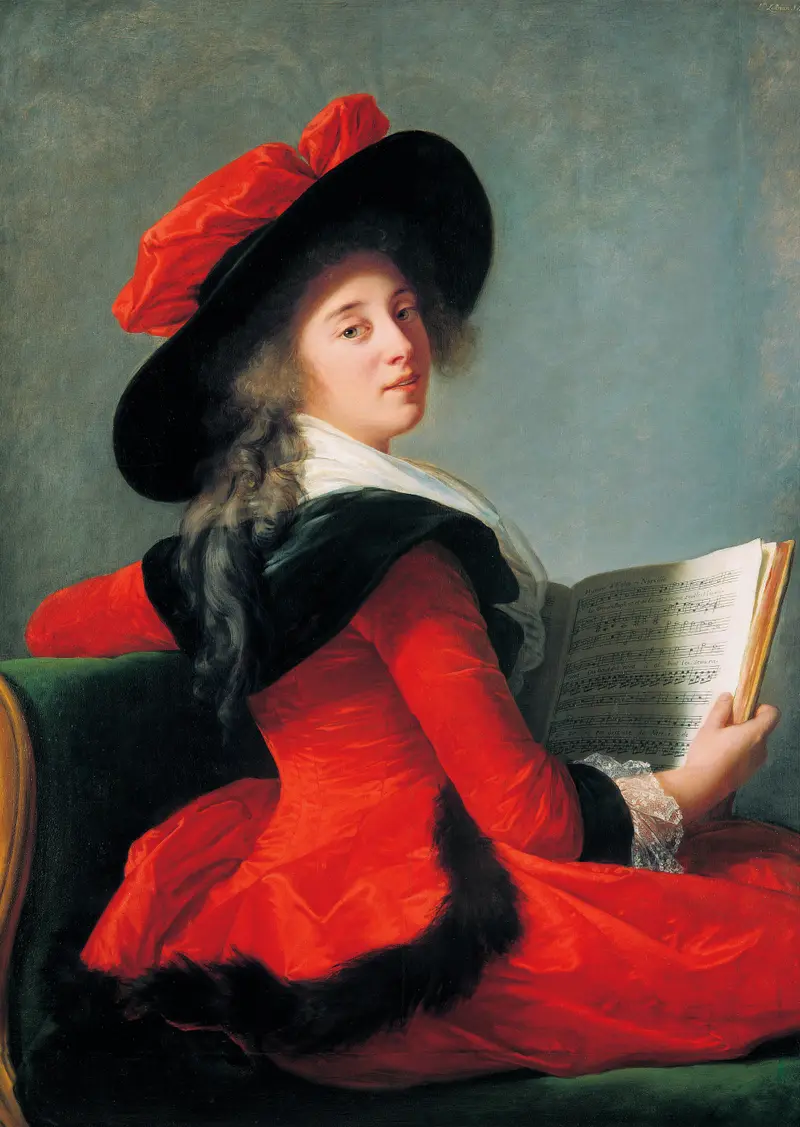 The Baronne de CrussolÉlisabeth Vigée Le Brun
Fragonard paintings
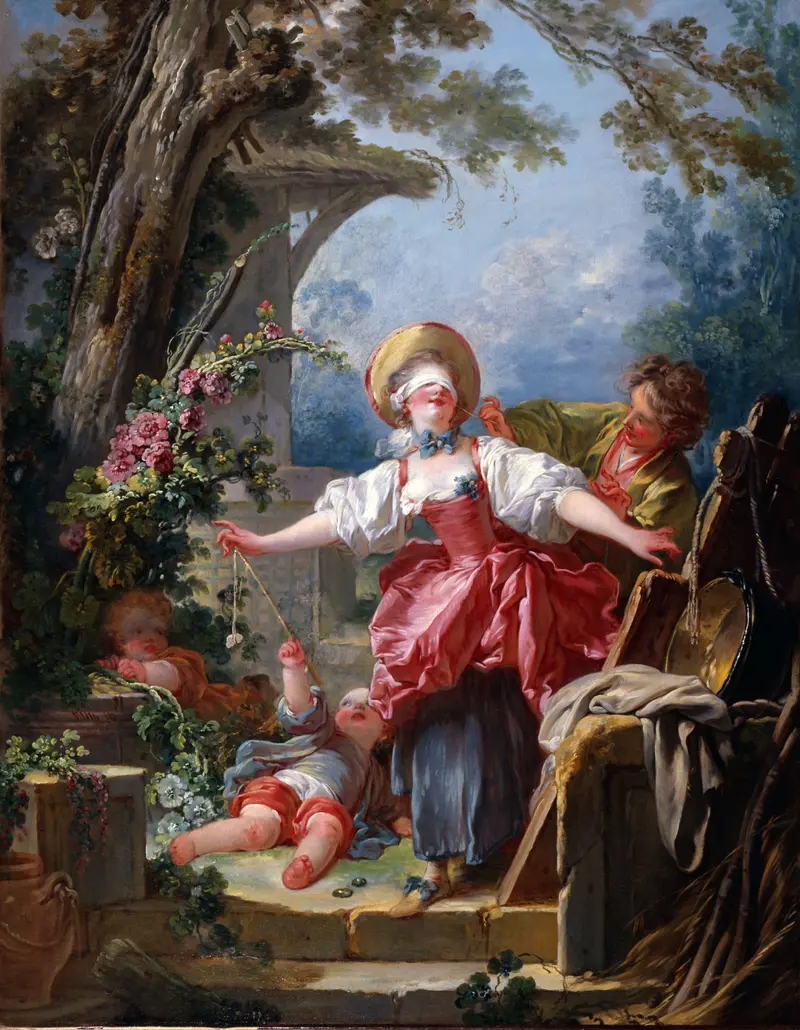
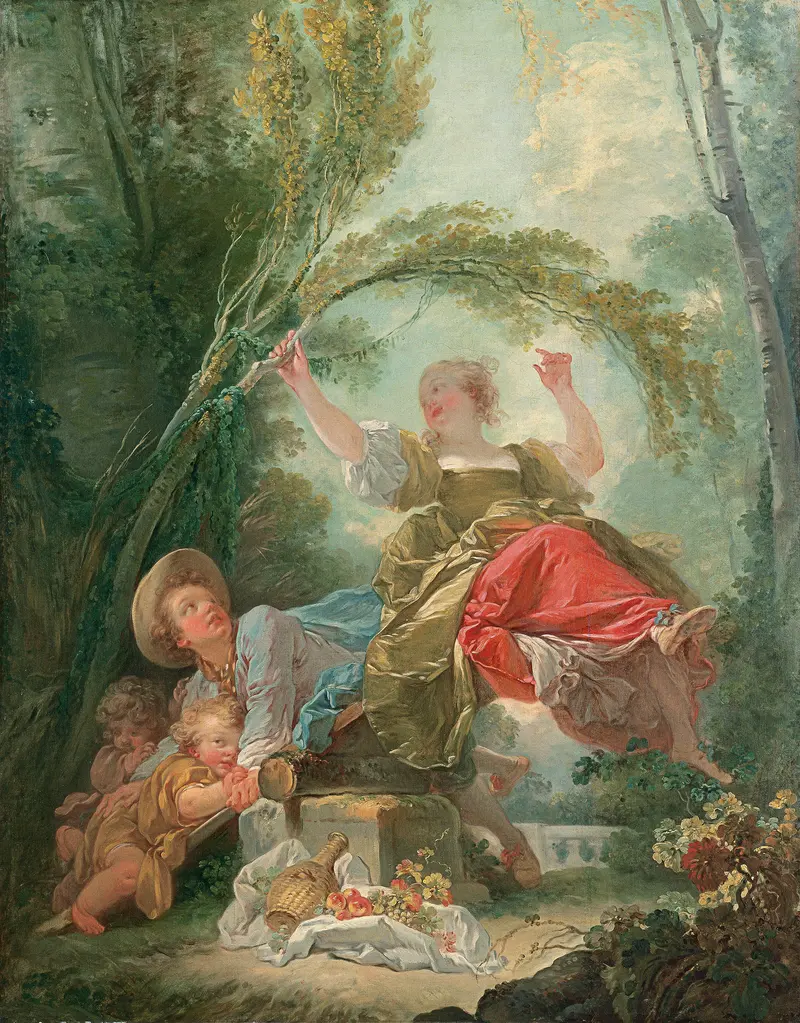
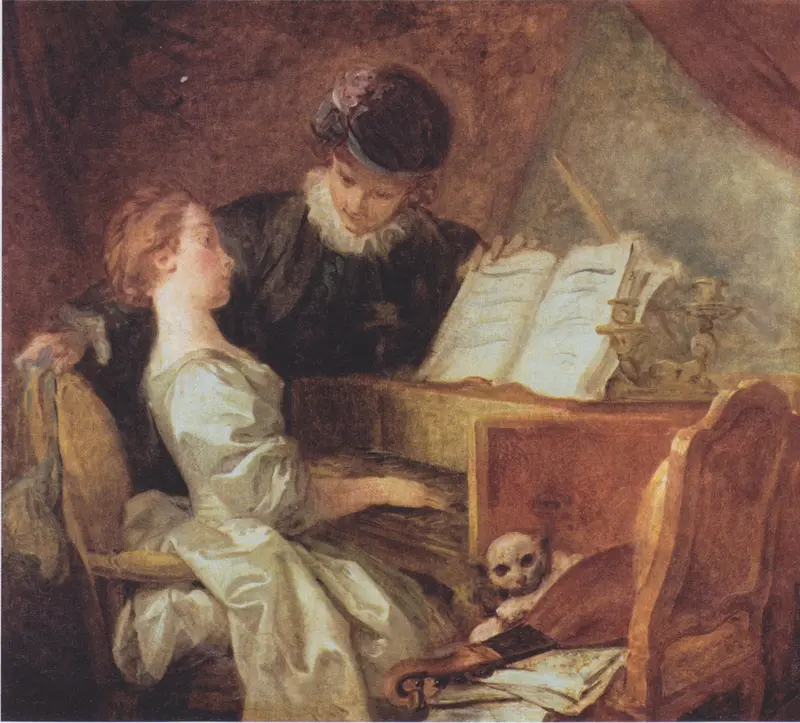
Around 1767, the Wallace Collection says, Fragonard turned from history paintings for the king to pictures for a small, well-informed circle of private collectors: games in gardens, music lessons and lovers like these.

Characteristics of the Rococo style: how to recognize it
Light, bright colors
Fragonard sets a buttercup-yellow dress against a violet cushion in quick, unblended strokes. The Getty's art vocabulary describes Rococo's light palette as a contrast to the heavier forms and darker colors of the Baroque.
A Young Girl Reading, Jean-Honoré Fragonard

Curves and asymmetry
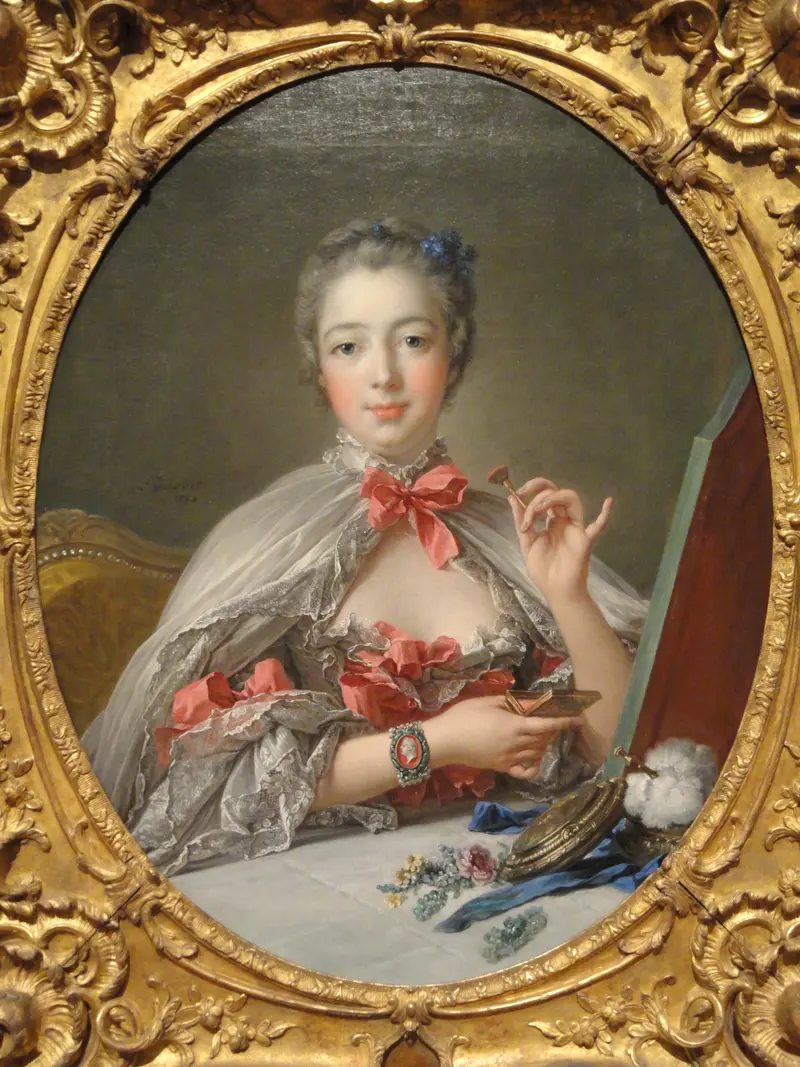
Follow the scrolls of the gilt clock, the writing table and the billowing dress: Boucher fills Madame de Pompadour's room with curving forms. A Rococo piece can be recognized by organic, asymmetrical C, G and S curves, says the Wallace Collection.
Portrait of Madame de Pompadour, François Boucher
Love, flirtation and play
A slipper flies off, an admirer hides in the roses and a statue of Cupid looks on. Flirtatious and frivolous subjects characterize the Rococo, from Watteau through Boucher to Fragonard, the Wallace Collection says.
The Swing, Jean-Honoré Fragonard
Elegant company in a park
Couples in silk pair off on a hillside and stroll down to a waiting boat. Watteau invented this kind of picture, the fête galante, and the French Academy created the category for this painting in 1717, the National Gallery in London says.
The Embarkation for Cythera, Jean-Antoine Watteau
Gods and goddesses at play
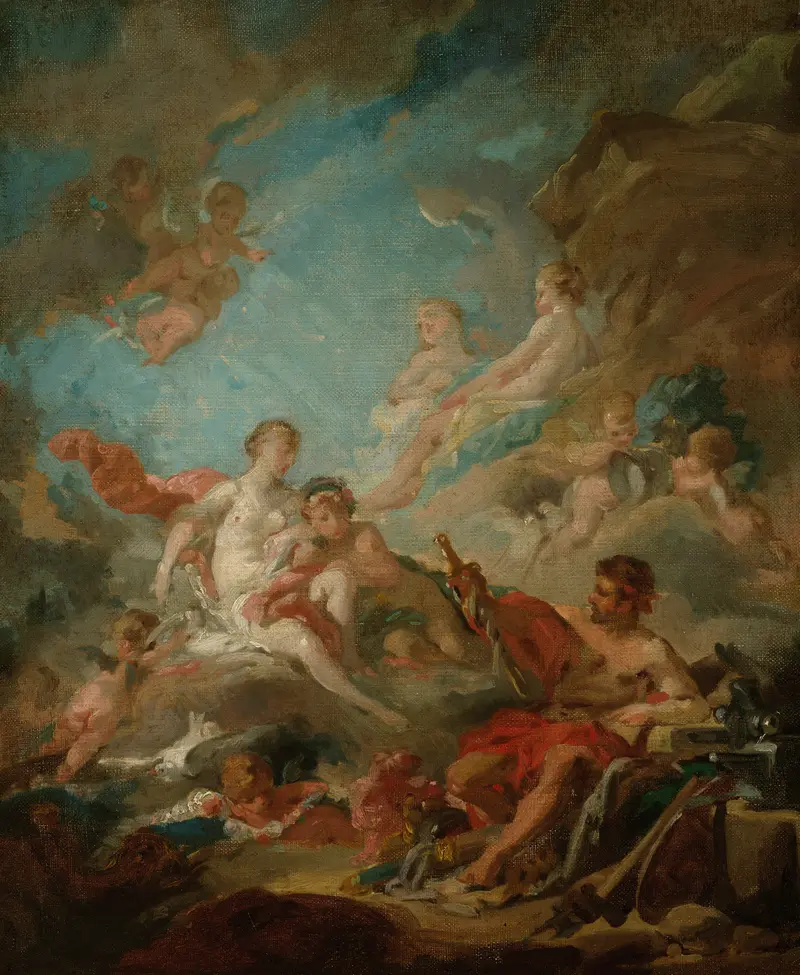
Boucher turns the goddess of the hunt into pearly skin, blue silk and the day's game. The Wallace Collection says mythological subjects let him give his scenes an erotic atmosphere, which rich collectors preferred to moralizing biblical or historical stories.
Diana leaving her Bath, François Boucher
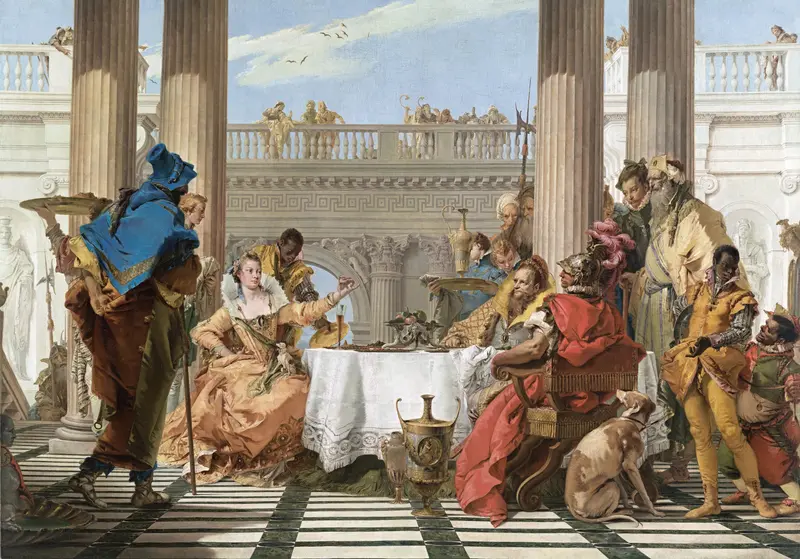
Light, airy grandeur in Venice
Tiepolo sets his feast under a pale sky between white columns. The National Gallery in London says his decorative paintings are light in color and airy in feel, even though his style was founded on the grand manner of the High Renaissance.
The Banquet Of Cleopatra, Giovanni Battista Tiepolo
Before and after Rococo
 Baroquec. 1590–1750
 Dutch Golden Age17th century
- Rocococ. 1715–1770s
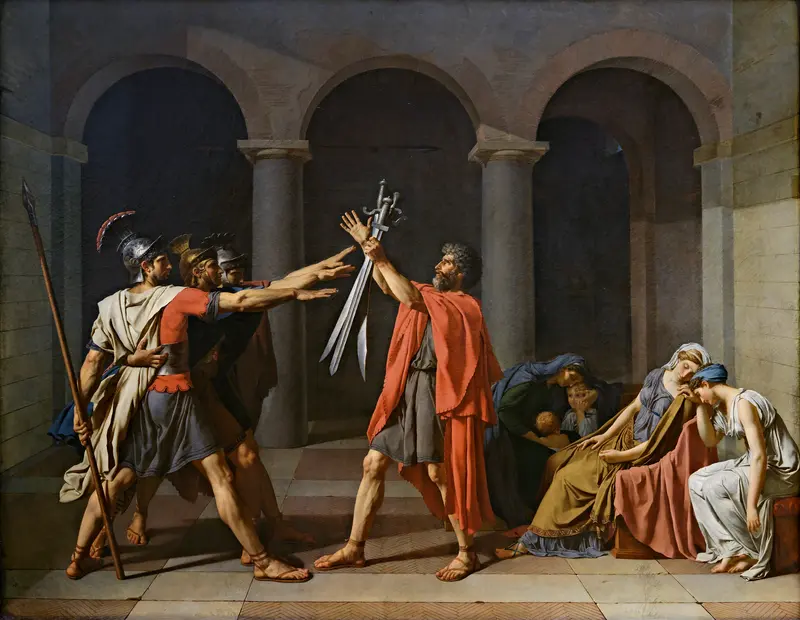 Neoclassicismc. 1750–1850
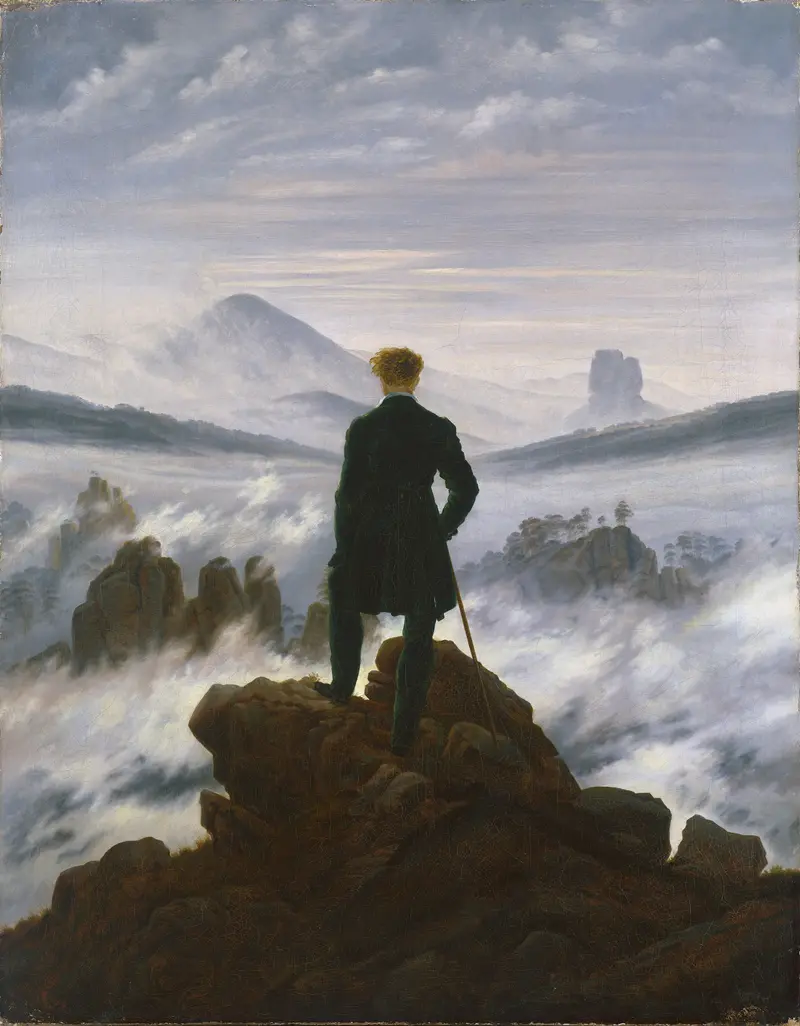 Romanticismc. 1780–1850
Rococo vs Baroque and Neoclassicism
| Compared | Baroque | Rococo | Neoclassicism |
|---|---|---|---|
| When | c. 1590–1750 | c. 1715–1770s | c. 1750–1850 |
| Subject | Religious drama, saints, kings and myths | Love, leisure, myths, pastorals and fashionable portraits | Ancient Greek and Roman history and myth |
| Look | Strong light and dark, diagonals, heavy forms | Light, bright colors, curves and asymmetry | Crisp lines, symmetry and restraint |
| Aim | To impress and move the viewer | To charm and give pleasure | Moral seriousness and classical purity |
| Famous example | Velázquez, Las Meninas | Fragonard, The Swing | David, Oath of the Horatii |
| Key artists | Caravaggio, Rubens, Velázquez | Watteau, Boucher, Fragonard | David, Ingres, Kauffmann |
List of famous Rococo paintings and their artists
The famous Rococo paintings: who painted them, when, and where each one is today.
Show the listHide the list
| Painting | Painted by | Year | Medium | Size | Located in | City |
|---|---|---|---|---|---|---|
| The Swing | Jean-Honoré Fragonard | c. 1767–1768 | Oil on canvas | 81 × 64.2 cm (31.9 × 25.3 in) | Wallace Collection | London |
| A Young Girl Reading | Jean-Honoré Fragonard | c. 1769 | Oil on canvas | 81.1 × 64.8 cm (31.9 × 25.5 in) | National Gallery of Art Washington | Washington, DC |
| The Embarkation for Cythera | Jean-Antoine Watteau | 1717 | Oil on canvas | 129 × 194 cm (50.8 × 76.4 in) | Louvre Museum | Paris |
| Mr and Mrs Andrews | Thomas Gainsborough | c. 1750 | Oil on canvas | 69.8 × 119.4 cm (27.5 × 47 in) | National Gallery London | London |
| Diana Leaving Her Bath | François Boucher | 1742 | Oil on canvas | 57 × 73 cm (22.4 × 28.7 in) | Louvre Museum | Paris |
| The Stolen Kiss | Jean-Honoré Fragonard | Late 1780s | Oil on canvas | 45 × 55 cm (17.7 × 21.7 in) | Hermitage Museum | St. Petersburg |
| Marriage A-la-Mode: 1, The Marriage Settlement | William Hogarth | c. 1743 | Oil on canvas | 69.9 × 90.8 cm (27.5 × 35.7 in) | National Gallery London | London |
| The Chocolate Girl | Jean-Étienne Liotard | c. 1744–1745 | Pastel on parchment | 82.5 × 52.5 cm (32.5 × 20.7 in) | Gemäldegalerie Alte Meister | Dresden |
| The Lady with the Veil | Alexander Roslin | 1768 | Oil on canvas | 65 × 54 cm (25.6 × 21.3 in) | Nationalmuseum | Stockholm |
| Portrait of a Violinist | Anne Vallayer-Coster | 1773 | Oil on canvas | 116 × 96 cm (45.7 × 37.8 in) | Nationalmuseum | Stockholm |
| The Stonemason's Yard | Canaletto | c. 1725 | Oil on canvas | 123.8 × 162.9 cm (48.7 × 64.1 in) | National Gallery London | London |
| Marie Antoinette and Her Children | Élisabeth Vigée Le Brun | 1787 | Oil on canvas | 271 × 195 cm (106.7 × 76.8 in) | Palace of Versailles | Versailles |
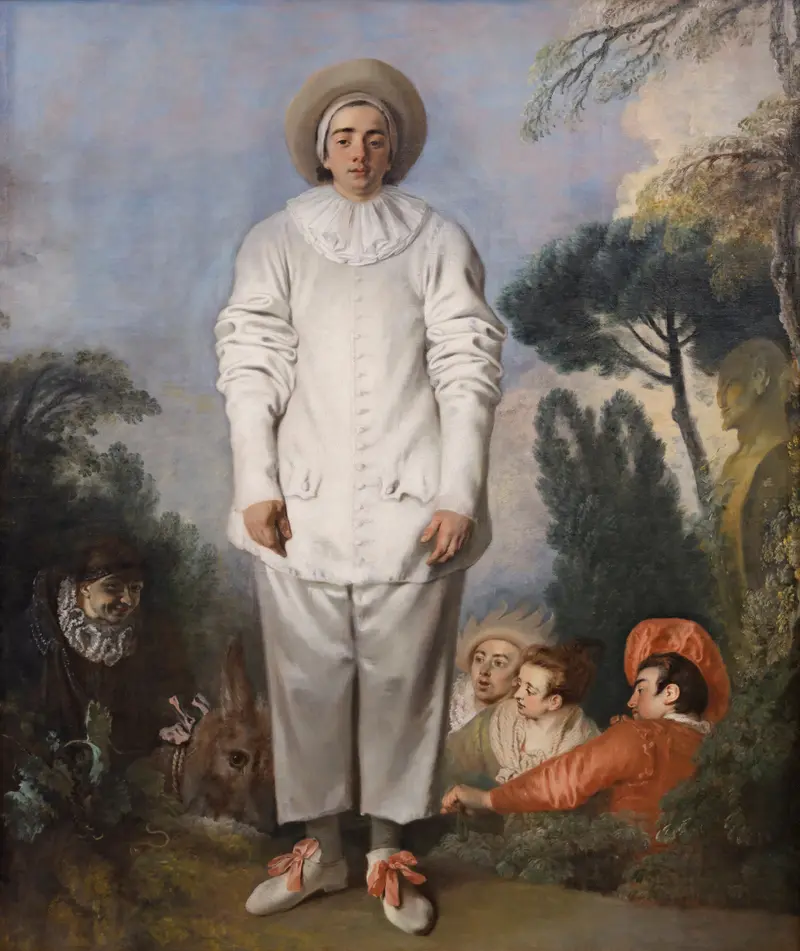
| Pierrot (Gilles) | Jean-Antoine Watteau | c. 1718–1719 | Oil on canvas | 184.3 × 155.7 cm (72.6 × 61.3 in) | Louvre Museum | Paris |
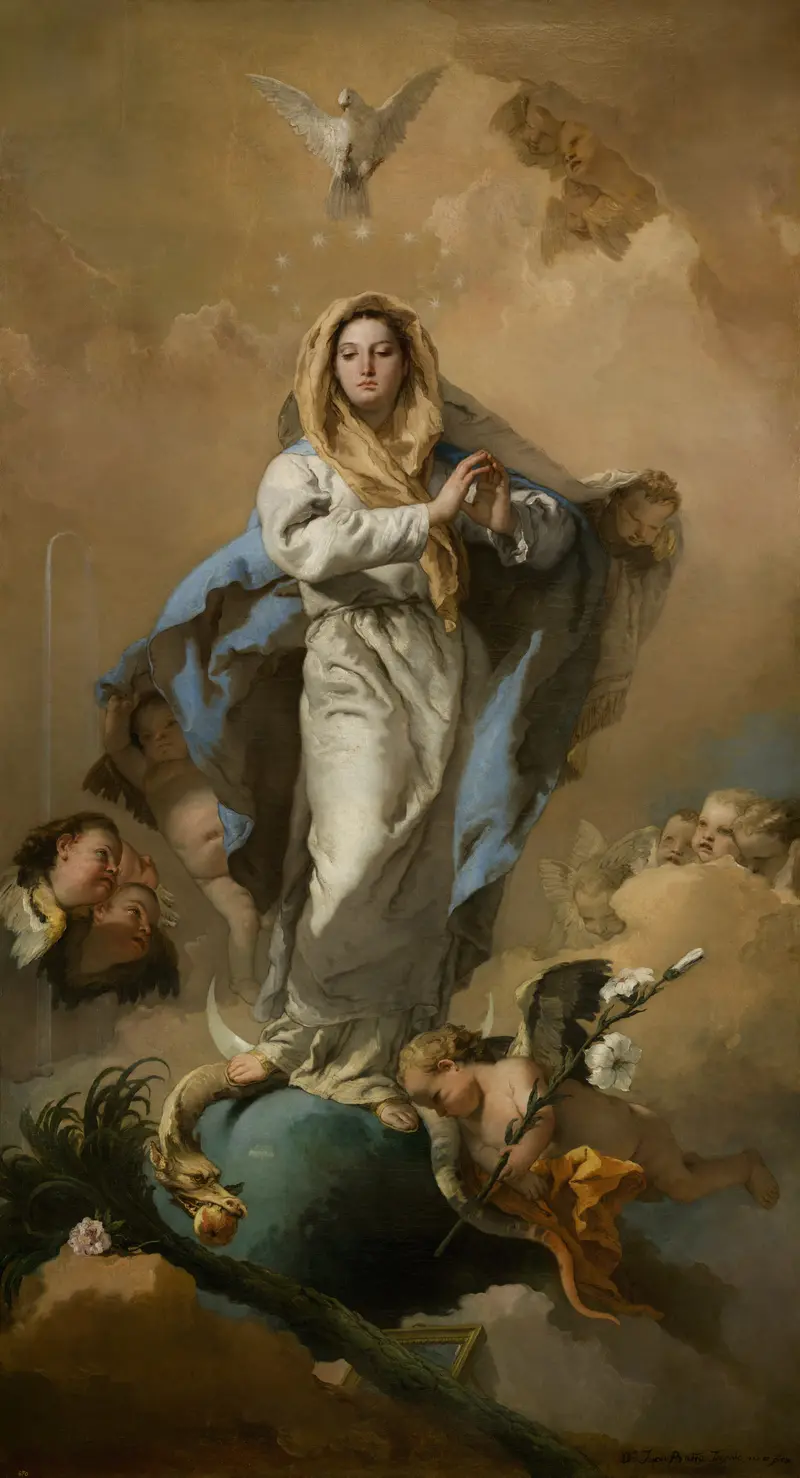
| The Immaculate Conception | Giovanni Battista Tiepolo | 1767 | Oil on canvas | 281 × 155 cm (110.6 × 61 in) | Museo del Prado | Madrid |
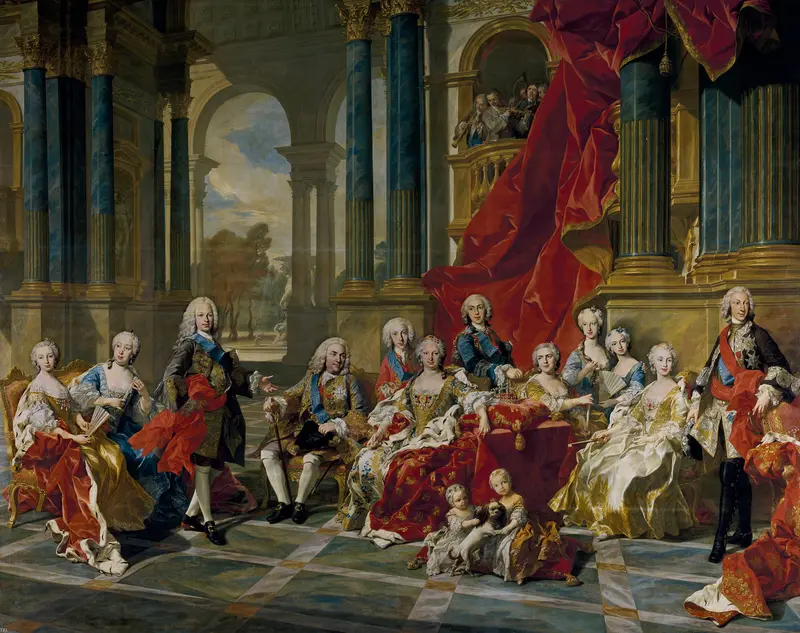
| The Family of Philip V | Louis-Michel van Loo | 1743 | Oil on canvas | 408 × 520 cm (160.6 × 204.7 in) | Museo del Prado | Madrid |
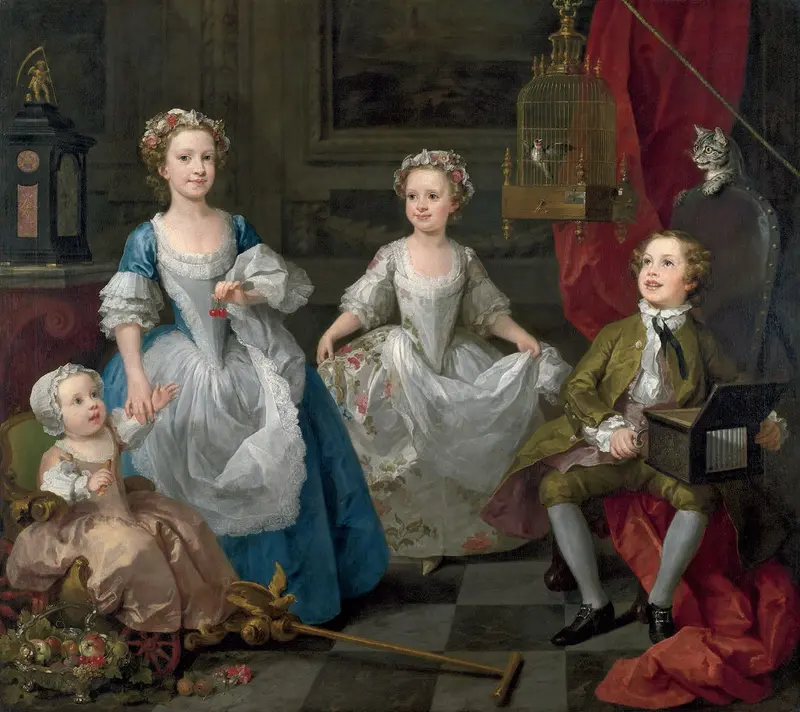
| The Graham Children | William Hogarth | 1742 | Oil on canvas | 160.5 × 181 cm (63.2 × 71.3 in) | National Gallery London | London |
| Madame de Pompadour | François Boucher | 1759 | Oil on canvas | 91 × 68 cm (35.8 × 26.8 in) | Wallace Collection | London |
| The Birth of Venus | François Boucher | 1754 | Oil on canvas | 79.2 × 138.7 cm (31.2 × 54.6 in) | Wallace Collection | London |
| The Ray | Jean-Siméon Chardin | 1728 | Oil on canvas | 114.5 × 146 cm (45.1 × 57.5 in) | Louvre Museum | Paris |
| Marie Antoinette with a Rose | Élisabeth Vigée Le Brun | 1783 | Oil on canvas | 113 × 87 cm (44.5 × 34.3 in) | Palace of Versailles | Versailles |
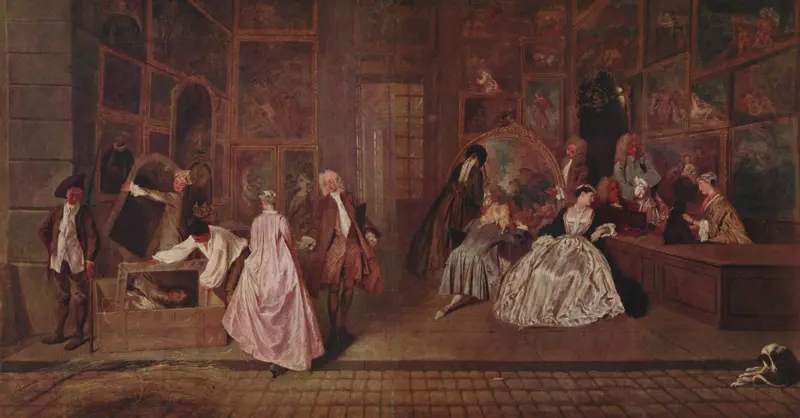
| The Shop Sign of Gersaint | Jean-Antoine Watteau | 1720 | Oil on canvas | 163 × 306 cm (64.2 × 120.5 in) | Charlottenburg Palace | Berlin |
| A Rake's Progress: 1, The Heir | William Hogarth | 1734 | Oil on canvas | 62.2 × 75 cm (24.5 × 29.5 in) | Sir John Soane's Museum | London |
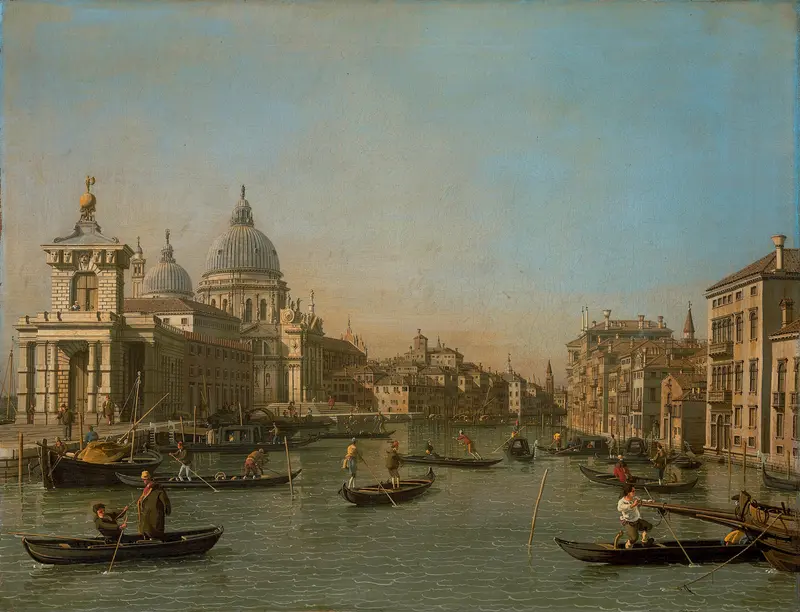
| The Entrance to the Grand Canal, Venice | Canaletto | c. 1730 | Oil on canvas | 49.6 × 73.6 cm (19.5 × 29 in) | Museum of Fine Arts, Houston | Houston |
| The Banquet of Cleopatra | Giovanni Battista Tiepolo | 1743–1744 | Oil on canvas | 250.3 × 357 cm (98.5 × 140.6 in) | National Gallery of Victoria | Melbourne |
| Self Portrait in a Straw Hat | Élisabeth Vigée Le Brun | 1782 | Oil on canvas | 97.8 × 70.5 cm (38.5 × 27.8 in) | National Gallery London | London |
Rococo: questions and answers
What does Rococo mean in art?
In art, Rococo means the light, playful and highly decorative style that grew up in France in the early 1700s, after the death of Louis XIV, as a reaction to the Baroque grandeur of Versailles. Tate describes it as light, sensuous and intensely decorative, a style of short curves, scrolls and counter-curves. The Getty's art vocabulary adds opulence, asymmetry, grace, gaiety and a light palette, in contrast to the heavier forms and darker colors of the Baroque.
Sources: Tate: Rococo · Getty AAT: Rococo
What are the characteristics of Rococo art?
Rococo art is light, curving and playful: pastel colors, asymmetrical C- and S-shaped curves, shells and flowers, and subjects of love, leisure and myth. The National Gallery in London says it is dominated by asymmetry, curved forms and light, bright colors. The Wallace Collection adds that pink and turquoise were favorite hues, that rustic shepherds and shepherdesses were a favorite theme, and that flirtatious, frivolous subjects run from Watteau through Boucher to Fragonard.
Sources: National Gallery: Rococo (glossary) · Wallace Collection: What is Rococo? · Wallace Collection: Re-viewing the Rococo
When did the Rococo period start and end?
Rococo began in France around 1715 and was out of fashion by the 1780s. Tate says it developed after the death of Louis XIV in 1715, in reaction to the Baroque grandeur of Versailles, and the National Gallery in London ties it to the reign of Louis XV (1715–1774). By the 1780s, the Wallace Collection says, a revolution in taste had replaced it with Neoclassicism, and by the French Revolution of 1789 it had fallen from favor entirely.
Sources: Tate: Rococo · National Gallery: Rococo (glossary) · Wallace Collection: Re-viewing the Rococo · Wallace Collection: What is Rococo?
Where did Rococo originate?
Rococo originated in France, at the court of Louis XV, and spread across Europe from there. The Getty's art vocabulary says it emerged in France around 1700 and dominated Europe until the Classical Revival of the late 18th century. The Wallace Collection says it was also popular in Italy, southern Germany, Austria and Russia, and Tate says the painter Philip Mercier brought it to Britain.
Sources: Getty AAT: Rococo · Wallace Collection: What is Rococo? · Tate: Rococo
How did Rococo get its name?
Rococo is named after rocaille, the French word for the shell-covered rock-work used to decorate artificial grottoes and fountains. The Wallace Collection says the word was first used in the early 1730s for anything exaggerated, asymmetrical or irregular, and only later for the fashionable style. The National Gallery in London notes that Neoclassical critics of the late 18th century applied the label as an insult.
Sources: Wallace Collection: What is Rococo? · Tate: Rococo · National Gallery: Rococo (glossary)
Who started Rococo?
No single artist started Rococo: it began as a style of interior decoration in France, and painters took it up. In painting, Antoine Watteau came first. The National Gallery in London says he invented the fête galante, and that the French Academy created a new category for his Pilgrimage to Cythera in 1717. Tate names Watteau, François Boucher and Jean-Honoré Fragonard as the painters who exemplify the style.
Sources: Getty AAT: Rococo · National Gallery: Jean-Antoine Watteau · Tate: Rococo
Why did Rococo end?
Rococo ended because taste turned against it as frivolous and decadent. In the 1750s and 1760s critics such as Denis Diderot attacked Boucher's pastorals as false and over-refined, just as Neoclassicism was stirring. By the 1780s, the Wallace Collection says, its curves and candy colors had given way to the clean lines of Neoclassicism, and the revolutionaries of 1789 condemned it as the style of a decadent, over-privileged class.
Sources: Wallace Collection: Boucher the artist · Wallace Collection: Boucher and the pastoral · Wallace Collection: Re-viewing the Rococo · Wallace Collection: What is Rococo?
What is the difference between Baroque and Rococo?
Baroque is the grand, dramatic style of the 17th century; Rococo, from early 18th-century France, is lighter, more intimate and more playful. Tate describes Baroque as dynamic and realistic and closely tied to the Catholic Counter-Reformation, and Rococo as a reaction to the Baroque grandeur of Versailles. The Getty contrasts Rococo's light palette with the heavier forms and darker colors of the Baroque.
Sources: Tate: Baroque · Tate: Rococo · Getty AAT: Rococo
What is the difference between Rococo and Neoclassicism?
Rococo is curving, colorful and frivolous; Neoclassicism, which replaced it, is severe and morally serious, modeled on ancient Greece and Rome. Tate dates Neoclassicism from about 1750, fed by the discovery of Pompeii and Winckelmann's history of ancient art. The Wallace Collection says that by the 1780s Rococo's asymmetrical curves had given way to the clean, clear lines and primary colors of Neoclassicism.
Sources: Tate: Neoclassicism · Wallace Collection: Re-viewing the Rococo
Who are the famous Rococo artists?
The best-known Rococo painters are Antoine Watteau, François Boucher and Jean-Honoré Fragonard in France, the three Tate names as the style's exemplars. Others include Jean-Siméon Chardin, Jean-Marc Nattier and Élisabeth Vigée Le Brun in France; Giovanni Battista Tiepolo in Italy, whom the National Gallery in London calls the greatest Italian Rococo painter; and William Hogarth and Thomas Gainsborough in Britain, where Tate traces the style's influence.
Sources: Tate: Rococo · National Gallery: Giovanni Battista Tiepolo
What is a fête galante?
A fête galante is a painting of elegantly dressed men and women flirting, dancing and making music in a park, the kind of picture Watteau invented. The National Gallery in London describes them as small cabinet pictures that explore the psychology of love, usually in a landscape, and says the French Academy created the new category when Watteau presented his Pilgrimage to the Isle of Cythera in 1717. Nicolas Lancret and Jean-Baptiste Pater took up the theme.
Sources: National Gallery: Jean-Antoine Watteau · National Gallery: Nicolas Lancret · National Gallery: Jean-Baptiste Pater
What is The Swing by Fragonard about?
The Swing shows a young woman on a swing, pushed by an older man, while her admirer looks up at her from the bushes. The Wallace Collection, which owns it, traces it to a commission of 1767: a gentleman of the court wanted his mistress painted on a swing pushed by a bishop, with himself admiring her legs; the painter Doyen refused and suggested Fragonard. In the finished picture the older man is no longer a priest, and a statue of Cupid by Falconet comments on the story.
Sources: Wallace Collection
Where can you see famous Rococo paintings?
Paris and London hold the largest groups. The Louvre has Watteau's Pilgrimage to Cythera and Pierrot, Boucher's Diana Leaving Her Bath and Chardin's The Ray. The Wallace Collection in London has Fragonard's The Swing and Boucher's 1759 portrait of Madame de Pompadour, and the National Gallery in London has Gainsborough's Mr and Mrs Andrews and Hogarth's Marriage A-la-Mode. In the United States, the National Gallery of Art in Washington has Fragonard's A Young Girl Reading, and the Metropolitan Museum of Art has Watteau's Mezzetin.
Sources: Louvre Museum · Wallace Collection · Wallace Collection: Madame de Pompadour's portrait · National Gallery, London · National Gallery of Art, Washington (Google Arts & Culture)
Is Rococo art in the public domain, and can I download it free?
Yes. Every painter on this page died by 1842, so their paintings are in the public domain in the United States and in countries where copyright ends 70 years after the artist's death. You can download them free and use them for anything, including commercial projects. A few countries have their own rules on photographs of artworks, so check them if you publish outside the U.S.
Sources: Cornell University Library: Copyright Term and the Public Domain
How we chose the famous paintings
The famous paintings on this page are the Rococo paintings known most widely around the world, measured by the number of languages that have an encyclopedia entry about each one, checked in November 2026. No painter has more than three of them, which is why Fragonard's The Lock and Blind Man's Bluff and more of Boucher's myths appear in the rows and the full collection further down.
We include only paintings that our catalogue, the holding museum or Wikidata classes as Rococo, and only where our own image shows the right painting without its frame. Hogarth's Marriage A-la-Mode and A Rake's Progress are series, so we show the first scene of each. Liotard's The Chocolate Girl is a pastel on parchment, the one work here not painted in oil.
Dates, sizes and locations come from the museums' own records and from Wikidata.
Spotted a mistake? Tell us and we will correct it.