Interieur van de ridderzaal van het Schloss Brühl — History & Facts
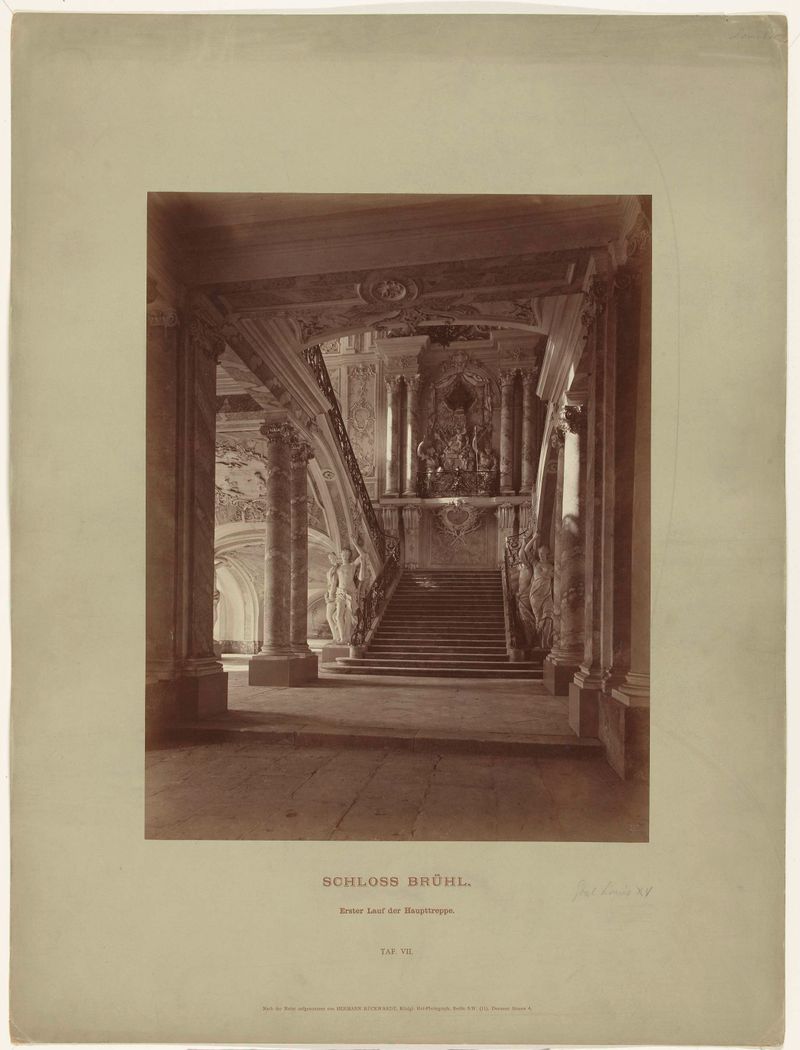
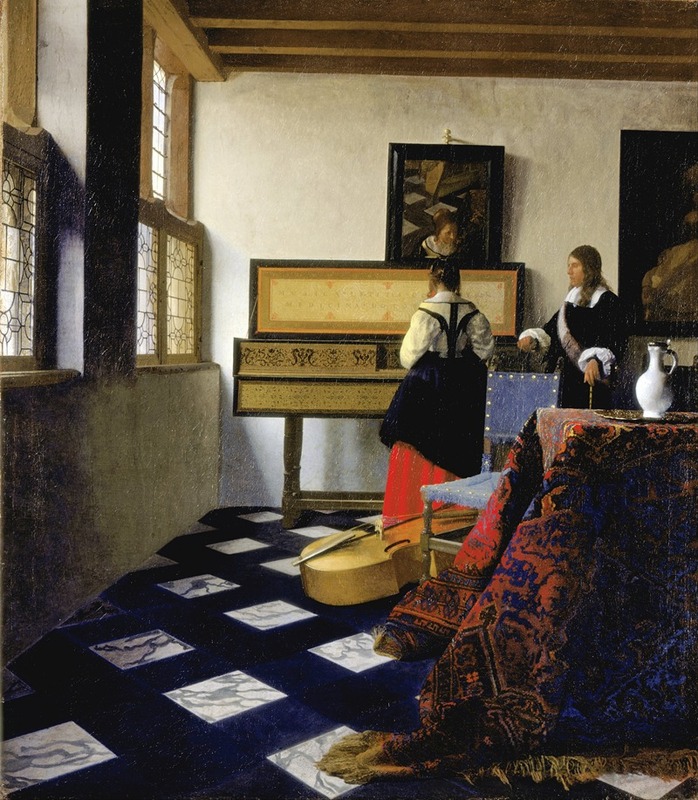
Where does light end, and longing begin? In the intimate confines of a grand hall, illuminated reflections beckon the spirit of awakening. Look to the left at the intricate details of the ornate woodwork, each carved element whispering tales of history and grandeur. Focus on the soft interplay of light streaming through the tall windows, casting long shadows that dance upon the polished floor. Notice how the color palette—rich browns, muted golds, and deep greens—evokes a sense of both comfort and melancholy, inviting the viewer to step into a moment suspended in time. The juxtaposition of opulence and emptiness creates an emotional landscape that resonates deeply.
The absence of figures amplifies the sense of longing, as if the hall itself is yearning for the vibrancy of life that once filled it. Small details, like a solitary beam of light tracing the edge of a table, suggest the passage of time and the memories held within the walls, each corner echoing unspoken stories of the past. In 1883, Hermann Rückwardt was immersed in the artistic currents of late 19th-century Europe, a time marked by romanticism and a growing fascination with realism. Living in Germany, he was influenced by the prevailing taste for historical subjects, yet he sought to infuse his work with personal emotion and depth.
Interieur van de ridderzaal van het Schloss Brühl emerged during this period of exploration, where the boundaries between the past and present began to blur, reflecting Rückwardt’s quest to capture the essence of memory within his art.