Interior of a Church — History & Facts
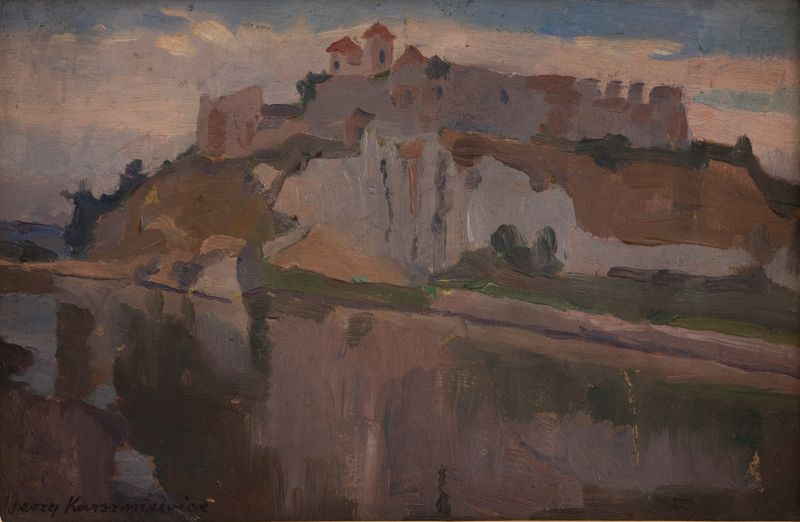
Could a single brushstroke hold eternity? In Jerzy Karszniewicz's Interior of a Church, the sweeping strokes of paint invite us into a space where silence resonates, and the divine feels palpable yet distant. Look to the luminous arches that soar above, drawing the eye toward the vaulted ceiling. Notice how the interplay of light and shadow crafts a sacred atmosphere, the flickering candlelight illuminating the worn pews below. The artist’s deliberate use of muted tones evokes a sense of solemnity, while the delicate highlights capture the essence of the sacred space, inviting contemplation and stillness. Hidden within this tranquility lies an emotional tension — the contrast between the grandeur of the architecture and the emptiness it contains.
Each empty pew serves as a reminder of absence, evoking a void that speaks to loss and longing. The pillars, standing tall yet solitary, reflect both the strength of faith and the isolation that can accompany spiritual journeys, creating a poignant dialogue between the viewer and the space. Karszniewicz painted Interior of a Church in 1902, a time when Europe was in the throes of socio-political change. The artist, based in Poland, sought to capture the spiritual essence of everyday life amidst a backdrop of uncertainty in the art world.
This was an era rich with artistic exploration, as new movements began to challenge traditional representations, making Karszniewicz's work a reflective piece on both personal and collective experiences of faith.