Interior Of St Bavo’s, Haarlem — History & Facts
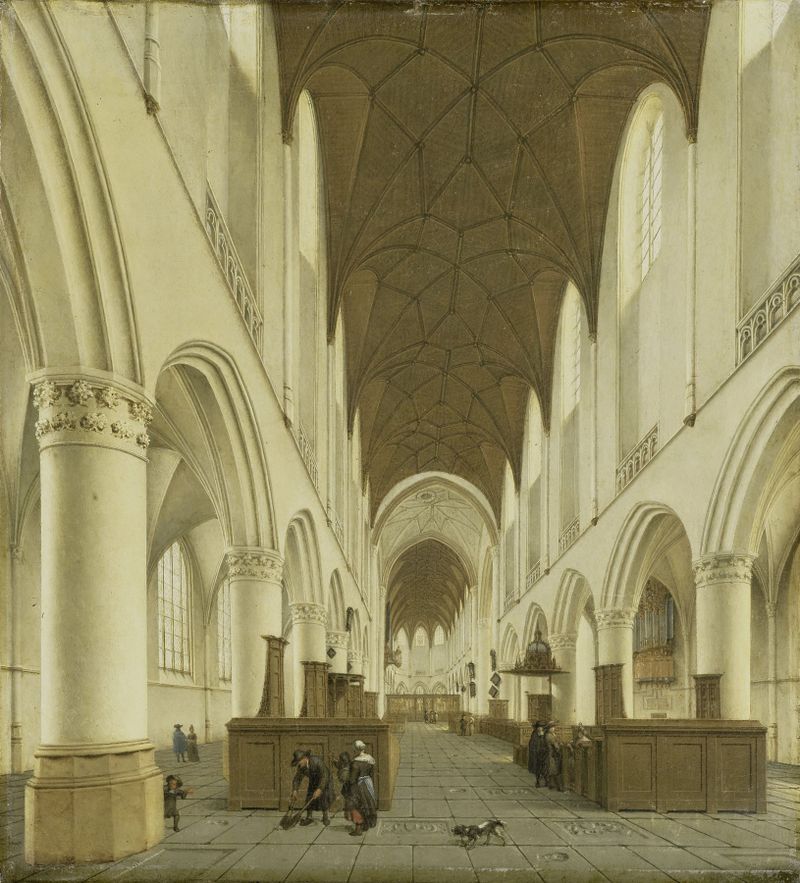
Can beauty exist without sorrow? In Interior of St Bavo’s, Haarlem, a quiet revelation emerges within the sacred space, inviting contemplation of the delicate balance between light and shadow, hope and despair. Look to the left at the lofty arches, their grandeur contrasting with the humble figures below. Notice how the warm light spills through stained glass, casting vibrant colors on the stone floor, while the muted tones of the congregation evoke a sense of stillness. The meticulous attention to detail in the carvings and the gentle curvature of the pews draws your eye deeper into the sacred sanctuary, inviting you to explore each corner of this meticulously rendered scene. The painting captures a moment of introspection amidst a bustling life, where the interplay of colors hints at emotional undercurrents.
The figures, absorbed in quiet prayer or reflection, suggest a collective yearning for solace in a world filled with turmoil. The stark contrast between the opulent architecture and the modest congregation underscores the theme of humility against a backdrop of divine beauty, a reminder of the fragility of human existence. Isaak van Nickelen created this work in 1696, during a time when Dutch art was experiencing a flourish of realism and attention to detail. Living in Haarlem, an epicenter for artists, he was influenced by the Baroque movement that sought to capture not just the visual world but its emotional resonances.
This painting reflects his commitment to portraying the spiritual essence of space, a testament to the profound relationship between art and the sacred context of 17th-century life.