Interior of St. Mark's, Venice — History & Facts
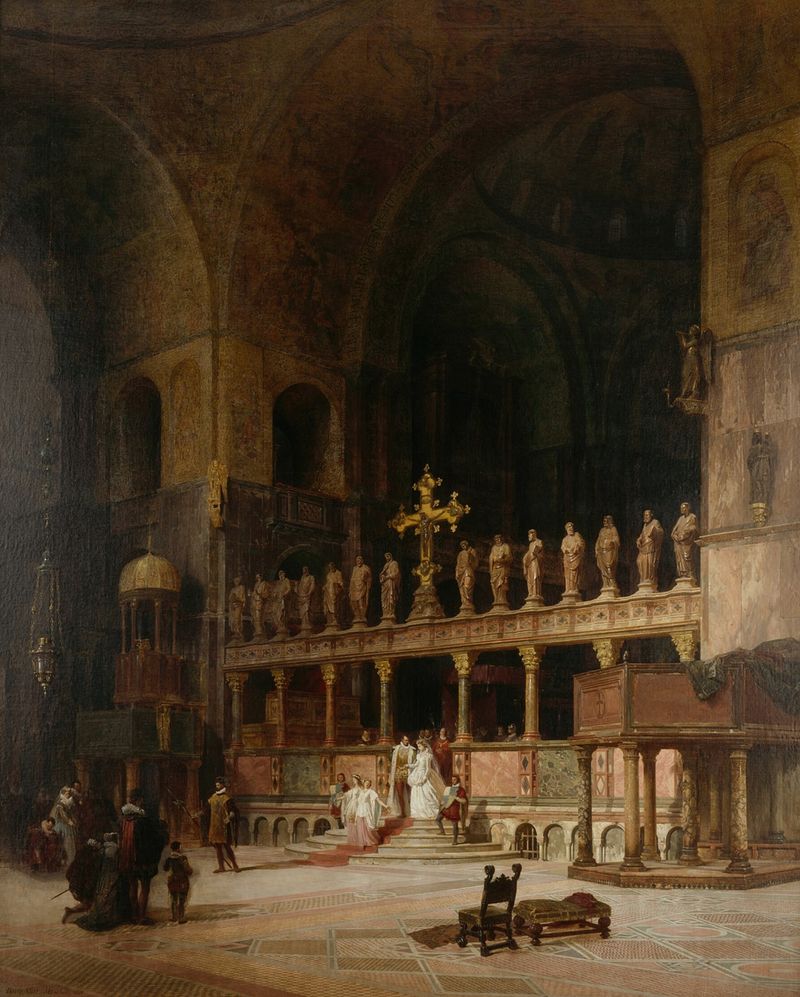
Can paint confess what words never could? In Interior of St. Mark's, Venice, the play of light and shadow reveals secrets that linger just out of reach, inviting the viewer to look deeper. Look to the left at the towering columns that ascend toward the ornate ceiling, each adorned with exquisite details that shimmer subtly under the soft glow of natural light. Notice how the artist employs a palette rich with deep golds and muted blues, allowing the intricate mosaics to breathe life into the space while casting gentle shadows that dance across the floor.
The composition draws your gaze upward, as if to transport you into the divine embrace of the cathedral, embodying both grandeur and intimacy. In the depths of the shadowed corners, there lies an emotional tension that speaks of reverence and solitude. The interplay of light captures the ethereal, while the darker areas evoke a sense of mystery and untold stories whispered through the ages. Each figure, though small and seemingly incidental, adds to the narrative of worship and reflection, suggesting a deeper connection between the sacred and the everyday life of Venice. David Dalhoff Neal created this masterpiece in 1869, during a period when the art world was deeply engaged in the exploration of realism and the effects of light.
Living in Venice, a city that had long captivated artists, Neal sought to capture not only the architectural beauty of St. Mark's but also its spiritual resonance amidst the bustling life outside. At a time when the Impressionists were rising to prominence, he forged his own path, focusing on the interplay of architecture and atmosphere, a choice that would define his artistic legacy.