Intérieur flamand — History & Facts
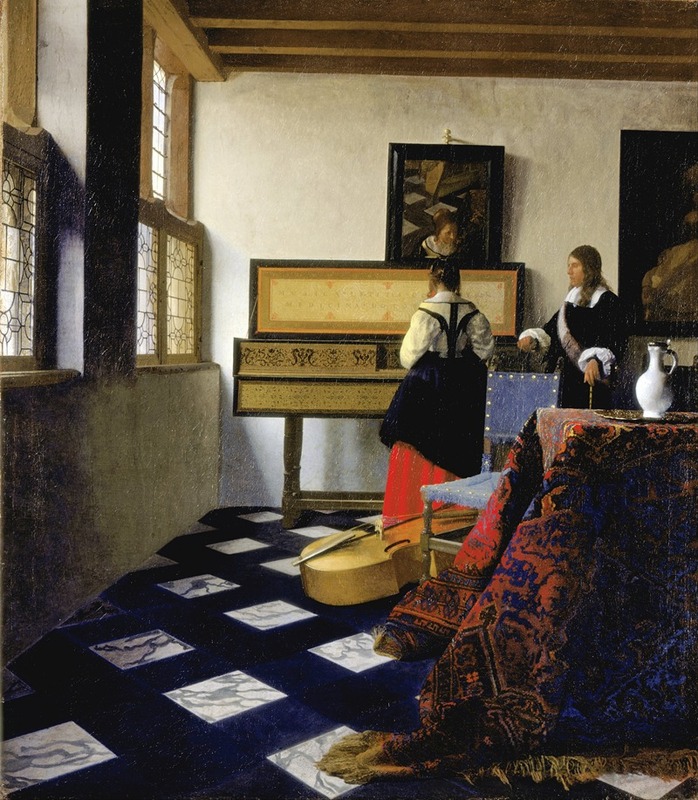
Could a single brushstroke hold eternity? In the delicate interplay of light and shadow, Intérieur flamand offers a glimpse into the heart's desires woven into the fabric of everyday life. Look to the left at the softly illuminated window, where the warm glow spills over the rustic wooden table, illuminating the remnants of a simple meal. The rich browns and golds of the interior evoke a sense of comfort and intimacy, inviting the viewer to linger. Notice how the artist masterfully captures texture, from the woven tapestry on the wall to the subtle reflections on the polished surfaces, revealing a world that feels both tangible and ephemeral. Amidst this serene setting, there lies a palpable tension between the mundanity of domestic life and the yearning for something greater.
The untouched chair suggests the absence of companionship, while the scattered utensils hint at transient moments of shared experiences. Each element resonates with a longing that transcends the physical space, urging us to reflect on our own connections and desires. In 1812, Emile Renard painted this piece during a time of artistic exploration in France, where Romanticism was beginning to flourish. As he worked in a small studio, Renard was influenced by the emerging interest in everyday life and the emotional depth it could convey.
This era marked a departure from the grandeur of neoclassicism, allowing artists to delve into the nuances of human experience, a shift that Renard embraced in his intimate portrayal of a Flemish interior.