Italian Landscape — History & Facts
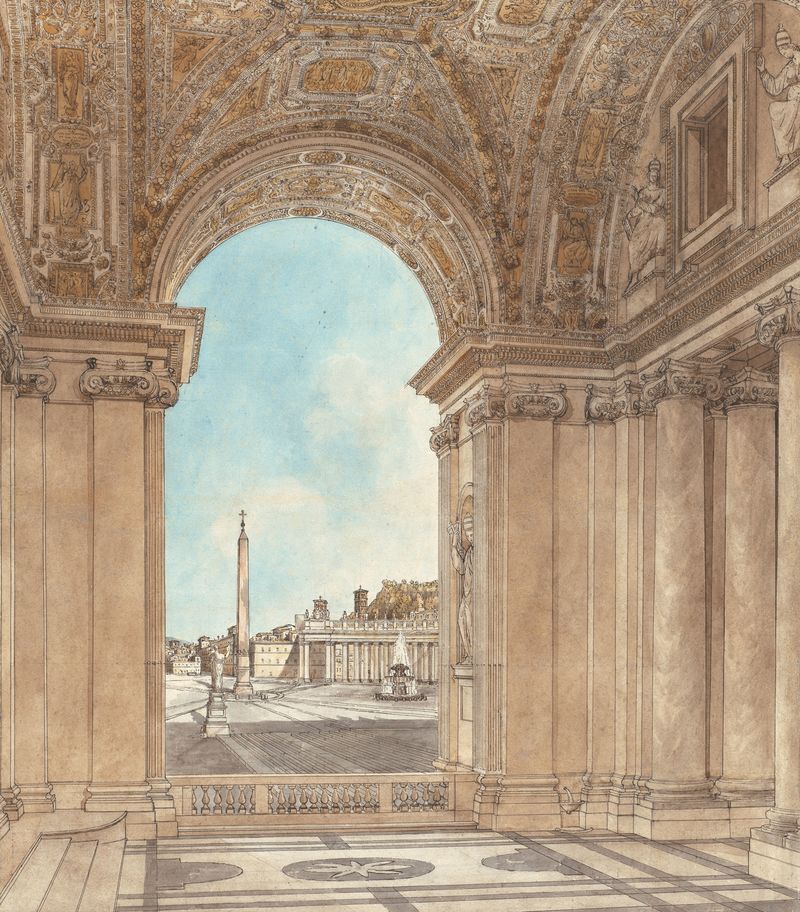
In a world that often feels stagnant, the act of creation becomes a powerful act of rebirth, inviting us to witness the ephemeral beauty of life. Look to the horizon where soft rolling hills embrace the sky, painted in delicate hues of green and gold. The artist’s keen eye captures the interplay of light and shadow, drawing us to the warm glow that bathes the landscape at dusk. Notice how the trees, finely detailed yet softened with a subtle touch, sway gently in the breeze, their forms alive with movement.
The careful brushwork evokes a sense of tranquility, allowing us to feel the cool air and breathe in the essence of nature. Beneath the serene surface lies a tension between the enduring and the fleeting. The vibrant palette suggests the joy of life, while the elongated shadows hint at the passage of time, reminding us that all beauty is temporary. The juxtaposition of the lush foreground against the distant mountains—a metaphor for aspirations and dreams—invites introspection, revealing a landscape that mirrors our journey through life, evoking both hope and nostalgia. Giacomo Quarenghi created Italian Landscape during the late 18th to early 19th century, a period marked by shifting artistic movements and a burgeoning interest in the natural world.
Amidst the neoclassical influences surrounding him in Europe, he sought to capture the essence of Italy's countryside, reflecting a personal exploration of beauty and a response to the Enlightenment's ideals. This work stands as a testament to his dedication to portraying the splendor of nature, a theme that resonated deeply with both artists and audiences of his time.