Italian Landscape — History & Facts
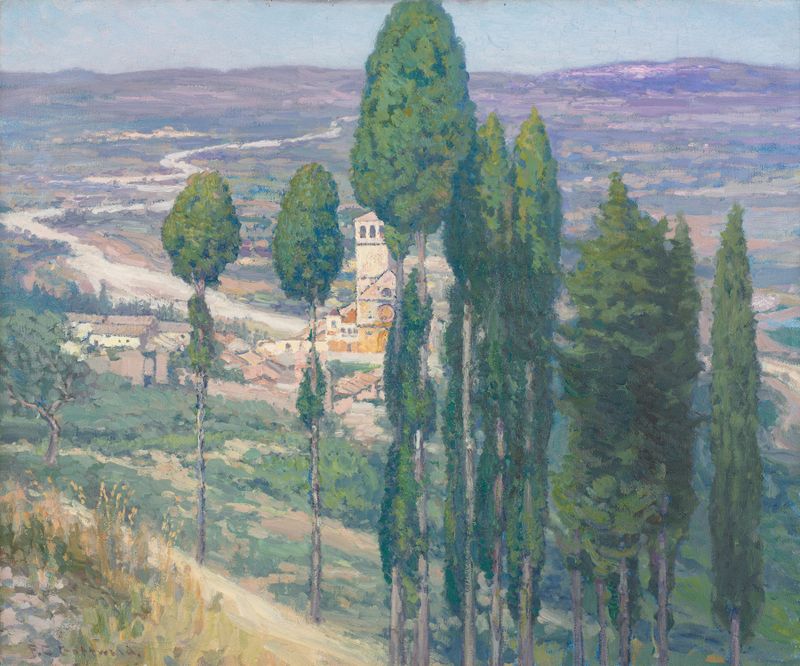
It is through color that we connect with the essence of our surroundings, drawing forth emotion from the silence of nature. Focus on the vibrant hues that breathe life into the canvas; the lush greens of the rolling hills beckon your gaze to the horizon, where the warm oranges and pinks of the setting sun dissolve into twilight. The artist employs a rich palette, layered with textured brushstrokes, which conveys not just the landscape but a palpable atmosphere. As you examine the foreground, notice the intricate details of the flora that sway gently, almost as if caught in an eternal dance with the wind. Within this serene expanse lies a deeper narrative—the contrast between the vivid vibrancy of nature and the subtle melancholy suggested by the fading light.
It speaks to the passage of time, urging the viewer to reflect on the ephemeral beauty of life. Each stroke embodies a moment of contemplation, inviting us to linger in an ephemeral world where harmony and turmoil coexist, reminding us that beauty often resides in the balance. Frederick Gottwald painted Italian Landscape in the early 1900s, a period marked by significant changes in the art world, as movements like Impressionism and Post-Impressionism were reshaping visual language. At this time, Gottwald was immersed in the vibrant art scene of Europe, exploring the connection between light and color in nature.
This painting captures his response to the landscapes he encountered, blending personal experience with the broader artistic dialogues of his day.