The Umbrian Valley, Italy — History & Facts
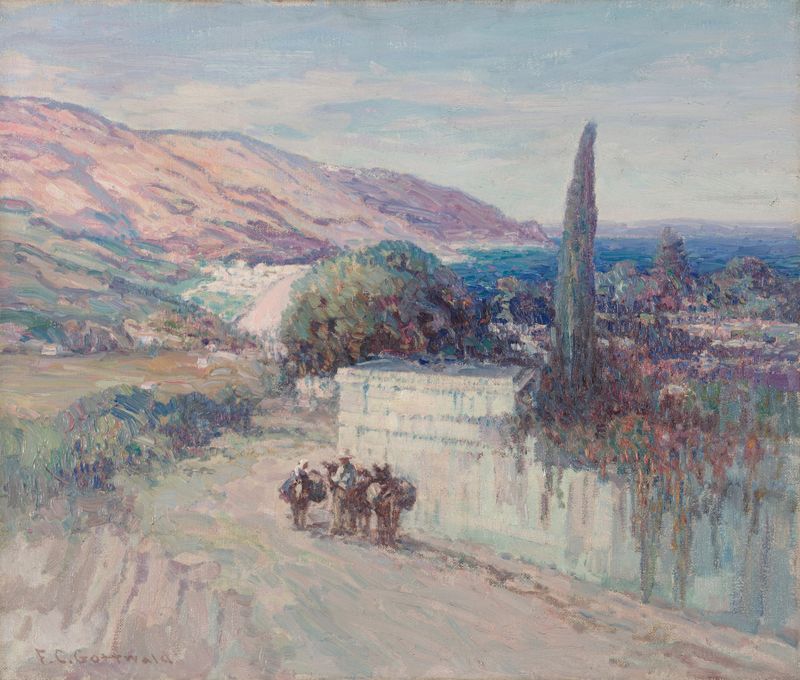
What if beauty was never meant to be finished? Frederick Gottwald’s The Umbrian Valley, Italy invites us to embrace the fleeting essence of nature, captured in a moment that transcends time. Look to the left at the rolling hills, where soft greens and ochres meld into one another, creating a serene tapestry that draws the eye into the undulating landscape. Notice how the light filters through the clouds, casting gentle shadows that shape the forms of distant trees and the meandering river. As your gaze travels across the canvas, the brushwork reveals a balance of fluidity and precision, emphasizing the vibrancy of color that speaks to a world alive with possibility. Beneath the tranquil surface, contrasts emerge—the harmony of the lush valley set against the stormy, tumultuous sky, reflecting the tension between the peace of nature and the unpredictability of life.
The vivid hues evoke an emotional resonance, suggesting that beauty is both ephemeral and eternal. The interplay of light and color suggests not just a physical location but a state of mind, inviting contemplation of what lies beyond the visible. In 1914, Gottwald painted this work during a period of great transformation, both personally and artistically. Living in the shadows of impending global conflict, he sought solace in the pastoral beauty of the Umbrian landscape.
The piece reflects a moment of calm amidst chaos, encapsulating the artist's desire to capture the essence of beauty, even as the world around him stood on the brink of turmoil.