J. & W. Chaplin’s Dover-London Stage on the Road — History & Facts
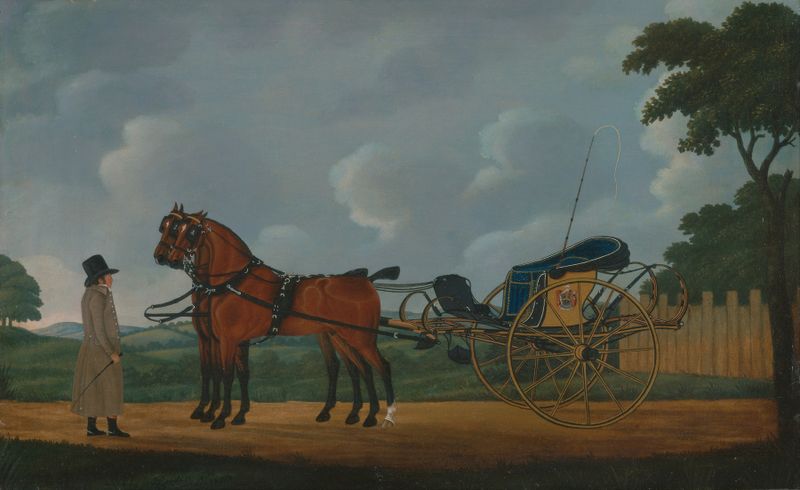
In the quiet space where paint meets memory, time becomes both the subject and the observer. Each stroke of the brush captures fleeting moments, a reminder of the relentless passage that shapes our existence. Focus on the detailed carriage at the center, its dark hues drawing the eye amidst a backdrop of muted earth tones. The intricate woodwork and the soft sheen of the horses’ coats suggest a moment of pause, where the ordinary transforms into the extraordinary through the artist's careful attention.
Notice how the light catches the edges of the wheels, illuminating the dust that swirls around the scene, creating a sense of movement even in stasis. Delve deeper into the hidden contrasts within this work: the juxtaposition of bustling travel and serene stillness, the celebration of human endeavor against the relentless march of time. Each figure, whether a passenger or a bystander, carries their own weight of experience, imbuing the scene with stories untold. The shadows hint at the transient nature of life, suggesting that while the stage may be set, the actors are always in motion, navigating their personal journeys. Created in an unspecified year, the artist painted this piece during a time of immense change in both transportation and society.
Cordrey’s focus on the stagecoach reflects not only the technological advances occurring in the 19th century but also a growing fascination with travel and movement. His works often evoke the simplicity of the past while hinting at the dynamics of contemporary life, capturing a moment that resonates profoundly as we consider our own relationship with time.