
Johannes op het eiland Patmos — History & Facts
Can paint confess what words never could? In Johannes op het eiland Patmos, the artist captures an intimate moment of revelation, where the confines of language dissolve into a visual narrative forged by obsession and divine inspiration. Look to the left at the figure of John, illuminated by a soft, ethereal light that spills across the rocky landscape, emphasizing his isolation. His gaze is directed upward, perhaps in prayer or contemplation, while the intricate details of his draped garments flutter with an unseen breeze. Notice the deep greens and earth tones that envelop him, contrasting sharply with the celestial blues of the sky, symbolizing the tension between earthly existence and heavenly calling.
Each brushstroke reveals the artist’s meticulous attention to texture, making the viewer almost feel the weight of the moment. Delve deeper into the symbolism woven within this composition. The rugged terrain represents both the harshness of solitude and the fertile ground for spiritual epiphany, while the open scroll lies nearby — a promise of the prophetic visions that await him. The juxtaposition of light and shadow encapsulates John's inner turmoil; he is both a seeker of truth and a vessel of divine messages.
This duality reflects the universal struggle of the human experience, caught between the mundane and the extraordinary. Created in the late 15th to early 16th century, this piece emerged during a time of profound transformation in the art world. Jan Wellens de Cock was active in a period that bridged the late Gothic and early Renaissance. His work, emerging from the Northern Renaissance context, illustrates the burgeoning fascination with human emotion and spirituality, setting the stage for the exploration of individual experience that would flourish in centuries to come.
More Artworks by Jan Wellens de Cock
Browse all →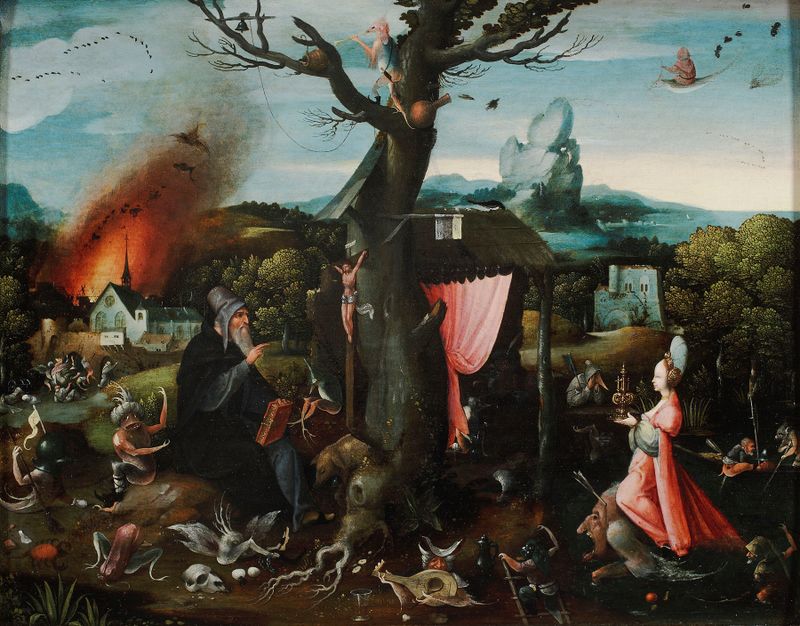
More Religious Art
Browse all →
The Return of the Prodigal Son
Rembrandt van Rijn

The Garden of Earthly Delights
El Bosco

Count Orgaz’ funeral
El Greco

The Hundred Guilder Print: the central piece with Christ preaching, the plate arched
Rembrandt van Rijn

The Descent from the Cross
Rogier van der Weyden

The return of the prodigal son
Rembrandt van Rijn