
Temptation of St. Anthony (Jacobus de Voragine, Legenda aurea, Vitae Patrum) — History & Facts
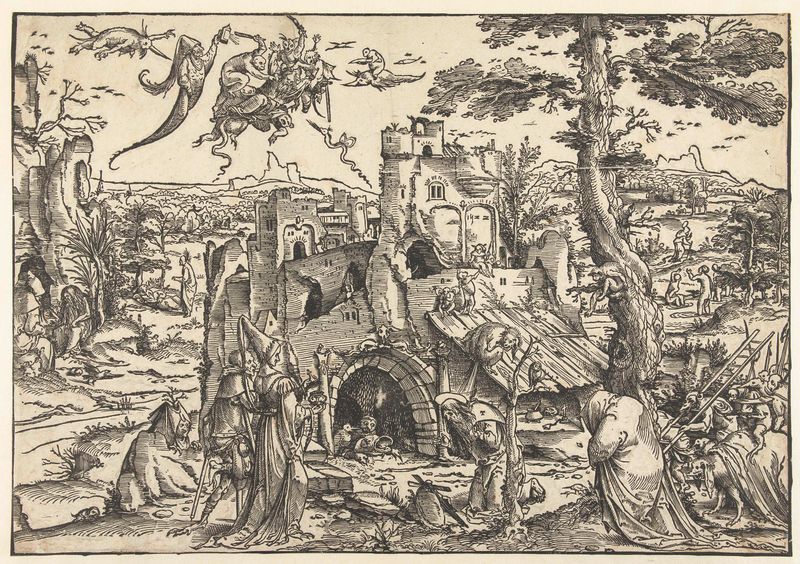
In a world brimming with temptation, resistance defines the essence of humanity's struggle. The tension between the sacred and the profane reverberates through the canvas, inviting one to ponder where desire ends and virtue begins. Focus on the swirling chaos surrounding the central figure of St. Anthony, who stands resolute yet vulnerable.
The artist masterfully employs a palette of earthy tones contrasted with vivid bursts of color to depict the grotesque apparitions that stalk him. Notice how the light illuminates the contours of St. Anthony’s face, emphasizing both his inner turmoil and steadfast spirit.
The composition draws the eye in a circular motion, reflecting the cyclical nature of temptation and the continuous battle for the soul. Beyond its surface, this work delves into the profound conflict of desire versus divine purpose. The varied depictions of monstrous figures might represent the myriad distractions of worldly life, each alluring yet hollow. The tension between the serene expression of the saint and the chaotic forms around him encapsulates the struggle between enlightenment and ensnarement.
Here, the viewer is confronted with a stark reminder of their own vulnerabilities, prompting a reflection on the personal and societal revolutions that emerge from such struggles. In the aftermath of the Reformation, the artist created this piece in a time marked by religious upheaval and introspection. Working in Antwerp in the years after 1523, the artist was influenced by the growing tensions between established doctrine and emerging perspectives on faith. This painting not only reflects the individual’s journey through temptation but also mirrors the collective questioning of authority that defined an era of change in art and society.
More Artworks by Jan Wellens de Cock
Browse all →
More Religious Art
Browse all →
The Return of the Prodigal Son
Rembrandt van Rijn

The Garden of Earthly Delights
El Bosco

Count Orgaz’ funeral
El Greco

The Hundred Guilder Print: the central piece with Christ preaching, the plate arched
Rembrandt van Rijn

The Descent from the Cross
Rogier van der Weyden

The return of the prodigal son
Rembrandt van Rijn